
Introduction
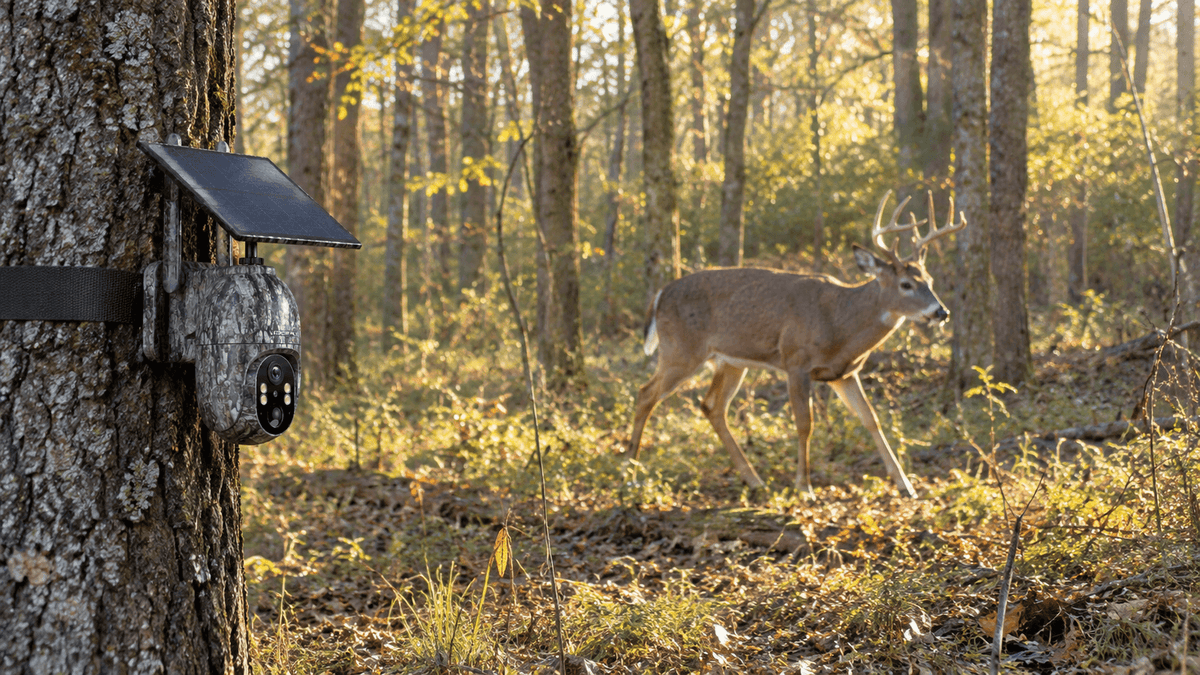
Choosing the best trail camera for deer hunting is not simply about buying the camera with the highest megapixel number or the longest list of features.
A good deer trail camera should help you understand what is happening in your hunting area when you are not there. It should capture deer reliably during the day and at night, trigger quickly enough to catch moving animals, provide useful images and video, and continue working for weeks or months with minimal maintenance.
For hunters and wildlife enthusiasts, the right hunting trail camera can make deer scouting much more efficient. Instead of repeatedly entering your hunting area and disturbing wildlife, you can use a strategically placed camera to monitor deer movement, identify individual bucks, and learn when animals are most active.
So, what features actually matter when choosing a trail camera for deer hunting?
Here are the specifications worth paying attention to.
1. Trigger Speed: Catching the Deer at the Right Moment
One of the most important features of a trail camera is trigger speed.
Trigger speed refers to how quickly the camera detects movement and captures an image after an animal enters the detection zone.
This matters because deer rarely stand perfectly still in front of a camera. A buck may walk quickly across a trail, turn its head, or pass through the camera's field of view in only a few seconds.
A slow deer camera may capture an empty trail after the deer has already passed.
A fast-triggering camera has a better chance of capturing the animal as it enters the frame.
When comparing hunting cameras, look at:
- Trigger speed
- Recovery time between photos
- Detection distance
- Detection angle
- Trigger sensitivity
- Adjustable detection settings
For active deer trails, a responsive wildlife camera can make a noticeable difference in the number of useful photos you collect.
2. Detection Range: How Far Can the Camera See?
Detection range is another specification that deserves attention.
A trail camera may have excellent image quality, but if its motion sensor cannot detect deer far enough away, you may miss animals approaching your setup.
For deer scouting, a useful detection range should cover the area where deer are actually moving—not simply the maximum number advertised on a product page.
Placement is equally important.
For example, positioning a camera directly beside a heavily used trail can create a different result than placing it 10–20 meters away from a food plot or open clearing.
When setting up a deer trail camera, consider:
Trail: Mount the camera slightly to the side of the trail rather than pointing directly down it.
Food plot: A wider field of view can help capture deer entering and leaving the area.
Water source: Position the camera where approaching animals naturally cross the detection zone.
The goal is to create a detection area that matches the behavior of the deer.
3. Image Resolution: More Than Just Megapixels
High-resolution images are useful for deer identification, but megapixels alone should not determine which best trail camera you choose.
A 60MP camera, for example, can provide plenty of detail for examining antlers, body characteristics, and other identifying features. However, image quality also depends on the sensor, lens, exposure, image processing, and lighting conditions.
For serious deer scouting, look for a combination of:
- High-resolution still images
- Clear video
- Good dynamic range
- Accurate exposure
- Natural color reproduction
- Sharp images in changing light
A good trail camera should produce useful images in real-world conditions—not just impressive specifications on paper.
4. Night Vision: One of the Most Important Deer Camera Features
Many deer are most active around dawn, dusk, and nighttime. That makes night vision trail cameras particularly important for hunting.
There are three common infrared approaches:
Standard Infrared
Standard infrared illumination can produce black-and-white nighttime images and is generally effective for wildlife monitoring.
Low-Glow Infrared
Low-glow cameras can provide more illumination while producing a faint visible glow. They can be useful when greater nighttime image detail is a priority.
No-Glow Infrared
No-glow cameras use infrared illumination designed to be invisible to the human eye. They are popular for discreet wildlife monitoring.
For hunters who frequently monitor deer at night, infrared night vision can be just as important as daytime resolution.
When comparing cameras, look beyond the phrase "night vision" and check the actual nighttime image quality.
5. Battery Life and Solar Power
A trail camera is only useful when it is working.
Battery life is therefore one of the most practical features to consider.
A camera placed deep in the woods may be inconvenient to visit every few days. Frequent battery changes can also disturb the hunting area.
This is where solar trail cameras can be especially useful.
A solar-powered trail camera can use sunlight to help maintain its battery, reducing the need for frequent maintenance. This can be particularly useful for long-term deer monitoring.
However, solar performance depends on:
- Sunlight availability
- Camera placement
- Weather
- Temperature
- Recording frequency
- Cellular transmission frequency
For a remote hunting location, a combination of solar power and rechargeable battery capacity can provide a convenient long-term setup.
6. Cellular Connectivity: Check Deer Activity From Anywhere
Traditional trail cameras usually require you to physically visit the camera to retrieve the SD card.
A cellular trail camera works differently.
Instead of waiting until your next scouting trip, a cellular camera can transmit photos or videos over a cellular network, depending on the model and service plan.
This can be especially useful when monitoring multiple hunting locations.
Imagine having cameras positioned at:
- A food plot
- A bedding area
- A water source
- A travel corridor
- A property entrance
Instead of checking every camera individually, you can receive updates remotely.
For hunters who want remote deer scouting, cellular connectivity can save significant time.
However, cellular cameras generally require a compatible data plan and sufficient network coverage. Always verify network compatibility and service availability before choosing a cellular hunting camera.
7. 4K Video: Useful for Understanding Deer Behavior
Photos can tell you that a deer was present. Video can tell you what the deer was doing.
That distinction can be valuable for deer scouting.
A 4K trail camera can capture detailed video of deer walking, feeding, fighting, rubbing trees, or interacting with other animals.
Video may also help you understand:
- Direction of travel
- Movement patterns
- Feeding behavior
- Group size
- Time spent in an area
- Individual buck behavior
For hunters interested in more than simple detection, a trail camera with high-resolution video can provide additional scouting information.
8. AI Animal Recognition Can Reduce Unnecessary Alerts
Modern trail cameras are becoming smarter.
Some AI trail cameras can distinguish between animals, people, vehicles, and other types of movement.
This can reduce the number of irrelevant notifications caused by:
- Wind-blown vegetation
- Small animals
- People
- Vehicles
- Environmental movement
For hunters monitoring a large property, intelligent detection can make reviewing hundreds or thousands of images much easier.
Instead of manually checking every image, you can focus more attention on the footage that actually contains deer.

9. Field of View and Camera Placement
A wider field of view is not always better.
If your camera is pointed at a narrow deer trail, an extremely wide field of view may include unnecessary background while making the deer appear smaller.
For open areas such as food plots, a wider viewing angle can be helpful.
For narrow trails, positioning and framing often matter more than simply choosing the widest lens.
Before installing your hunting trail camera, walk through the area and imagine the path deer are likely to take.
Then position the camera so that the animal moves across the frame rather than directly toward it.
This can improve the chance of capturing useful images.
10. Weather Resistance Matters
A deer hunting camera may spend months outside in rain, snow, heat, and humidity.
That means durability should not be overlooked.
Look for a weather-resistant design that can handle outdoor conditions and protect the internal electronics.
Useful considerations include:
- Weather-resistant housing
- Secure battery compartment
- Protected ports
- Strong mounting system
- Reliable operation in changing temperatures
A camera that performs well for one week but fails after heavy rain is not a practical long-term wildlife camera.
11. Storage and Video Options
Storage capacity is another factor that can easily be overlooked.
If your camera captures hundreds of photos or videos, a small memory card may fill quickly.
Consider how frequently the camera will trigger and whether you plan to record video.
For cellular cameras, remote transmission can reduce the need to physically retrieve images, but local storage can still be valuable as a backup.
If you plan to record 4K trail camera video, remember that high-resolution files require significantly more storage than standard photographs.
 Voopeak: A Practical Choice for Modern Deer Scouting
For hunters looking for a modern trail camera for deer hunting, Voopeak offers several options designed around the features that matter in real-world wildlife monitoring.
For example, the Voopeak TC22 combines WiFi connectivity with high-resolution imaging, making it suitable for hunters who want to check and manage camera footage without relying on a traditional cellular connection.
For locations where remote monitoring is more important, Voopeak's cellular models can provide another approach.
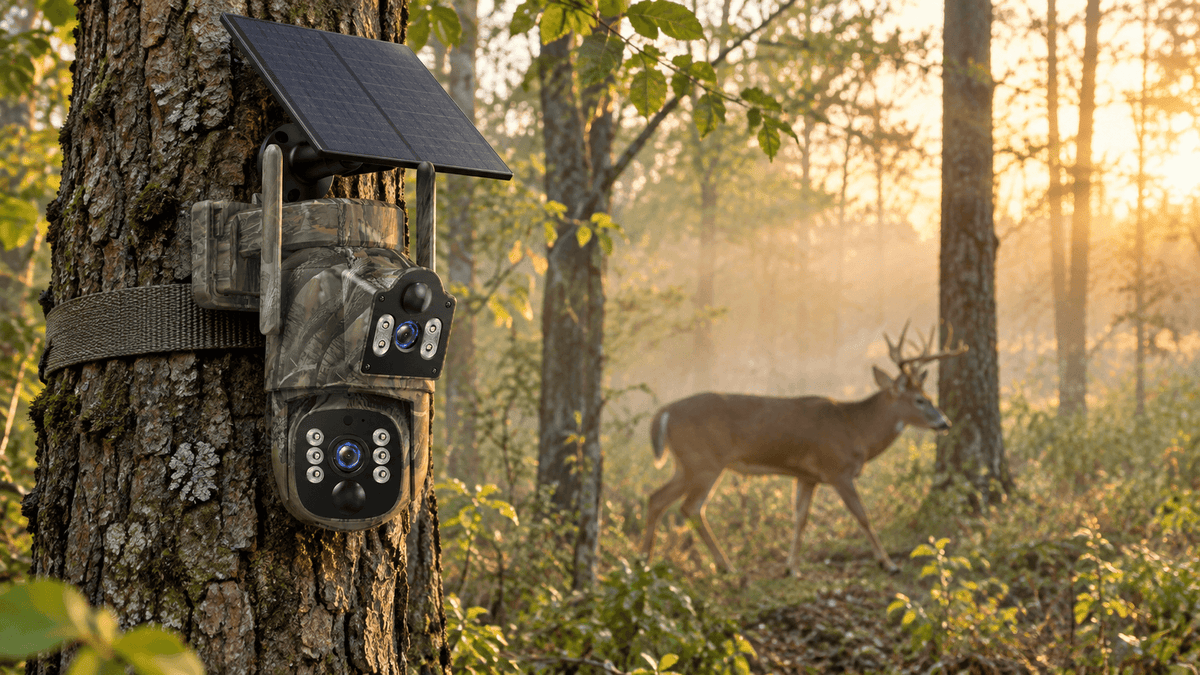
The Voopeak TC32 is a 4G solar-powered trail camera designed for long-term outdoor monitoring. Cellular connectivity allows hunters to receive captured images remotely, while solar charging can help reduce routine battery maintenance.
For hunters interested in pan-and-tilt coverage, models such as the Voopeak TC27 combine 4G connectivity, solar power, and PTZ functionality, allowing the camera to cover a broader area than a traditional fixed-position trail camera.
The right model ultimately depends on your hunting property, cellular coverage, desired image quality, power requirements, and scouting strategy.

What Is the Best Trail Camera for Deer Hunting?
There is no single feature that makes one camera the perfect choice for every hunter.
Instead, focus on the features that match your hunting environment.
| Feature | Why It Matters |
|---|---|
| Fast trigger speed | Helps capture moving deer |
| Detection range | Determines how far movement can be detected |
| High-resolution photos | Helps identify deer and antlers |
| 4K video | Provides more detail and behavioral information |
| Night vision | Captures deer after dark |
| Solar power | Reduces battery maintenance |
| Cellular connectivity | Enables remote monitoring |
| AI recognition | Helps filter irrelevant alerts |
| Weather resistance | Supports long-term outdoor use |
| Large storage | Useful for frequent photo and video capture |
For a remote property, cellular + solar power may be the most important combination.
For a property where you regularly visit the camera, high image quality, reliable detection, and good battery life may be more important.
For nighttime deer activity, prioritize infrared night vision.
And for detailed deer identification, look for a camera that combines high-resolution imaging with reliable triggering and good image processing.

Final Thoughts: Focus on Real-World Performance
The best trail camera for deer hunting is not necessarily the camera with the biggest megapixel number or the longest feature list.
The most useful camera is the one that reliably captures the information you actually need.
For most deer hunters, that means paying attention to trigger speed, detection range, image quality, night vision, battery life, weather resistance, and storage.
If you need to monitor a remote hunting property, cellular trail cameras can make scouting much easier by allowing you to receive images without visiting the camera.
If you want less maintenance, a solar trail camera can help extend operating time.
And if you want more detailed wildlife footage, 4K trail camera video can provide valuable information about deer movement and behavior.
Before buying a camera, think about where you will use it, how often you can visit it, whether cellular service is available, and when the deer in your area are most active.
Choose the features that solve those problems, and your trail camera will become more than just a camera—it will become a useful tool for deer scouting, wildlife monitoring, and hunting preparation.

Leave a comment
This site is protected by hCaptcha and the hCaptcha Privacy Policy and Terms of Service apply.