
Trail cameras have become one of the most popular tools for hunters, wildlife enthusiasts, property owners, and outdoor explorers. Unlike traditional cameras, a trail camera is designed to operate automatically in outdoor environments, capturing photos and videos whenever movement is detected.
But how do trail cameras work? What technology allows them to capture wildlife in complete darkness, send images remotely, and operate for months in the field?
In this beginner-friendly guide, we will explain everything you need to know about trail camera technology, including motion detection, infrared night vision, cellular connectivity, solar power, and how to choose the right wildlife camera for your outdoor needs.
Whether you are searching for a hunting camera, a cellular trail camera, or a reliable outdoor wildlife monitoring camera, understanding how these devices work will help you make a better decision.
What Is a Trail Camera?
A trail camera, also known as a game camera or wildlife camera, is an automatic outdoor camera designed to monitor areas without requiring constant human operation.
Originally created for hunters to monitor deer movement and animal patterns, modern trail cameras are now used for many purposes, including:
- Wildlife observation
- Hunting preparation
- Farm and property monitoring
- Outdoor security
- Research and conservation projects
Unlike regular cameras, trail cameras are built for long-term outdoor use. They are typically weather-resistant, battery-powered, and equipped with sensors that allow them to capture images automatically when activity is detected.
Modern models can include advanced features such as:
- Motion detection sensors
- High-resolution photos and videos
- Infrared night vision
- No-glow technology
- Cellular connectivity
- Solar charging systems
- Mobile app control
How Do Trail Cameras Detect Movement?
The most important technology inside a trail camera is the PIR motion sensor (Passive Infrared Sensor).
This sensor detects changes in infrared energy caused by moving objects, such as animals or people.
When an animal walks into the detection area:
- The PIR sensor detects body heat and movement.
- The camera processor analyzes the signal.
- The camera activates instantly.
- The shutter captures photos or videos.
This allows trail cameras to remain in standby mode most of the time, which helps save battery power.
For example, a deer walking through a forest does not need someone watching the camera. The trail camera automatically recognizes movement and records the activity.
The performance of a trail camera depends on several motion detection factors:
- Detection range
- Trigger speed
- Sensor sensitivity
- Camera placement
- Weather conditions
A high-quality hunting camera with a fast trigger speed can capture animals before they move out of the frame.

How Do Trail Cameras Capture Photos and Videos?
After detecting movement, the trail camera activates its internal camera module.
The image quality depends on several components:
Image Resolution
Higher megapixel sensors capture more detailed photos. Modern trail cameras often offer:
- 24MP
- 32MP
- 48MP
- 60MP images
Higher resolution helps users identify wildlife details such as:
- Animal species
- Antler size
- Movement patterns
- Behavior changes
Video Recording
Many trail cameras can record HD or 4K videos with audio.
Video mode is useful for:
- Observing animal behavior
- Monitoring feeding areas
- Understanding wildlife activity
For beginners, a camera that supports both photo and video recording provides more flexibility.
How Do Trail Cameras Work at Night?
One of the biggest advantages of modern trail cameras is their ability to capture wildlife after sunset.
Many beginners ask:
Can trail cameras see in complete darkness?
The answer is yes.
Trail cameras use infrared technology to capture nighttime images without requiring visible light.
There are mainly three types of night vision systems:
Infrared Flash
Infrared LEDs illuminate the area using invisible infrared light.
Advantages:
- Good night image quality
- Lower power consumption
- Reliable performance
Low Glow Flash
These cameras produce a small visible red glow when taking photos.
They usually provide brighter nighttime images but may be noticed by animals.
No Glow Flash
No glow trail cameras use invisible infrared wavelengths.
Benefits include:
- Less disturbance to wildlife
- Better for cautious animals
- More discreet monitoring
When choosing a wildlife camera, night vision capability is an important feature to consider, especially for deer hunting or long-term outdoor monitoring.

How Do Cellular Trail Cameras Send Photos?
Traditional trail cameras require users to physically remove the SD card to view images.
However, modern cellular trail cameras use mobile networks to send photos directly to your phone.
A cellular trail camera works by using:
- A SIM card with cellular service
- Built-in 4G LTE connectivity
- A mobile application
- Cloud or remote image transmission
After capturing an image, the camera uploads the file through the cellular network, allowing users to check activity remotely.
This is especially useful when cameras are installed in remote locations where checking the device frequently is difficult.
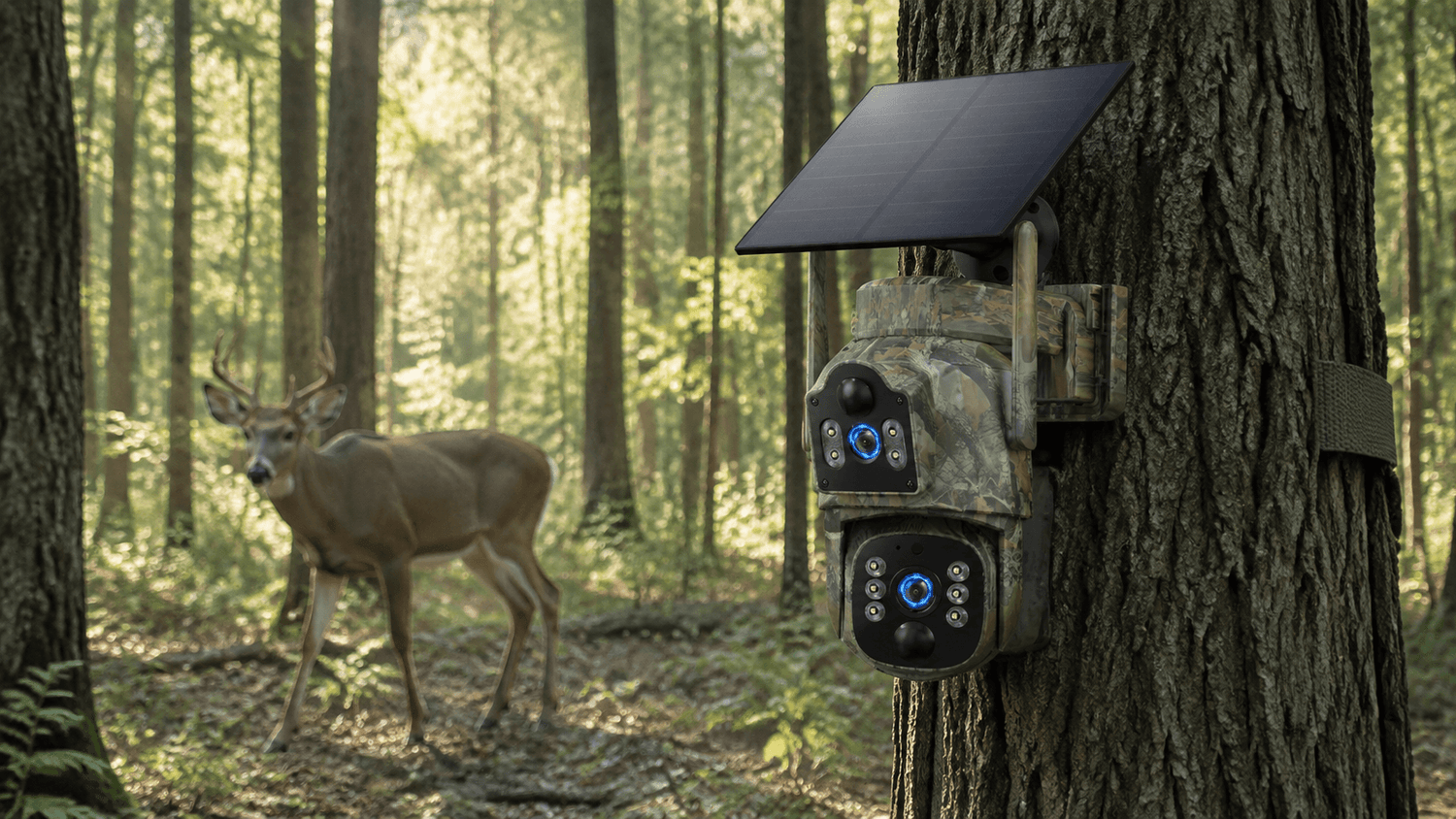
For example, the Voopeak TC39 4G LTE Solar Dual Lens Trail Camera combines cellular connectivity, solar charging, and dual-lens technology to provide a convenient solution for long-term wildlife monitoring.
The TC39 is designed for outdoor environments where users need reliable remote monitoring without frequently visiting the camera location.
Its key features include:
- 4G LTE cellular connection
- Solar charging capability
- Dual-lens design
- High-resolution wildlife videos
- Remote viewing through mobile devices
This type of solar trail camera is ideal for hunters, outdoor enthusiasts, and property owners who want continuous monitoring with less maintenance.

Do Trail Cameras Need WiFi?
A common beginner question is:
Do trail cameras work without WiFi?
Yes, many trail cameras can work without WiFi.
There are three common connection types:
WiFi Trail Cameras
WiFi models require users to be relatively close to the camera.
They are suitable for:
- Backyard monitoring
- Short-distance wildlife observation
Cellular Trail Cameras
Cellular models use mobile networks instead of WiFi.
They are better for:
- Remote forests
- Hunting locations
- Large properties
Traditional Trail Cameras
Basic cameras store photos on an SD card and do not require any network connection.
The best choice depends on where you plan to install your camera.
How Do Solar Trail Cameras Work?
Battery life is one of the biggest concerns for outdoor cameras.
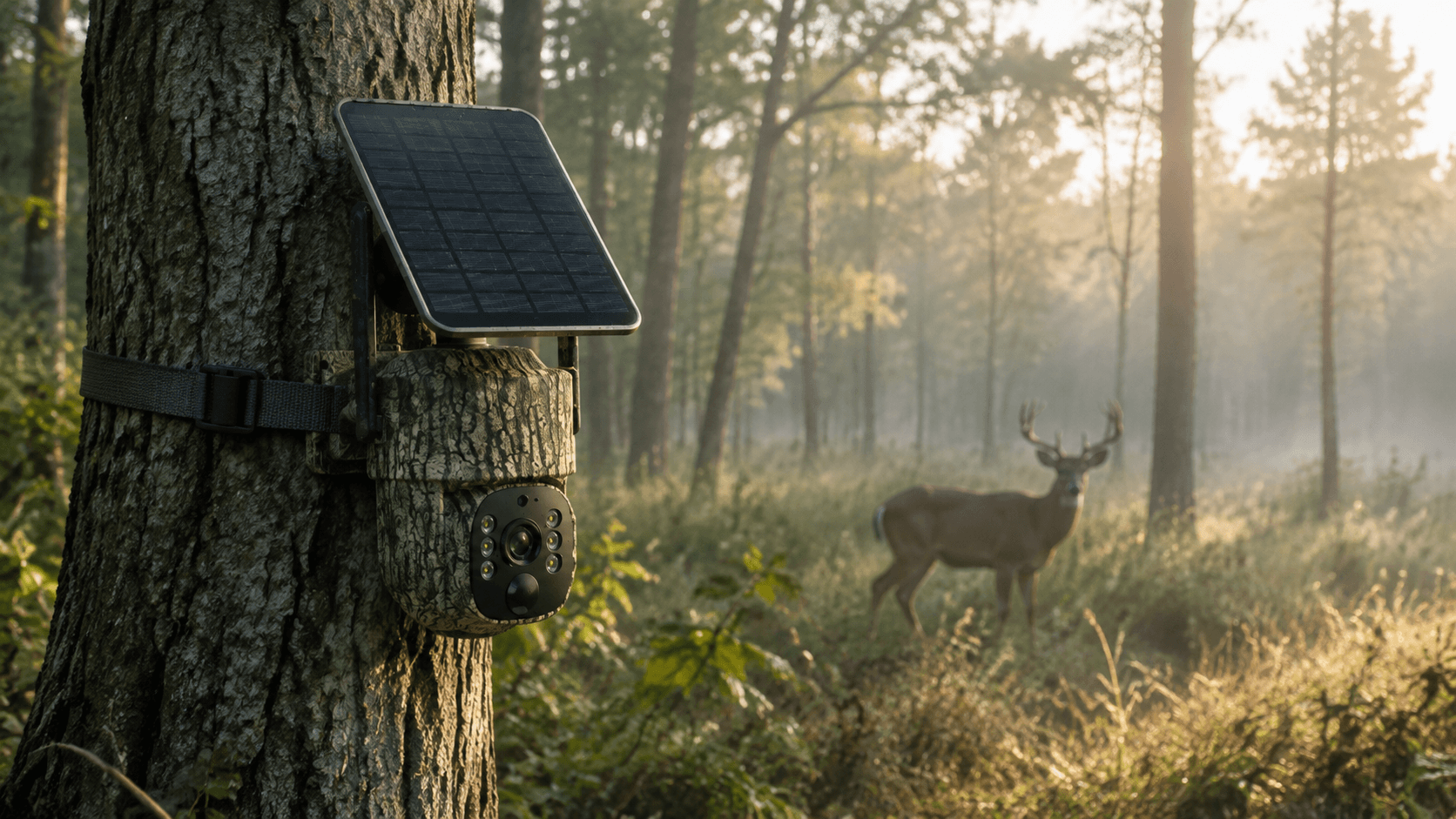
A solar trail camera uses a solar panel to recharge the internal battery, reducing the need for frequent battery replacement.
Solar-powered models are especially useful for:
- Remote hunting areas
- Wildlife research
- Farm monitoring
- Long-term outdoor observation
However, solar charging performance depends on:
- Sunlight availability
- Installation angle
- Weather conditions
- Camera usage frequency
A properly installed solar trail camera can significantly extend operating time compared with standard battery-only cameras.
How to Set Up a Trail Camera for Beginners
Proper installation is essential for getting clear wildlife images.
Follow these simple steps:
1. Choose the Right Location
Look for areas with animal activity, such as:
- Wildlife trails
- Water sources
- Feeding areas
- Forest edges
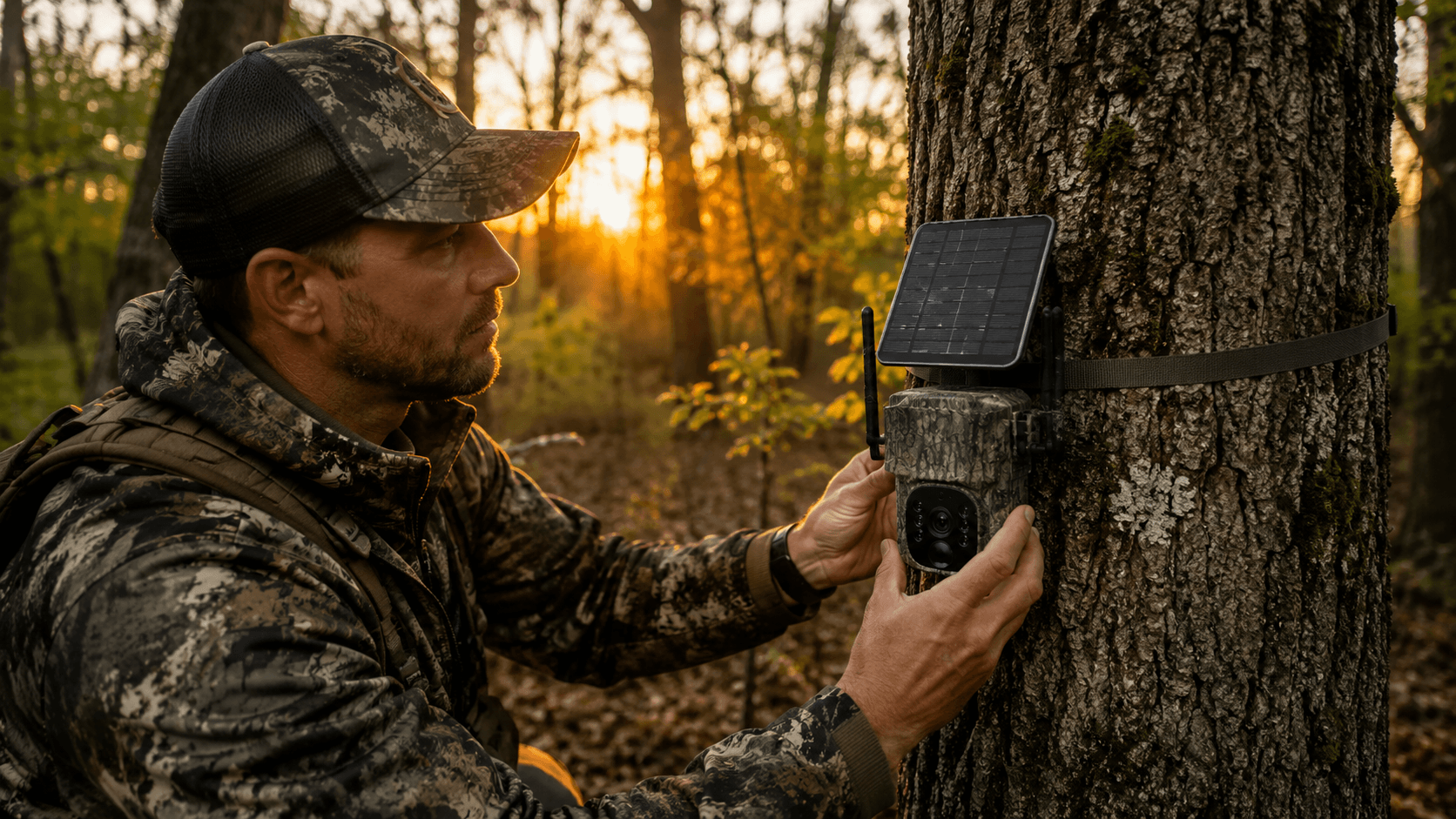
2. Mount the Camera Correctly
Install the camera:
- Around chest height
- Facing north or south when possible
- Away from direct sunlight
This reduces glare and improves image quality.
3. Adjust the Camera Angle
Make sure the detection zone covers the expected movement path.
Avoid placing the camera directly facing a trail because animals may move through the frame too quickly.
4. Test Before Leaving
Walk through the detection area and check:
- Trigger response
- Image framing
- Night vision performance

What Should Beginners Look for When Buying a Trail Camera?
Before purchasing a trail camera, consider these important features:
1. Image Quality
Choose a camera with enough resolution for identifying wildlife details.
2. Trigger Speed
A faster trigger helps capture moving animals.
3. Night Vision Performance
Look for reliable infrared technology.
4. Battery Life
Solar charging can reduce maintenance.
5. Connectivity Options
Choose between:
- SD card storage
- WiFi connection
- Cellular transmission
6. Weather Resistance
Outdoor cameras should handle:
- Rain
- Snow
- Dust
- Temperature changes
FAQ
How far can a trail camera detect animals?
Most trail cameras detect movement between 60 and 100 feet depending on the model, environment, and sensor sensitivity.
How long can a trail camera last?
Battery life depends on usage, settings, temperature, and connection type. Solar-powered models can operate much longer with proper sunlight.
Can trail cameras record continuously?
Most trail cameras are designed for motion-triggered recording instead of continuous recording because this saves battery power and storage space.
Are cellular trail cameras worth it?
For remote locations, cellular trail cameras are extremely useful because they allow users to receive photos without physically checking the camera.
Final Thoughts: Understanding Trail Camera Technology
Trail cameras have transformed the way people observe wildlife and monitor outdoor areas.
By combining motion sensors, infrared night vision, cellular technology, and solar power, modern cameras provide an efficient way to collect real-time outdoor information.
For beginners, the most important factors are choosing the right location, understanding your monitoring needs, and selecting features that match your environment.
Whether you are tracking deer, studying wildlife, protecting property, or exploring nature, a reliable trail camera can help you discover what happens outdoors even when you are not there.
With advanced options like the Voopeak TC39 4G LTE Solar Dual Lens Trail Camera, outdoor monitoring has become easier, smarter, and more accessible for everyone.

Hinterlasse einen Kommentar
Diese Website ist durch hCaptcha geschützt und es gelten die allgemeinen Geschäftsbedingungen und Datenschutzbestimmungen von hCaptcha.