
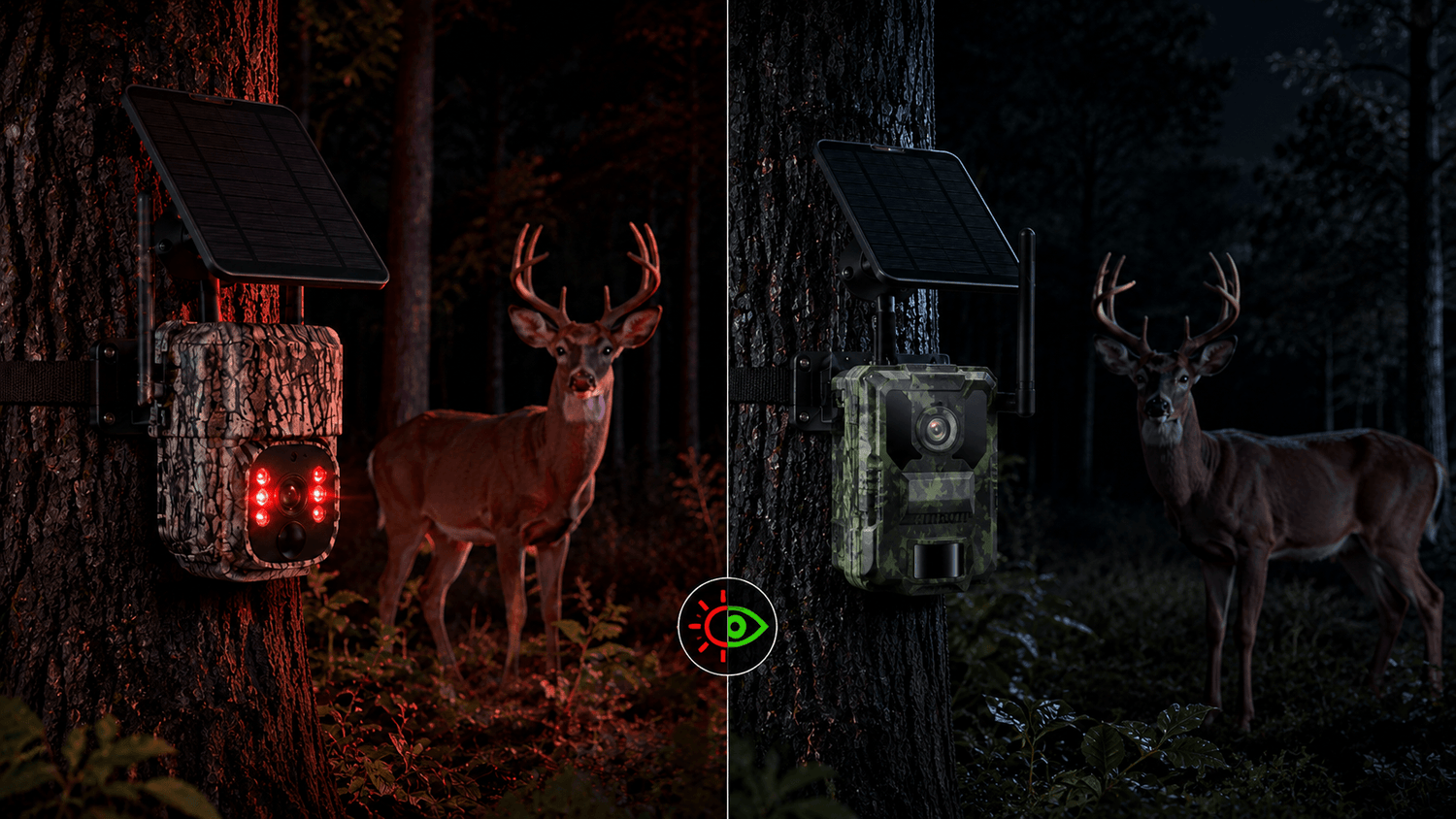
Nachtsicht ist eine der wichtigsten Funktionen moderner Wildkameras, insbesondere für Jäger und Wildbeobachter, die Tieraktivitäten nach Einbruch der Dunkelheit aufzeichnen müssen. Da die meisten Wildtiere nachts aktiv sind, kann das Verständnis der Funktionsweise von Nachtsicht bei Wildkameras Ihnen helfen, die richtige Kamera für Ihre Umgebung auszuwählen.
Es gibt zwei Haupttechnologien, die in Nachtsicht-Wildkameras verwendet werden:
- Infrarot-Nachtsicht (geringes Leuchten)
- Nachtsicht ohne Leuchten (Black Flash / Unsichtbares IR)
Jede hat je nach Art und Ort der Kameranutzung unterschiedliche Vorteile.
In diesem Leitfaden beleuchten wir beide Technologien und erklären, warum Modelle wie die Voopeak TC36 No Glow Wildkamera ideal für die unauffällige Wildbeobachtung sind.
Was ist Nachtsicht bei Wildkameras?
Nachtsicht bei Wildkameras bezeichnet die Fähigkeit einer Kamera, Bilder oder Videos in Umgebungen mit wenig Licht oder völliger Dunkelheit mithilfe von Infrarot-Technologie aufzunehmen.
Im Gegensatz zu normalen Kameras, die auf sichtbares Licht angewiesen sind, verwenden Wildkameras Infrarot-LEDs, um die Szene zu beleuchten, ohne Wildtiere zu stören.
Dies ermöglicht Ihnen die Überwachung von:
- Wildwechsel
- Jagdgebieten
- Wildfütterungsplätzen
- Hofbereichen
- Abgelegenen Grundstücksgrenzen
Wie funktioniert Infrarot-Nachtsicht (Low Glow)?
Infrarot-Nachtsicht verwendet 850nm IR-LEDs, die bei Aktivierung ein schwaches rotes Leuchten abgeben.
Hauptmerkmale:
- Leicht sichtbares rotes Leuchten
- Längere Beleuchtungsreichweite
- Niedrigere Kosten
- Gute Bildhelligkeit bei Nacht
Bei Bewegungserkennung schalten sich die IR-LEDs ein und beleuchten die Szene für den Kamerasensor.
Vorteile:
- Stärkere Nachtbildhelligkeit
- Längere Erfassungsreichweite
- Günstigere Option
Nachteile:
- Sichtbares rotes Leuchten kann von Tieren wahrgenommen werden
- Kann empfindliche Wildtiere leicht stören
- Leichter für Menschen, den Kamerastandort zu erkennen
Infrarotkameras sind ideal für die allgemeine Wildbeobachtung, bei der Tarnung nicht die höchste Priorität hat.

Was ist No Glow (Black Flash) Nachtsicht?
No Glow Wildkameras verwenden 940nm Infrarot-LEDs, die sowohl für Menschen als auch für Tiere völlig unsichtbar sind.
Dies wird auch genannt:
- Black Flash Technologie
- Unsichtbare IR-Nachtsicht
- Tarn-Nachtsicht
Ein gutes Beispiel ist die Voopeak TC36 No Glow Wildkamera, die speziell für die versteckte Wildbeobachtung entwickelt wurde.
Wie die No Glow Technologie funktioniert
Anstatt sichtbares rotes Licht abzugeben, verwendet die Kamera:
- Unsichtbare Infrarotbeleuchtung
- Hochempfindliche Bildsensoren
- Low-Light-Verbesserungsverarbeitung
Dies ermöglicht es der Kamera, Wildtiere aufzunehmen, ohne entdeckt zu werden.
Vorteile von No Glow Kameras:
- Völlig unsichtbar bei Nacht
- Ideal für scheues Wild (Hirsche, Füchse, Wildschweine)
- Perfekt für die Sicherheitsüberwachung
- Keine Lichtverschmutzung oder Störung
Einschränkungen:
- Etwas geringere Beleuchtungsreichweite als bei Low Glow
- Teurer aufgrund fortschrittlicher LEDs
- Erfordert bessere Sensorqualität für Klarheit

Infrarot vs. No Glow: Hauptunterschiede
| Merkmal | Infrarot (geringes Leuchten) | No Glow (Black Flash) |
|---|---|---|
| Lichtsichtbarkeit | Sichtbares rotes Leuchten | Völlig unsichtbar |
| Wildtierstörung | Mittel | Sehr gering |
| Nachtbildhelligkeit | Höher | Etwas geringer |
| Tarnstufe | Niedrig | Sehr hoch |
| Kosten | Niedriger | Höher |
| Beste Verwendung | Allgemeine Überwachung | Getarnte Wildbeobachtung + Sicherheit |
Warum No Glow Kameras wie die Voopeak TC36 wichtig sind
Die Voopeak TC36 No Glow Wildkamera wurde für Benutzer entwickelt, die maximale Tarnung in nächtlichen Umgebungen benötigen.
Sie ist besonders nützlich für:
- Hirschjagd-Anlagen
- Wildtierforschung
- Hofsicherheit
- Grundstücksüberwachung in abgelegenen Gebieten
Da sie die Black Flash Technologie verwendet, können Tiere die Kamera überhaupt nicht erkennen – selbst aus nächster Nähe.
Dies verbessert erheblich:
- Die Erfassung des natürlichen Tierverhaltens
- Die Jagderfolgsquoten
- Die Sicherheitseffektivität
Nachtsichtleistung in der Praxis
In realen Außenumgebungen hängt die Nachtsichtleistung ab von:
1. Entfernung
Infrarotkameras leisten in der Regel auf größere Entfernungen besser, während No Glow Kameras Tarnung vor extremer Entfernung priorisieren.
2. Wetterbedingungen
Nebel, Regen und Feuchtigkeit können die IR-Klarheit beeinträchtigen, insbesondere in dichten Wäldern.
3. Tierverhalten
Einige Tiere reagieren empfindlich auf sichtbares IR-Licht, was das Bewegungsmuster beeinflussen kann.
No Glow Kameras eliminieren dieses Problem vollständig.
4. Platzierungswinkel
Die korrekte Positionierung verbessert die Nachtbildklarheit und reduziert Bewegungsunschärfen.
Wann sollten Sie Infrarot oder No Glow wählen?
Wählen Sie Infrarot (Low Glow), wenn:
- Sie eine längere Nachtreichweite benötigen
- Das Budget Priorität hat
- Wildtierstörung nicht kritisch ist
- Sie offene Felder überwachen
Wählen Sie No Glow (TC36), wenn:
- Tarnung wichtig ist
- Sie Hirsche oder scheues Wild überwachen
- Sie eine versteckte Sicherheitsüberwachung benötigen
- Sie nachts keinerlei sichtbares Licht wünschen
Warum Nachtsicht bei Wildkameras wichtig ist
Ohne Nachtsicht würde die meiste Wildtieraktivität völlig übersehen werden.
Nachtsicht ermöglicht:
- 24-Stunden-Wildtierverfolgung (ereignisbasiert, bewegungsaktiviert)
- Bessere Jagdstrategieplanung
- Grundstückssicherheit nach Einbruch der Dunkelheit
- Verhaltensanalyse von Tieren
Für Jäger und Outdoor-Nutzer ist Nachtsicht keine Option, sondern unerlässlich.
Warum Voopeak Wildkameras herausragen
Voopeak Wildkameras sind konzipiert für:
- Hochempfindliche PIR-Bewegungserkennung
- Fortschrittliche Infrarot-Nachtsichtsysteme
- Niedrigen Stromverbrauch
- Zuverlässige Outdoor-Haltbarkeit
- Flexible Installation in abgelegenen Umgebungen
Modelle wie die TC36 No Glow sind besonders stark in Tarnszenarien, während andere Voopeak-Modelle eine langreichweitige Infrarotleistung bieten.
Häufig gestellte Fragen
Was ist der Unterschied zwischen Infrarot- und No Glow-Wildkameras?
Infrarotkameras geben nachts ein schwaches rotes Leuchten ab, während No Glow-Kameras unsichtbares Infrarotlicht verwenden, das von Tieren oder Menschen nicht gesehen werden kann.
Ist No Glow besser für die Hirschjagd?
Ja. No Glow-Kameras wie die Voopeak TC36 sind ideal für die Hirschjagd, da sie das Tierverhalten nicht stören.
Haben No Glow-Kameras eine schlechtere Bildqualität?
Unter bestimmten Bedingungen leicht, aber moderne Sensoren minimieren den Unterschied erheblich.
Können Tiere Infrarot-Wildkameras sehen?
Tiere können das schwache rote Leuchten von Low Glow-Infrarot-LEDs sehen, aber keine No Glow-Kameras (940nm).
Lohnt sich eine No Glow-Wildkamera?
Ja, besonders für die unauffällige Wildbeobachtung, Jagdeinrichtungen und Sicherheitsanwendungen, bei denen Unsichtbarkeit wichtig ist.

Fazit
Die Nachtsichttechnologie von Wildkameras spielt eine entscheidende Rolle bei der genauen Erfassung des Wildtierverhaltens nach Einbruch der Dunkelheit.
Infrarotkameras (mit geringem Leuchten) bieten eine stärkere Helligkeit und größere Reichweite, während No Glow-Kameras wie die Voopeak TC36 unübertroffene Tarnung und Unsichtbarkeit bieten.
Die Wahl zwischen ihnen hängt von Ihrer Priorität ab: Bildhelligkeit vs. vollständige Tarnung.
Für ernsthafte Tierbeobachtungen oder Jagdanwendungen ist die No-Glow-Technologie oft die bevorzugte Wahl, da sie in der Lage ist, das natürliche Verhalten der Tiere ohne Störung zu erfassen.

Hinterlasse einen Kommentar
Diese Website ist durch hCaptcha geschützt und es gelten die allgemeinen Geschäftsbedingungen und Datenschutzbestimmungen von hCaptcha.