

Trail cameras have become an essential tool for hunters, wildlife enthusiasts, landowners, and outdoor photographers. Unlike traditional cameras, a trail camera is designed to stay outdoors for extended periods and automatically capture photos or videos when activity is detected.
But how do trail cameras work?
In simple terms, a trail camera uses a combination of a motion sensor, camera lens, image processor, infrared night vision system, storage, and power source to monitor an area automatically. When an animal or person enters the detection zone, the camera detects movement, wakes up, captures an image or video, and saves the file for later viewing—or sends it directly to your phone if it supports cellular or WiFi connectivity.
In this beginner's guide, we'll explain exactly how trail cameras work and what you need to know before choosing or setting up one.
What Is a Trail Camera?
A trail camera, also called a game camera, wildlife camera, or hunting camera, is a weather-resistant camera designed for remote monitoring.
Instead of requiring someone to press a shutter button, a trail camera can operate automatically for days, weeks, or even months.
Common uses include:
- Deer and wildlife monitoring
- Hunting property scouting
- Wildlife research
- Nature observation
- Farm and property monitoring
- Security and surveillance
- Tracking animal activity
- Capturing nighttime wildlife
Most modern trail cameras are designed to operate outdoors in changing weather conditions and can capture both daytime and nighttime activity.
How Does a Trail Camera Detect Movement?
The first step in understanding how trail cameras work is understanding motion detection.
Most modern trail cameras use a PIR sensor, which stands for Passive Infrared sensor.
A PIR sensor detects changes in infrared radiation, particularly the heat produced by moving objects such as animals or people.
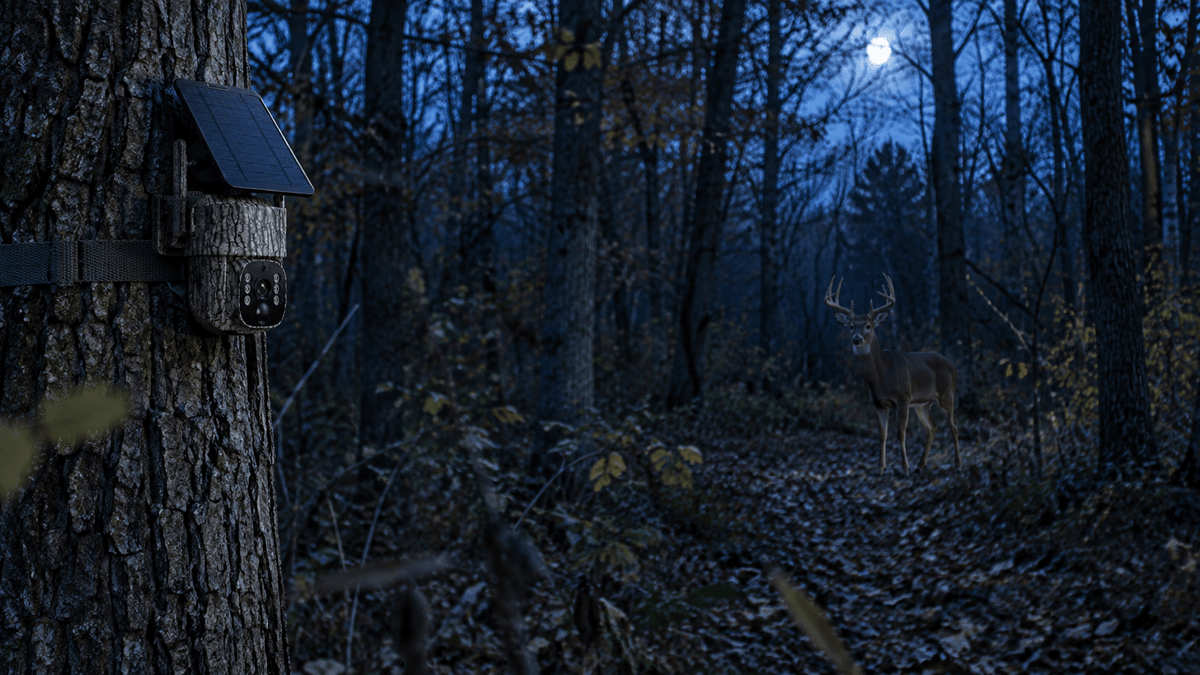
For example, imagine a deer walking across the camera's detection zone.
The deer has a different heat signature from the surrounding trees, grass, and ground. When the deer moves across the detection area, the PIR sensor recognizes a change in infrared energy.
The camera then activates and captures an image or video.
This process generally happens extremely quickly.
What Is PIR Detection?
PIR detection is one of the most important technologies in a trail camera.
A typical detection process looks like this:
Movement → PIR sensor detects activity → Camera wakes up → Image/video captured → File stored or transmitted
The exact detection distance and trigger speed depend on the camera model and environmental conditions.
This is why trail camera placement is so important. If the camera is positioned incorrectly, an animal may move outside the detection zone before the camera triggers.
How Does a Trail Camera Take Pictures?
After detecting movement, the camera's internal processor activates the imaging system.
Depending on the settings, the trail camera may capture:
- Still photos
- Burst photos
- Video
- Photos plus video
- Time-lapse images
Modern trail cameras can also offer high-resolution image sensors, allowing users to capture detailed wildlife photos.
For example, Voopeak trail cameras include models designed for different outdoor applications, from WiFi trail cameras to cellular trail cameras.
The camera's trigger speed is particularly important for wildlife photography.
Trigger speed refers to how quickly the camera can respond after detecting movement.
A faster trigger can increase the chance of capturing an animal before it moves out of the frame.
How Do Trail Cameras Work at Night?
One of the biggest advantages of a trail camera is that it can monitor an area 24 hours a day.
But how does a trail camera take pictures in complete darkness?
The answer is infrared night vision.
Most trail cameras use infrared LEDs to illuminate the scene without relying on visible light.
There are several common types of infrared illumination.
Red Glow Infrared
Traditional infrared LEDs may produce a visible red glow when the camera takes a nighttime image.
Low-Glow Infrared
Low-glow cameras use wavelengths that are much less noticeable to animals while still providing infrared illumination.
No-Glow Infrared
No-glow trail cameras are designed to minimize visible light from the infrared LEDs. They are particularly useful for wildlife monitoring when minimizing disturbance is important.
This makes no-glow trail cameras popular for deer hunting, wildlife observation, and nighttime animal monitoring.

How Does a Trail Camera Store Photos and Videos?
Once a trail camera captures an image or video, it needs somewhere to store the file.
Traditional trail cameras usually save files to a microSD card.
The camera automatically writes each photo or video to the memory card.
Storage capacity depends on the card and camera settings. Higher-resolution images and longer videos require more storage space.
For example, if you configure a trail camera to record long videos every time movement is detected, the storage capacity can fill much faster than if the camera only captures still photos.
For this reason, choosing the right trail camera settings is important.
If you're monitoring wildlife for several weeks, you may want to balance:
- Image resolution
- Video length
- Trigger frequency
- Photo burst settings
- Detection sensitivity
- Storage capacity
How Do Cellular Trail Cameras Work?
Traditional trail cameras require you to physically retrieve the SD card to view the photos.
A cellular trail camera works differently.
Instead of storing photos only for later retrieval, a cellular trail camera can use a mobile network to transmit photos or notifications directly to your smartphone.
The basic process is:
Animal detected → Photo captured → Camera connects to cellular network → Image transmitted → You view it on your phone
This is especially useful when the camera is installed far away from your home.
For example, hunters may place a cellular trail camera deep inside a hunting property and monitor activity without repeatedly visiting the camera location.
Voopeak offers cellular trail camera options designed for remote wildlife monitoring, including 4G models.
However, cellular trail cameras generally require a compatible cellular data plan or SIM service, depending on the model and region.
How Do WiFi Trail Cameras Work?
A WiFi trail camera uses WiFi connectivity differently from a cellular camera.
Many WiFi trail cameras create a direct local wireless connection that allows a smartphone to connect to the camera when nearby.
This can make it easier to:
- Change camera settings
- Preview photos
- Download files
- Adjust shooting modes
- Check the camera without removing the SD card
WiFi trail cameras can be particularly convenient when you regularly visit the camera location.
However, WiFi trail cameras and cellular trail cameras serve different purposes.
If you need remote access from far away, cellular connectivity is generally the more relevant feature.
If you mainly need convenient local access, a WiFi trail camera can be a practical option.

How Do Solar Trail Cameras Work?
Power is another important part of understanding how trail cameras work.
Many traditional trail cameras use replaceable batteries.
However, solar trail cameras combine a rechargeable battery with a solar panel.
During daylight hours, the solar panel converts sunlight into electrical energy. That energy can recharge the camera's battery and help extend operating time.
The basic system works like this:
Sunlight → Solar panel → Battery → Camera
Solar trail cameras can be useful for long-term outdoor monitoring because you don't need to replace batteries as frequently.
They are particularly helpful when a camera is installed in a remote location that is difficult to access regularly.
However, solar performance depends on factors such as:
- Sunlight exposure
- Weather
- Season
- Camera activity
- Panel placement
- Battery capacity
A solar trail camera should ideally be installed where the solar panel receives sufficient sunlight.
What Is a Trail Camera Trigger Time?
Trigger time is another important specification when choosing a trail camera.
It describes how quickly the camera reacts after detecting movement.
A fast trigger can be especially useful for animals that move quickly across the camera's field of view.
However, trigger speed isn't the only factor that determines whether you get a good wildlife photo.
Camera placement, detection range, detection sensitivity, field of view, animal movement direction, and lighting conditions all matter.
For best results, position the camera so that animals are likely to move across the detection zone rather than directly toward or away from the camera.
Where Should You Place a Trail Camera?
Proper placement can make a major difference.
Before installing your camera, look for signs of animal activity such as:
- Deer trails
- Tracks
- Scrapes
- Bedding areas
- Feeding areas
- Water sources
- Game trails
- Natural travel corridors
Avoid pointing the camera directly toward the rising or setting sun whenever possible.
Strong sunlight can cause overexposure and false triggers.
A slight angle across the trail can often provide a better opportunity to capture an animal moving through the detection area.

What Makes a Good Trail Camera?
When choosing a trail camera, don't focus on megapixels alone.
Consider the complete feature set.
1. Detection Range
A longer detection range can help monitor larger areas.
2. Trigger Speed
Fast trigger performance can help capture moving animals before they leave the frame.
3. Night Vision
Infrared night vision determines how effectively the camera can capture nighttime activity.
4. Image and Video Quality
Higher-resolution cameras can provide more detailed photos and videos.
5. Battery Life
Long battery life reduces the need for frequent maintenance.
6. Connectivity
Choose between SD-card, WiFi, and cellular connectivity depending on how you want to access your images.
7. Weather Resistance
Outdoor cameras need to withstand rain, dust, temperature changes, and other environmental conditions.
8. Solar Power
A solar-powered trail camera can reduce battery maintenance for long-term deployments.
Trail Camera vs. Security Camera: What's the Difference?
Although trail cameras and security cameras can both detect movement, they are designed for different environments.
A security camera is generally designed for homes, businesses, driveways, and buildings.
A trail camera is optimized for outdoor environments, wildlife, hunting areas, and locations without traditional power or network infrastructure.
Trail cameras typically prioritize:
- Battery efficiency
- PIR motion detection
- Infrared night vision
- Weather resistance
- Compact installation
- Long-term outdoor operation
This makes them particularly suitable for monitoring wildlife and remote outdoor locations.
How Long Can a Trail Camera Run?
There is no single answer because battery life depends on usage.
A camera that captures hundreds of photos every day will consume more power than one that only triggers occasionally.
Battery life can be affected by:
- Number of triggers
- Video recording frequency
- Video length
- Nighttime recording
- Temperature
- Cellular transmission
- WiFi usage
- Battery type
- Solar charging conditions
If you're setting up a trail camera for long-term monitoring, use energy-efficient settings and check the battery level periodically.
Final Thoughts: How Do Trail Cameras Work?
So, how do trail cameras work?
The process is actually quite simple:
1. The PIR sensor detects movement.
2. The camera wakes up.
3. The camera captures a photo or video.
4. Infrared LEDs provide illumination at night.
5. The file is saved to an SD card or internal storage.
6. WiFi or cellular models can transmit images to a connected device.
7. Battery or solar power keeps the camera operating outdoors.
Modern trail cameras have made wildlife monitoring much easier than it used to be. Whether you're scouting deer, studying wildlife, monitoring a remote property, or simply curious about what happens in your backyard at night, the right trail camera can provide valuable information without requiring you to stay there 24/7.
For beginners, the most important things to consider are motion detection, trigger speed, night vision, image quality, battery life, connectivity, weather resistance, and camera placement.
Voopeak offers different types of trail cameras, including WiFi trail cameras, cellular trail cameras, solar trail cameras, and no-glow trail cameras, allowing you to choose a setup based on how and where you plan to monitor.
The better you understand how trail cameras work, the easier it becomes to choose the right camera and get useful images from your outdoor monitoring setup.

Leave a comment
This site is protected by hCaptcha and the hCaptcha Privacy Policy and Terms of Service apply.