
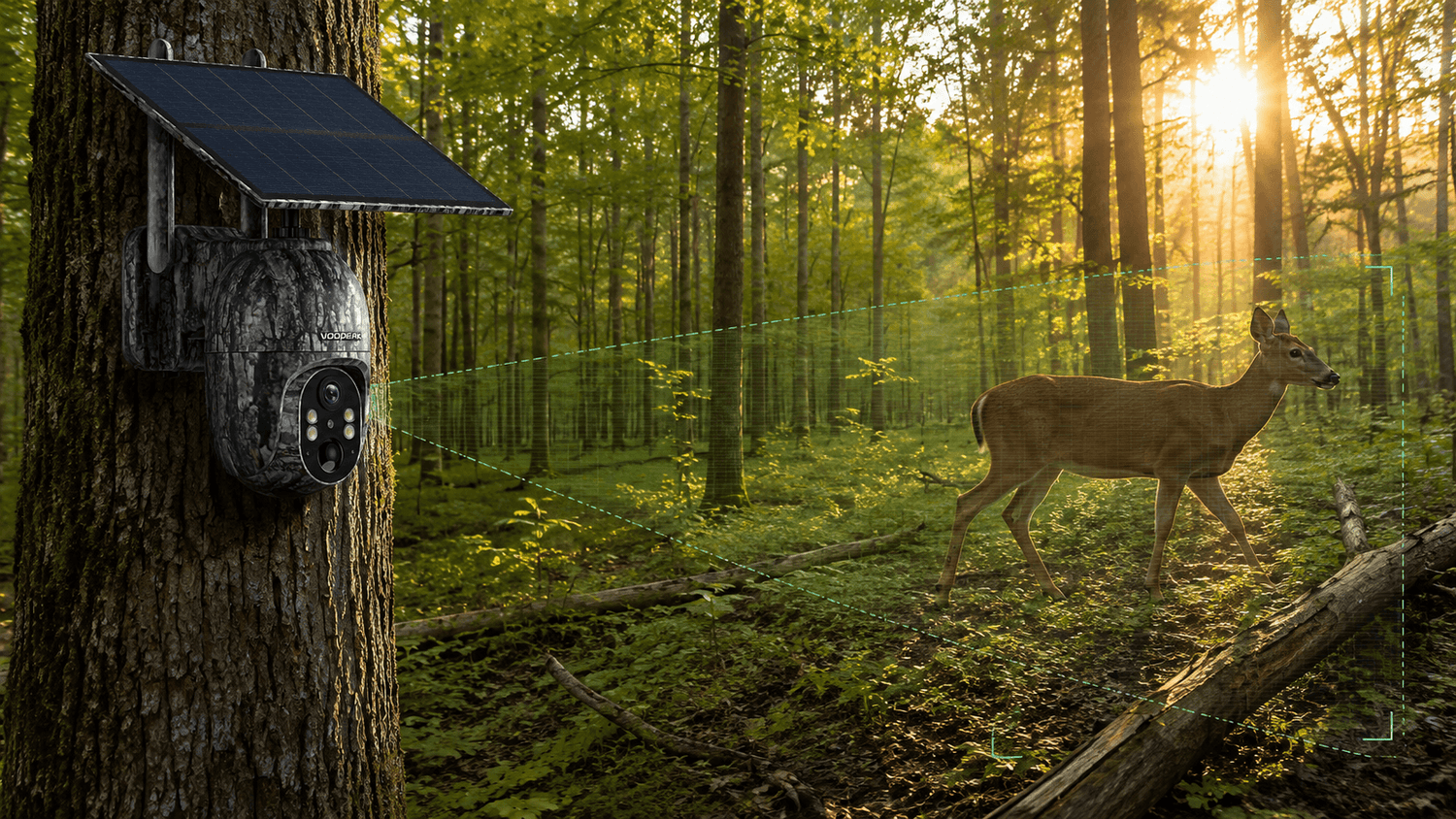
Trail cameras have become one of the most valuable tools for hunters, wildlife enthusiasts, researchers, and landowners. Whether you're monitoring deer movement, observing elusive wildlife, or protecting remote property, a trail camera allows you to capture activity automatically—without being physically present.
But have you ever wondered how trail cameras actually know when to take a picture?
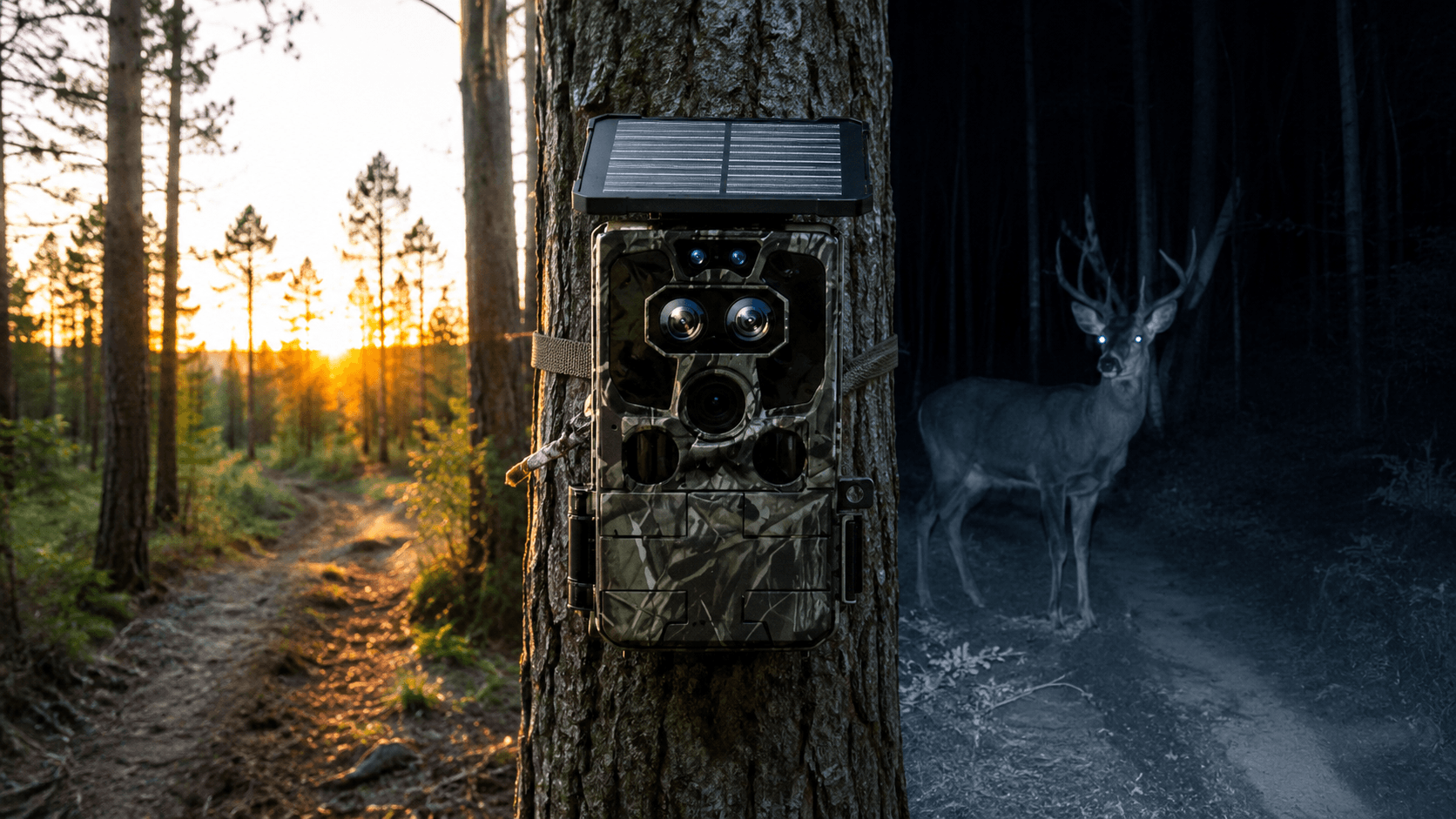
The answer lies in a sophisticated combination of Passive Infrared (PIR) motion sensors, intelligent image processing, trigger speed, and optimized detection zones. Modern models like the Voopeak TC27 4G LTE Solar Trail Camera combine these technologies with real-time cellular connectivity, making wildlife monitoring easier than ever.
In this guide, we'll explain exactly how trail cameras work, how motion detection functions, and what factors affect their performance.
What Is a Trail Camera?
A trail camera, also known as a game camera or wildlife camera, is an outdoor camera designed to operate autonomously for extended periods. Instead of recording continuously, it remains in an ultra-low-power standby mode until movement is detected.
Modern trail cameras are commonly used for:
- Deer scouting
- Wildlife monitoring
- Hunting preparation
- Property surveillance
- Farm security
- Research projects
- Outdoor conservation
Unlike standard security cameras, trail cameras are built for harsh weather, long battery life, camouflage, and remote deployment.
The Core Technology: PIR Motion Detection
The heart of every trail camera is the Passive Infrared (PIR) sensor.
Unlike a regular motion sensor that detects movement visually, a PIR sensor detects changes in infrared energy (heat) emitted by animals, people, or vehicles.
When a warm object moves across the sensor's detection zone, the camera immediately wakes from standby mode and prepares to capture an image or video.
This process happens in fractions of a second.
How PIR Sensors Work
The PIR sensor continuously monitors the surrounding temperature.
When there is:
- Movement
- A noticeable temperature difference
- Motion across the detection area
the sensor sends a signal to the camera processor.
The camera then:
- Wakes instantly
- Focuses exposure settings
- Captures the image
- Saves it to the SD card
- (On cellular models) uploads it through the mobile network
This efficient design dramatically extends battery life because the camera isn't recording continuously.

Why Motion Must Cross the Sensor
One common misconception is that any movement triggers the camera.
Actually, PIR sensors work best when an animal moves across the camera's field of view rather than directly toward it.
Crossing movement creates a larger change in infrared energy, making detection faster and more reliable.
That's why experienced hunters often position trail cameras along game trails rather than facing directly down them.
Detection Range vs Camera View Angle
Many people confuse these two concepts.
Detection Range
This is how far the PIR sensor can detect movement.
Camera Viewing Angle
This is how much of the scene the camera lens can actually record.
The detection area is usually slightly narrower than the camera's viewing angle, ensuring animals are already inside the frame before the shutter activates.
Proper alignment helps prevent missed shots.
Trigger Speed: Why Every Fraction of a Second Matters
Once motion is detected, the camera must react immediately.
This reaction time is known as trigger speed.
A fast trigger speed means:
- Fewer missed animals
- Better action photos
- Sharper moving subjects
- Higher success rates during hunting season
Fast-moving wildlife like deer, coyotes, foxes, and wild boars can cross a trail in seconds.
A slow camera may only capture an empty frame.

Why Detection Distance Matters
Detection distance determines how early the camera notices approaching wildlife.
A larger detection zone offers several advantages:
- Earlier activation
- Better image framing
- More complete animal photos
- Reduced missed opportunities
However, excessive distance isn't always ideal.
Small animals may not generate enough heat to trigger the sensor at maximum range, while nearby vegetation moved by strong winds could occasionally cause unnecessary captures.
Proper placement remains essential.
How Cellular Trail Cameras Improve Monitoring
Traditional trail cameras require users to retrieve the SD card manually.
A 4G cellular trail camera eliminates this limitation.
After capturing an image, it can transmit photos directly to your smartphone.
The Voopeak TC27 combines:
- 4G LTE connectivity
- Solar charging
- Pan & Tilt control
- Live View
- Remote settings
- Instant image transmission
This allows users to monitor wildlife without disturbing the area, making it especially useful during hunting season or long-term wildlife observation.

Factors That Affect Motion Detection Performance
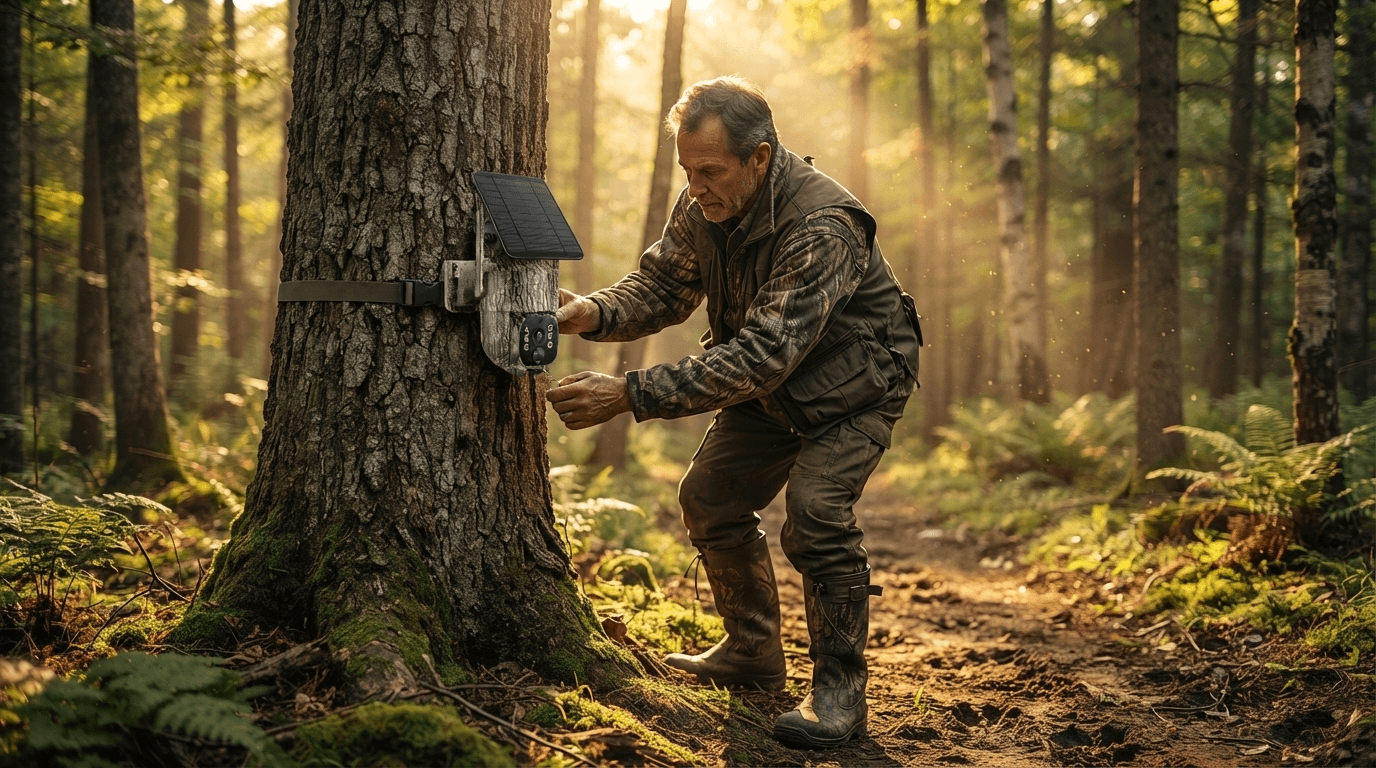
Even the best trail camera depends on proper installation.
Camera Height
Typically 3–5 feet (about 1–1.5 meters) above the ground.
Sunlight
Avoid pointing directly east or west to reduce false triggers caused by rapid heating.
Vegetation
Trim grass and branches within the detection zone.
Animal Speed
Slower-moving wildlife creates more reliable triggers.
Temperature
Smaller temperature differences between animals and the environment can slightly reduce PIR sensitivity during extremely hot weather.
Tips for Better Motion Detection
To maximize capture success:
- Mount the camera securely.
- Face north whenever possible.
- Position it along travel corridors.
- Clear moving vegetation.
- Test the detection area before leaving.
- Choose an appropriate sensitivity level.
- Regularly update firmware if available.
These simple adjustments can dramatically improve image quality and detection accuracy.
Why the Voopeak TC27 Is an Excellent Example
The Voopeak TC27 showcases how modern trail camera technology has evolved.
Its combination of:
- Solar-powered operation
- 4G LTE connectivity
- Live remote viewing
- Pan & Tilt functionality
- Reliable PIR motion detection
- High-quality image capture
makes it suitable for hunting, wildlife research, ranch management, and remote property monitoring.
Instead of repeatedly visiting your camera, you can receive updates wherever cellular coverage is available.

FAQ
How do trail cameras detect motion?
Trail cameras use Passive Infrared (PIR) sensors to detect changes in heat caused by animals or people moving across the detection area.
Do trail cameras record all the time?
No. Most trail cameras remain in standby mode and activate only when motion is detected, helping maximize battery life.
What is the difference between a PIR sensor and a regular motion sensor?
A PIR sensor detects infrared heat rather than visible movement, making it highly efficient for outdoor wildlife monitoring.
Why is my trail camera taking empty pictures?
Common causes include moving branches, sunlight, rapid temperature changes, or small animals leaving the detection zone before the shutter activates.
Is a cellular trail camera better than a standard trail camera?
A cellular trail camera allows images to be transmitted directly to your phone without retrieving the SD card, making it ideal for remote monitoring.
Does the Voopeak TC27 use motion detection?
Yes. The Voopeak TC27 uses an advanced PIR motion detection system combined with 4G LTE connectivity, allowing it to detect wildlife efficiently and send images remotely.
Conclusion
Understanding how trail cameras work helps you choose the right equipment and install it more effectively. From PIR motion sensors and trigger speed to detection range and cellular connectivity, every component plays a role in capturing reliable wildlife images.
Whether you're tracking deer, studying wildlife behavior, or monitoring remote property, selecting a well-designed camera can significantly improve your results. A modern cellular model like the Voopeak TC27 combines intelligent motion detection with remote access, making outdoor monitoring more convenient and efficient than ever before.

Leave a comment
This site is protected by hCaptcha and the hCaptcha Privacy Policy and Terms of Service apply.