
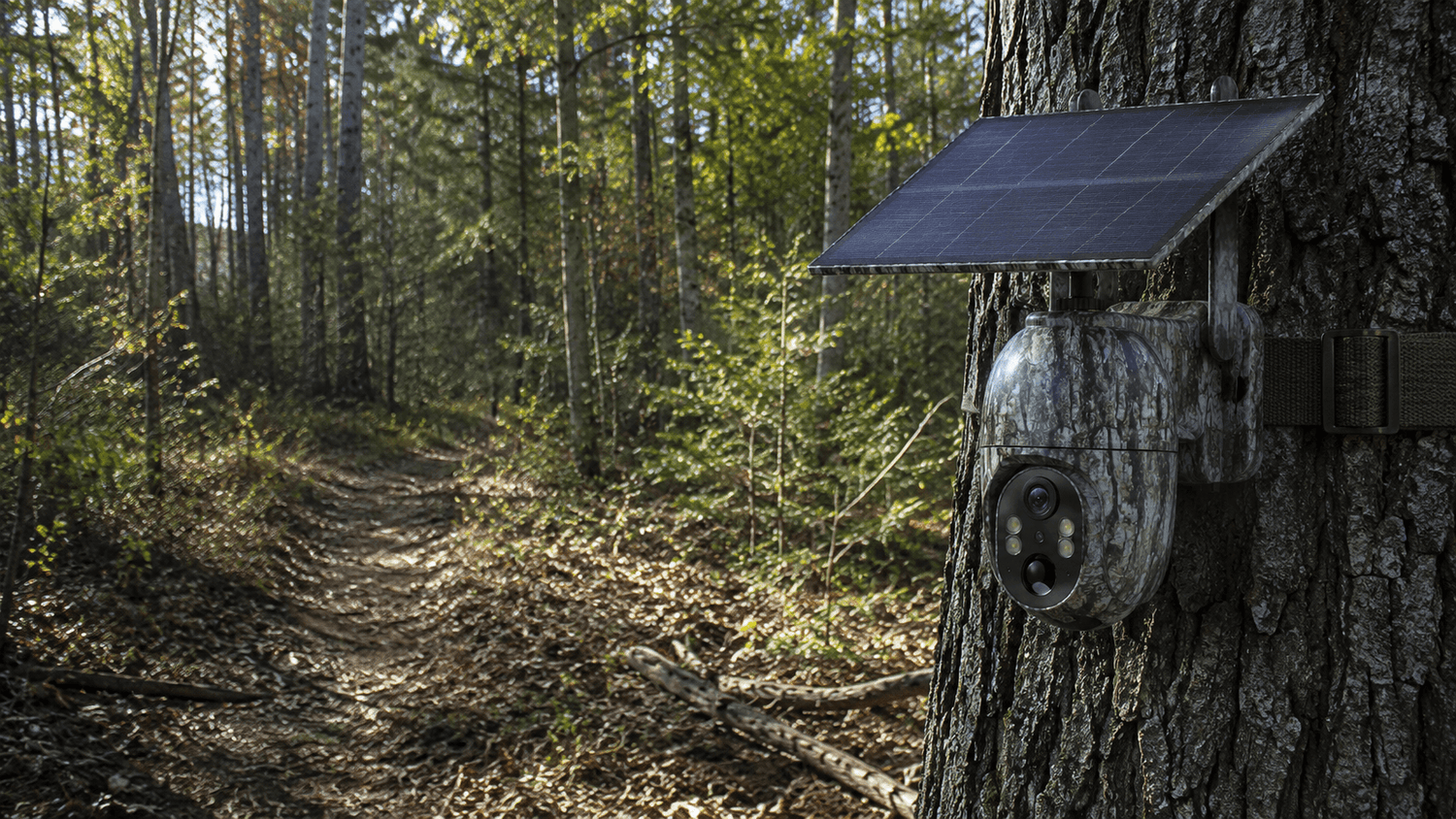
Choosing the right trail camera can make the difference between capturing the wildlife you came for and getting hundreds of empty photos. Whether you're looking for the best trail camera for deer hunting, wildlife photography, property monitoring, or backyard wildlife, there are several important features to consider before you buy.
Today's trail cameras range from simple SD-card models to advanced 4G cellular trail cameras with solar power, remote access, live view, PTZ control, and high-resolution video. With so many options available, the most expensive camera isn't necessarily the best choice.
The key is matching the camera's features to how and where you plan to use it.
In this trail camera buying guide, we'll explain 12 things to know before buying a trail camera, including image quality, trigger speed, detection range, night vision, battery life, cellular connectivity, solar power, storage, weather resistance, and ease of use.
Quick Answer: What Should You Look for in a Trail Camera?
If you don't have time to compare dozens of specifications, start with these seven features:
- Fast trigger speed for moving wildlife
- Reliable motion detection and suitable detection range
- High-quality daytime and nighttime images
- Good infrared night vision
- Long battery life or solar charging
- Cellular connectivity if you need remote monitoring
- Weather-resistant construction for outdoor use
For remote locations, a 4G cellular trail camera with solar power can significantly reduce the number of trips needed to check the camera. For areas where you can easily access the camera, a WiFi or traditional SD-card trail camera may be more practical.
The best trail camera is ultimately the one that fits your environment, wildlife, monitoring distance, and budget.
1. Decide What You Will Use the Trail Camera For
Before comparing trail camera specifications, determine your primary purpose.
Are you buying a camera for:
- Deer hunting and scouting
- Wildlife photography
- Backyard wildlife observation
- Farm or ranch monitoring
- Property security
- Remote outdoor monitoring
- Research and animal behavior observation
Different applications require different features.
For example, a hunter monitoring a deer trail may prioritize fast trigger speed, detection range, and night vision. A wildlife photographer may care more about image quality, color reproduction, and video resolution.
Someone monitoring a remote hunting property, meanwhile, may benefit more from a cellular trail camera with solar power and remote access.
Start with your use case before you start comparing megapixels.
2. Choose Between Cellular, WiFi, and Traditional Trail Cameras
One of the biggest decisions is how you want to access your photos and videos.
Traditional Trail Cameras
Traditional trail cameras generally save images and videos to an SD card. You physically visit the camera to retrieve the files.
They're a good choice when:
- The camera is close to your home
- You don't need remote access
- You want a simple setup
- You want to avoid cellular data costs
WiFi Trail Cameras
A WiFi trail camera can make it easier to connect your phone directly to the camera when you're nearby.
For example, the Voopeak TC22 combines WiFi connectivity with 4K video, high-resolution still images, dual-lens imaging, and solar power, making it suitable for wildlife observation and hunting applications.
Cellular Trail Cameras
A 4G LTE cellular trail camera uses a mobile network to transmit images or other data to your phone or app.
This is especially useful when the camera is installed somewhere difficult to access.
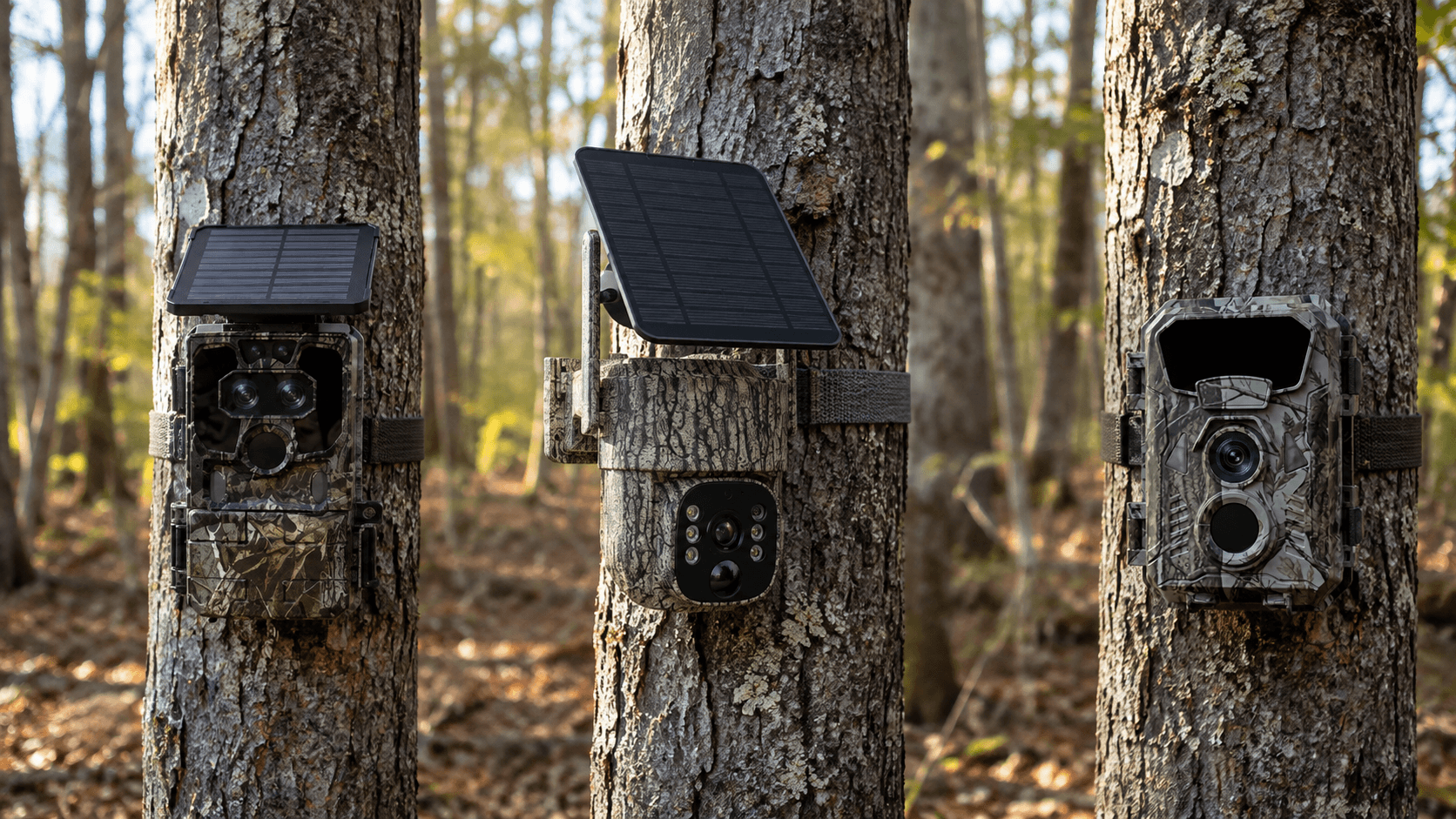
For remote monitoring, models such as the Voopeak TC27 and TC32 combine cellular connectivity with solar-powered outdoor operation. Voopeak's current lineup also includes cellular models designed for live viewing and remote monitoring.
Tip: Before buying a cellular trail camera, always check network coverage in the location where you plan to install it.

3. Don't Choose a Trail Camera Based Only on Megapixels
High megapixel numbers look impressive, but they aren't the only factor determining image quality.
A good wildlife camera needs more than a large number on the specification sheet.
Consider:
- Image sensor quality
- Lens quality
- Image processing
- Exposure control
- Daytime detail
- Nighttime performance
- Video resolution
- Motion blur
A camera advertised with a very high megapixel number may not necessarily produce better real-world images than a camera with a lower advertised resolution.
This is particularly important for wildlife photography, where lighting conditions can change quickly.
Look for examples of real trail camera photos and videos rather than comparing megapixel numbers alone.
4. Check the Trigger Speed
Trigger speed is the amount of time between the camera detecting movement and capturing an image or starting a video.
For wildlife, this matters a lot.
A deer, fox, coyote, or other animal can move through the camera's field of view in only a few seconds. A slow camera may capture the animal partially—or miss it completely.
As a general guideline:
- Under 0.3 seconds: Excellent for fast-moving wildlife
- 0.3–0.5 seconds: Very good for most hunting situations
- 0.5–1 second: Suitable for slower-moving subjects
- Over 1 second: More likely to miss fast-moving animals
Trigger speed should also be considered together with recovery time, which determines how quickly the camera is ready to capture another event.
Fast triggering and quick recovery are especially valuable when multiple animals move through the frame.
5. Look at Detection Range and Field of View
Detection range tells you how far away the camera's motion sensor can detect movement.
A longer detection range isn't automatically better.
For a narrow deer trail, you may want the camera positioned relatively close to the path. For an open field or food plot, a longer detection range can help capture animals approaching from farther away.
Consider:
- Detection distance
- Camera field of view
- Animal size
- Camera mounting height
- Distance to the trail
- Terrain and vegetation
The actual detection distance can vary depending on temperature, animal size, movement direction, vegetation, and environmental conditions.
The goal isn't simply to find the longest detection range.
The goal is to find a detection range that matches your installation location.
6. Pay Attention to Night Vision
Many animals are most active around dawn, dusk, and nighttime, making night vision one of the most important features of a wildlife camera.
Most modern trail cameras use infrared illumination.
There are three common approaches:
Low-Glow IR
Low-glow infrared LEDs may produce a faint visible glow. They can provide strong nighttime illumination while remaining relatively discreet.
No-Glow IR
No-glow trail cameras use infrared illumination designed to be essentially invisible to the human eye and less noticeable to wildlife.
They are particularly popular for hunting and wildlife observation where minimizing visible light is important.
White Flash
White-flash cameras can produce color images at night but are more noticeable and may disturb some animals.
When choosing a trail camera for night photography, don't only look at the advertised night vision distance. Also consider image clarity, exposure, illumination consistency, and motion blur.

7. Consider Solar Power and Battery Life
Battery life can become one of the biggest maintenance problems when a trail camera is installed in a remote location.
A solar trail camera can reduce the frequency of battery replacement or manual charging when the solar panel receives enough sunlight.
Solar power is particularly useful for:
- Long-term wildlife monitoring
- Remote hunting properties
- Farms and ranches
- Property surveillance
- Cellular trail cameras
However, solar performance depends on installation conditions. Shade, seasonal sunlight, weather, panel orientation, and camera activity can all affect charging performance.
For remote installations, a combination of solar charging + built-in rechargeable battery can be a convenient solution.

8. Think About Cellular Data and Remote Monitoring
One of the biggest advantages of a cellular trail camera is that you don't have to physically visit the camera every time you want to check activity.
A cellular wildlife camera can send captured images or videos through a mobile network, depending on the model and service plan.
This is useful when:
- The camera is far from your home
- You are monitoring a hunting property
- You want frequent wildlife updates
- You need remote property monitoring
- You don't want to repeatedly remove the SD card
Some advanced models also support remote viewing or camera control.
For example, Voopeak's cellular lineup includes models with 4G LTE connectivity, solar power, live viewing, and remote monitoring capabilities, depending on the model.
Remember that cellular trail cameras require compatible network coverage and may involve data-plan costs.
9. Check the Weather Resistance
A trail camera lives outdoors.
It may be exposed to:
- Rain
- Snow
- Dust
- Humidity
- Heat
- Freezing temperatures
- Strong wind
- Direct sunlight
A durable, weather-resistant housing is therefore essential.
Look for a trail camera designed specifically for outdoor use and pay attention to its waterproof or weather-resistance rating.
Also consider the mounting system. A camera that is difficult to secure can shift during strong wind, changing the field of view and reducing the quality of your footage.
A rugged housing and reliable mounting system are just as important as camera specifications.
10. Don't Forget Storage Capacity
Trail cameras can generate a surprising amount of data.
A busy deer trail may produce hundreds or even thousands of photos and videos over time.
Before buying, check:
- Maximum supported SD card capacity
- Photo file size
- Video file size
- Burst shooting options
- Recording modes
- Loop recording
- Storage management
If you use video frequently, you'll need considerably more storage than someone who only captures occasional still photos.
For long-term installations, choose a storage solution that minimizes the need for frequent maintenance.
11. Make Sure the Camera Is Easy to Install and Use
A feature-packed trail camera isn't useful if it takes hours to configure.
Before purchasing, consider how easy it is to:
- Insert batteries or charge the camera
- Install an SD card
- Mount the camera
- Adjust the camera angle
- Change detection sensitivity
- Configure photo and video settings
- Connect the camera to your phone
- Check captured images
For cellular and WiFi models, the companion app is also important.
A good mobile app can make it much easier to manage settings and check wildlife activity without repeatedly opening the camera housing.
12. Compare Long-Term Value, Not Just the Price
The cheapest trail camera isn't always the best trail camera.
Instead of comparing only the initial purchase price, consider the total value you receive from the camera.
Ask yourself:
- How reliable is the camera?
- How good is the night vision?
- How long can it operate between maintenance visits?
- Does it support solar charging?
- Do I need cellular connectivity?
- Are there ongoing data costs?
- Is the camera weather resistant?
- Is the mobile app easy to use?
- What type of warranty and customer support is available?
For example, a basic SD-card trail camera may be the best value for a camera mounted behind your house.
For a remote hunting property, however, paying more for a solar-powered cellular trail camera could save considerable time and travel.
The right camera isn't necessarily the one with the most features. It's the one that gives you the features you will actually use.
Which Voopeak Trail Camera Should You Choose?
Voopeak offers several types of trail cameras for different outdoor applications.
| Voopeak Model | Best For | Key Features |
|---|---|---|
| TC22 | Wildlife photography & hunting | 4K video, 60MP images, WiFi, dual lens, solar power |
| TC27 | Remote wildlife monitoring | 4G LTE, solar power, 360° PTZ, live monitoring |
| TC32 | Long-term outdoor deployment | 4G LTE, solar power, PTZ, remote monitoring |
| TC37 | High-resolution wildlife photography | 4K video, 60MP images, WiFi, solar power |
| TC39 | Remote monitoring & security | 4G LTE, dual lens, solar power |
Voopeak's current product selection includes both wireless and cellular trail cameras, allowing users to choose based on connectivity, power requirements, monitoring distance, and intended use.
Best Trail Camera for Wildlife Photography
If image detail is your top priority, consider a high-resolution WiFi trail camera such as the Voopeak TC22 or TC37.
Best Cellular Trail Camera for Remote Monitoring
If you need to check your camera from a distance, a 4G LTE cellular trail camera such as the TC27 or TC32 may be a better fit.
Best Solar Trail Camera
For long-term outdoor deployment, solar-powered models can reduce maintenance and make remote installation more convenient.

Final Trail Camera Buying Checklist
Before you buy a trail camera, ask these 12 questions:
- What will I use the camera for?
- Do I need cellular, WiFi, or SD-card storage?
- Is the image quality good enough for my needs?
- How fast is the trigger speed?
- Is the detection range suitable for my location?
- Does it have reliable night vision?
- Do I need no-glow infrared?
- How long will the battery last?
- Would solar power make sense?
- How much storage do I need?
- Can the camera handle outdoor weather?
- Does the overall cost make sense over several seasons?
If you answer these questions before shopping, you'll have a much better chance of choosing a trail camera that performs well in the real world.
The best trail camera isn't necessarily the one with the highest resolution or the most features. It's the camera that matches your wildlife, your environment, your monitoring goals, and the amount of maintenance you're willing to do.
Whether you're scouting deer, photographing backyard wildlife, monitoring a remote property, or simply curious about what visits your land at night, choosing the right trail camera can turn an ordinary patch of woods into a window into the wild.

Leave a comment
This site is protected by hCaptcha and the hCaptcha Privacy Policy and Terms of Service apply.