
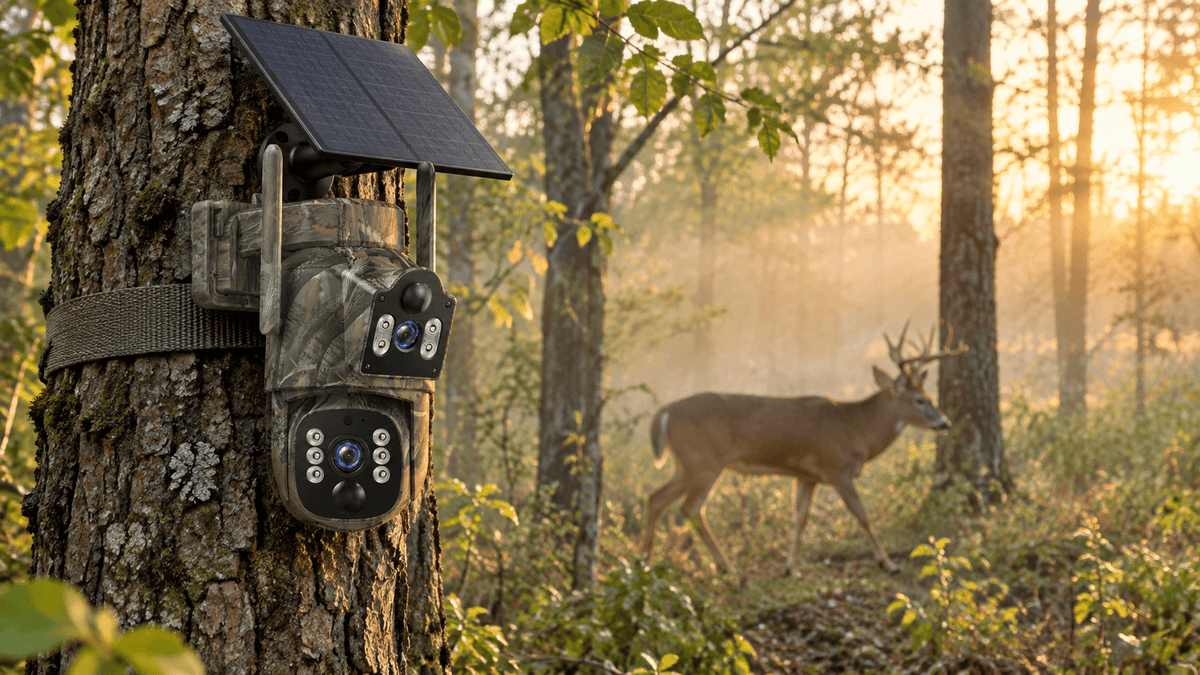
For hunters, landowners, and wildlife enthusiasts, checking a traditional trail camera can mean driving miles into the woods just to remove an SD card. A cellular trail camera changes that completely.
Instead of storing every photo and video locally, a cellular game camera can use a 4G LTE cellular network to transmit images and alerts remotely. This makes it possible to monitor deer, wildlife, hunting properties, farms, and remote outdoor areas without visiting the camera every time.
If you are looking for the best cellular trail camera for remote hunting or wildlife monitoring, there are several features worth considering, including cellular connectivity, image quality, battery life, solar charging, detection performance, night vision, and remote access.
Voopeak cellular trail cameras are designed around these needs, providing practical solutions for hunters and wildlife observers who need reliable monitoring in locations where traditional WiFi cameras are not practical.
What Is a Cellular Trail Camera?
A cellular trail camera is an outdoor wildlife camera that uses a cellular network instead of traditional WiFi to transmit photos and videos.
Unlike a standard trail camera, you do not necessarily need to physically visit the camera to see what it has captured. Once the camera detects movement, it can capture an image or video and send the information through a supported cellular network.
This makes a 4G LTE trail camera particularly useful for:
- Remote hunting properties
- Deer hunting and game monitoring
- Wildlife observation
- Farms and large rural properties
- Forests and wooded areas
- Food plots
- Private hunting land
- Livestock monitoring
- Remote outdoor security
For locations without a nearby WiFi connection, a cellular trail camera with a SIM card and data plan can provide a much more practical remote monitoring solution.

Why Use a Cellular Trail Camera for Remote Hunting?
The biggest advantage of a cellular trail camera is convenience.
Imagine setting up a camera several miles from your home. With a traditional game camera, you may need to drive to the location every few days or weeks to check the SD card.
A cellular hunting camera can reduce unnecessary trips by allowing you to receive captured images remotely.
1. Monitor Wildlife Without Visiting the Camera
Remote access is especially valuable during hunting season. Hunters can monitor animal activity while minimizing human presence around a hunting area.
A trail camera for deer hunting can help identify:
- Deer activity
- Approximate movement times
- Frequently used trails
- Potential feeding areas
- Wildlife patterns
- Other animals entering the property
This information can help hunters better understand what is happening on their property before deciding when and where to hunt.
2. 4G LTE Connectivity for Remote Locations
A 4G LTE trail camera works differently. It connects through a cellular network, making it suitable for locations where conventional wireless internet is unavailable.
Before purchasing any cellular game camera, always check whether the supported cellular bands and carrier coverage are compatible with your area.
3. Reduce Disturbance Around Wildlife
Every visit to a hunting property can potentially create noise, scent, or movement that affects wildlife behavior.
Remote wildlife monitoring allows you to check images without physically approaching the camera as often.
For hunters and wildlife researchers, this can be an important advantage when monitoring animals in areas that are difficult to access.
What Features Should the Best Cellular Trail Camera Have?
Not every cellular trail camera is designed for the same type of outdoor monitoring. Here are some of the most important features to compare.
High-Resolution Photos and 4K Video
Image quality matters when identifying wildlife.
A high-resolution hunting camera can provide clearer details of antlers, body characteristics, markings, and animal behavior.
Voopeak offers cellular and wireless trail camera options with high-resolution imaging designed for outdoor wildlife monitoring. Models such as the Voopeak TC32 combine cellular connectivity with high-resolution wildlife photography, making them suitable for remote monitoring applications.
Solar Power for Extended Outdoor Monitoring
Battery replacement can become inconvenient when a camera is installed in a remote location.
A solar cellular trail camera can use a solar panel to help maintain battery power during outdoor operation. This can reduce the frequency of manual battery changes and make long-term wildlife monitoring easier.
Solar power is particularly useful for cameras installed in open areas where the solar panel can receive sufficient sunlight.
However, solar-powered trail cameras still depend on environmental conditions. Extended periods of shade, cloudy weather, or insufficient sunlight can affect charging performance.

Motion Detection
A good wildlife camera should capture activity when animals enter its detection zone while avoiding unnecessary recordings.
Motion detection helps conserve storage and battery power by activating the camera when movement is detected.
For deer hunting, proper camera placement is just as important as the detection technology itself. Positioning the camera across a trail, near a food plot, or close to a water source can improve the chances of capturing useful wildlife activity.
Night Vision
Wildlife does not only move during daylight.
Many deer and other animals are active around dawn, dusk, and nighttime. Therefore, night vision trail cameras are an important tool for 24-hour wildlife monitoring.
Voopeak trail cameras are available with infrared night vision technologies designed to capture wildlife activity in low-light environments.
When choosing a night vision hunting camera, consider infrared wavelength, image quality, detection range, and whether visible illumination could disturb animals.

Voopeak Cellular Trail Cameras for Remote Wildlife Monitoring
For users who need remote connectivity, the Voopeak TC32 is designed as a cellular wildlife monitoring solution.
The TC32 supports cellular connectivity and can transmit captured wildlife images remotely, making it suitable for locations where WiFi is unavailable.
Its combination of cellular connectivity, high-resolution imaging, motion detection, and outdoor-oriented design makes it a practical option for monitoring hunting properties and wildlife habitats.
Another important advantage is flexibility. Instead of limiting a camera to locations with an existing home WiFi network, cellular connectivity allows hunters to install cameras farther away from buildings and conventional internet connections.
For remote hunting properties, this can significantly expand where a camera can be installed.
Cellular Trail Camera vs. Traditional Trail Camera
The right camera depends on how and where you plan to use it.
| Feature | Cellular Trail Camera | Traditional Trail Camera |
|---|---|---|
| Remote image access | Yes | Usually no |
| Cellular network | Yes | No |
| WiFi required | Usually no | No |
| Physical SD card access | Usually available | Commonly required |
| Remote monitoring | Yes | Limited |
| Best for remote properties | Excellent | Good |
| Data plan | Usually required | No |
| Long-term monitoring | Excellent with proper power | Good |
A traditional game camera can still be an excellent choice when you are comfortable checking the SD card manually.
A cellular trail camera, however, becomes especially useful when the camera is installed far away or when frequent remote monitoring is important.
How to Choose the Best Cellular Trail Camera for Hunting
Before purchasing a cellular hunting camera, consider these questions:
1. Does the camera support your local cellular network?
Cellular compatibility and network coverage should always be checked first.
2. Do you need solar power?
For long-term installations, a solar-powered cellular camera can reduce maintenance.
3. What image quality do you need?
High-resolution photos and 4K video can be useful for identifying animals and documenting wildlife.
4. Do you need nighttime monitoring?
If you want 24/7 wildlife observation, look for a camera with reliable infrared night vision.
5. How frequently will you visit the camera?
If the camera is installed in a remote location, cellular transmission and remote access become much more valuable.
6. What animals are you monitoring?
For deer, consider detection range, trigger speed, night vision, and camera placement.
Best Places to Install a Cellular Trail Camera
Correct installation can make a major difference in the quality of your wildlife footage.
Popular locations include:
- Deer trails
- Food plots
- Water sources
- Mineral sites
- Game crossings
- Forest edges
- Feeding areas
- Property entrances
- Remote fields
Avoid pointing the camera directly toward the rising or setting sun whenever possible. Strong sunlight can cause overexposure and reduce image quality.
For deer hunting, mounting the camera slightly off the trail rather than directly facing the animal's path can help produce better side-angle images.

Final Thoughts
The best cellular trail camera for remote hunting and wildlife monitoring depends on your property, cellular coverage, power requirements, and monitoring goals.
For remote locations without WiFi, a 4G LTE cellular trail camera provides the major advantage of remote image transmission. Add solar charging, high-resolution photography, motion detection, and night vision, and the result can be a powerful tool for long-term wildlife monitoring.
Voopeak cellular trail cameras are designed to provide hunters and outdoor enthusiasts with a convenient way to monitor wildlife remotely while reducing unnecessary trips into the field.
Whether you are tracking deer, observing wildlife behavior, monitoring a hunting property, or simply documenting animals in their natural habitat, choosing the right cellular trail camera can make remote monitoring significantly easier.


Hinterlasse einen Kommentar
Diese Website ist durch hCaptcha geschützt und es gelten die allgemeinen Geschäftsbedingungen und Datenschutzbestimmungen von hCaptcha.