
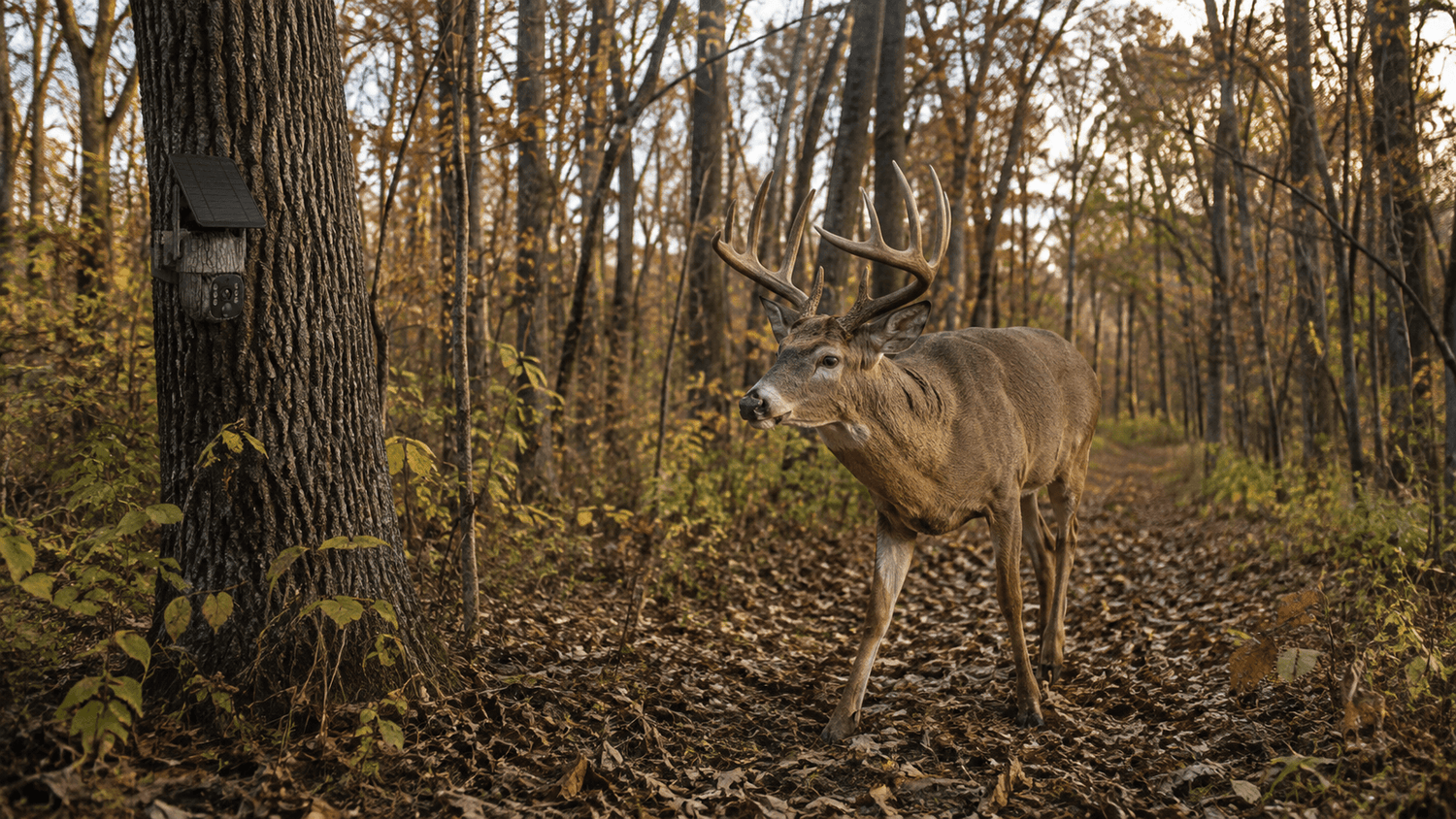
Choosing the best trail camera for deer hunting is about much more than buying the camera with the highest megapixel number or the longest advertised detection range. For serious deer hunters, a trail camera is a scouting tool. It can help you understand deer movement, identify individual bucks, monitor feeding areas, check trails and scrapes, and make better decisions before you ever enter the hunting area.
Today, hunters can choose from traditional game cameras, WiFi trail cameras, cellular trail cameras, solar-powered trail cameras, and advanced models with AI detection and remote monitoring. With so many options available, understanding which features actually matter can save you money—and help you collect better information throughout the hunting season.
If you're looking for the best trail camera for deer hunting, here are the key features you should consider before buying.
What Makes a Good Deer Hunting Trail Camera?
The best deer hunting camera should provide a balance of image quality, detection performance, battery life, night vision, durability, connectivity, and ease of use.
A camera with impressive specifications is not necessarily the best choice if it has poor battery life, unreliable connectivity, slow triggering, or difficult-to-use software.
For most hunters, the most important factors are:
- Fast trigger speed
- Reliable motion detection
- Clear daytime and nighttime images
- Good detection range
- Long battery life
- Solar charging for long-term deployments
- Cellular or WiFi connectivity when remote access is needed
- Weather-resistant construction
- Easy setup and mobile app access
Modern cellular trail cameras have become particularly useful because they can send captured images to a smartphone without requiring the hunter to physically visit the camera. This can reduce unnecessary trips into hunting areas and make remote scouting considerably easier.
1. Image Quality Matters When Scouting Deer
One of the first things hunters look at when comparing trail cameras is image resolution.
A high-resolution trail camera can make it easier to identify important details such as antler characteristics, body size, distinguishing markings, and the difference between individual deer.
However, don't choose a trail camera based only on the megapixel number printed on the box.
What matters is the overall image quality produced by the sensor, lens, image processing, infrared system, and camera settings.
For deer hunting, a good camera should produce usable images in both bright daylight and low-light conditions. Clear images can help hunters determine whether a deer is a mature buck, a young buck, or a doe and can provide valuable information about when and where deer are moving.
The Voopeak TC22 and TC37, for example, are designed around high-resolution wildlife imaging, with both models offering 4K video and up to 60MP still images. The TC22 also uses a dual-lens design, while the TC37 focuses on high-resolution WiFi trail-camera performance.
2. Trigger Speed and Detection Range
A deer may only remain inside a camera's detection zone for a few seconds.
That's why trail camera trigger speed and PIR detection performance are important.
A slow camera may capture a deer after it has already passed through the center of the frame—or miss the animal entirely.
When positioning a camera along a deer trail, crossing, funnel, scrape, or food plot, hunters should consider the direction deer are traveling. Positioning the camera so animals move across the detection zone can help increase the opportunity for the PIR sensor to detect movement.
Detection range is equally important.
A longer detection range can be useful for open fields, large food plots, wide trails, and other areas where deer may approach from a distance. However, detection range should always be considered together with image quality and real-world environmental conditions.
Trees, vegetation, temperature, terrain, and camera angle can all influence how effectively a trail camera detects animals.
3. Night Vision Is Essential for Deer Hunting
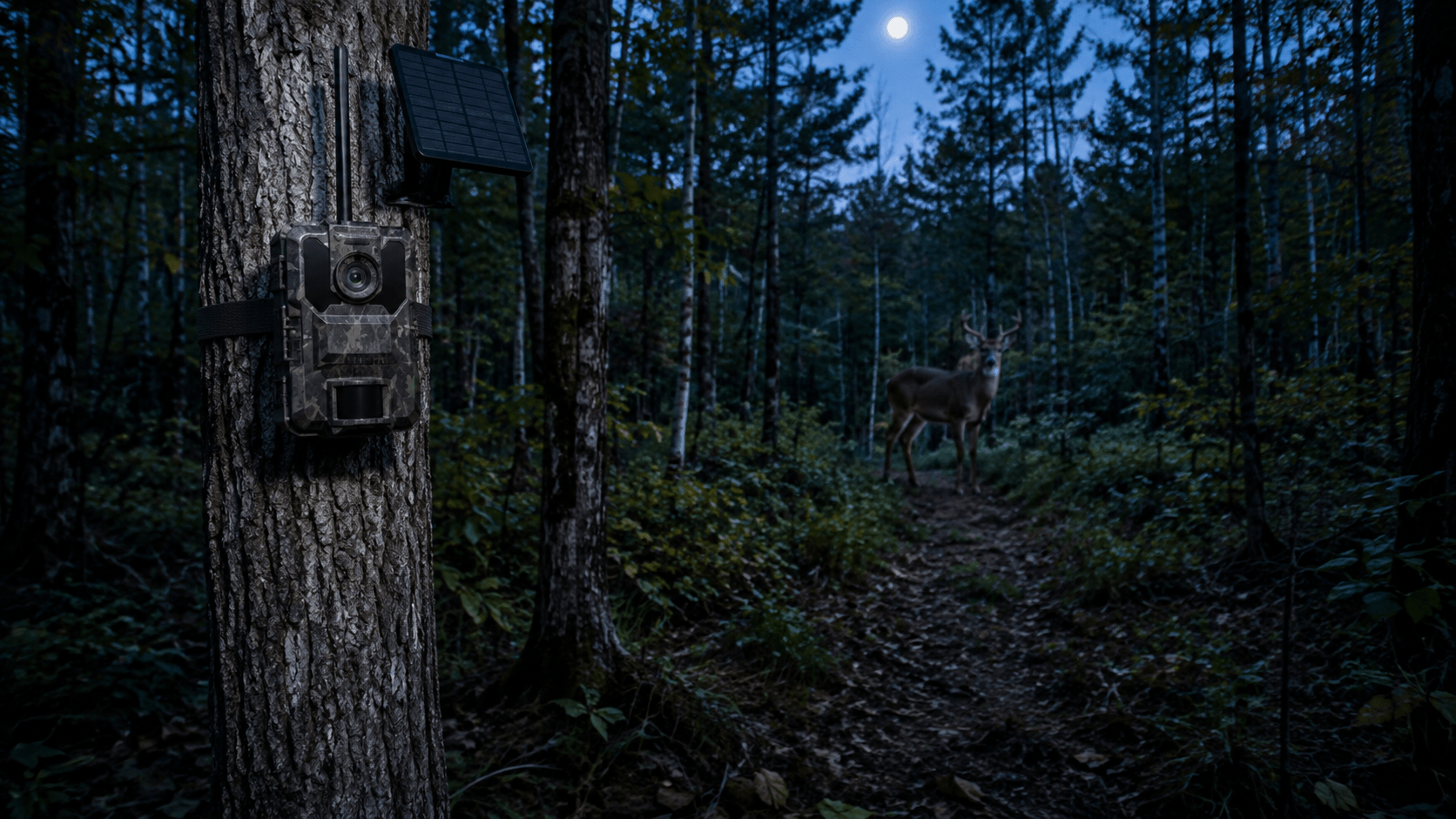
Deer are often active during low-light periods, especially around dawn, dusk, and nighttime.
That makes night vision trail cameras an essential tool for serious deer scouting.
A quality infrared system should capture recognizable images without producing excessive blur. Hunters should also consider whether they want standard infrared, low-glow infrared, or no-glow infrared.
For hunters concerned about minimizing visible illumination, low-glow or no-glow systems can be particularly attractive.
Nighttime image quality is especially important when scouting mature bucks because many older deer may move primarily under low-light conditions.
When comparing the best trail cameras for deer, don't evaluate nighttime performance from specifications alone. Look for real-world nighttime sample images whenever possible.

4. Cellular vs. WiFi Trail Cameras: Which Is Better?
One of the biggest decisions when buying a modern hunting camera is whether you need cellular connectivity.
Cellular Trail Cameras
A cellular trail camera uses a mobile network to transmit images from the camera to an app or cloud platform.
This is ideal for hunters who want to monitor cameras located far from their home or hunting cabin.
With a 4G LTE trail camera, you can potentially receive wildlife images remotely instead of walking into the woods to retrieve an SD card.
This is particularly useful when you want to monitor:
- Remote hunting properties
- Food plots
- Deer trails
- Scrapes
- Large farms
- Wildlife corridors
- Hunting leases
- Cabins and remote properties
Voopeak's TC27 and TC32 are examples of solar-powered 4G cellular trail cameras designed for remote monitoring, while the TC39 adds a dual-lens configuration for hunters who want cellular connectivity and broader monitoring flexibility.
WiFi Trail Cameras
A WiFi trail camera is a different solution.
WiFi models are useful when you want convenient local wireless access without paying for a cellular data plan. They can be particularly practical for hunters who regularly visit their property and want to connect directly to the camera using a smartphone.
The Voopeak TC22 and TC37 are examples of WiFi trail cameras designed for hunting and wildlife monitoring.
So, which is better?
Choose cellular if remote monitoring is your priority. Choose WiFi if you want convenient local access without a cellular subscription.

5. Solar Power Can Make Long-Term Scouting Easier
Battery life is another major consideration when selecting a deer trail camera.
A camera that requires frequent battery changes can become inconvenient, especially when installed in a remote location.
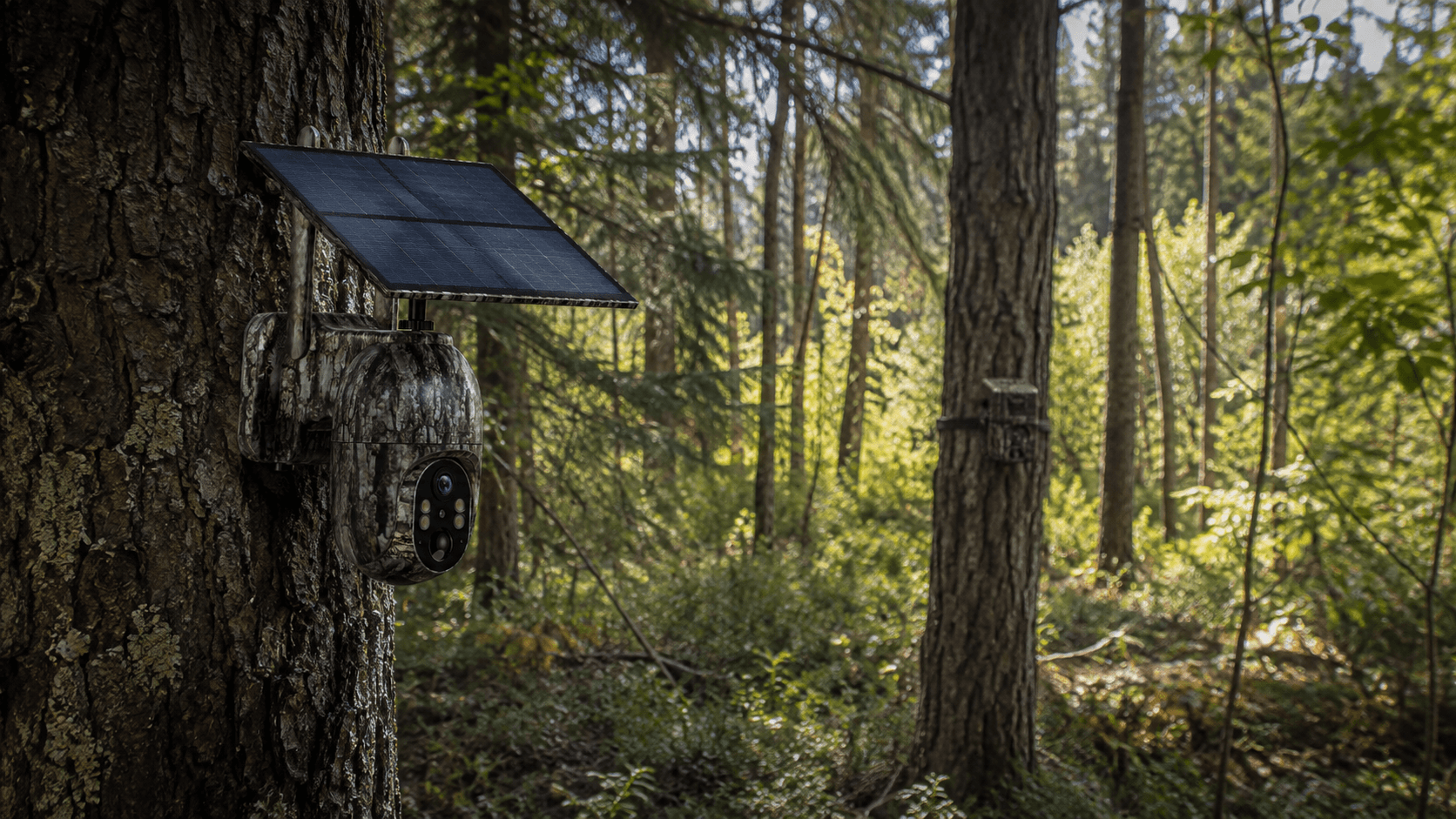
Solar-powered trail cameras can reduce maintenance by using sunlight to recharge the internal battery.
For long-term deer scouting, solar power can be particularly useful when the camera is installed in an open location with sufficient sunlight.
However, solar performance depends on environmental conditions. Heavy shade, prolonged cloudy weather, and seasonal changes can affect charging. For this reason, hunters should still consider the camera's internal battery capacity and overall power management.
6. Durability Matters in the Woods
A deer hunting camera spends much of its life outdoors.
Rain, snow, dust, heat, freezing temperatures, insects, branches, and wildlife can all put stress on the camera.
A good outdoor trail camera should therefore be designed for outdoor conditions and have a weather-resistant housing.
Placement also matters.
Mounting the camera securely to a tree and positioning it away from direct hazards can help protect the camera while improving the quality of the images.
Before purchasing, consider how long you expect the camera to remain in the field and whether you will be checking it every few days or leaving it for several weeks.
7. Where Should You Put a Trail Camera for Deer?
Even the best trail camera for deer hunting cannot produce useful scouting information if it is installed in the wrong location.
Popular deer camera locations include:
- Active deer trails
- Scrapes
- Food plots
- Field edges
- Water sources
- Bedding-area entrances
- Funnels
- Travel corridors
- Fence crossings
- Pinch points
Try to avoid pointing the camera directly toward the sunrise or sunset because strong backlighting can reduce image quality.
It is also important to consider the direction of travel. If possible, position the camera so deer move across the detection zone instead of directly toward the camera.
This can increase the amount of time the animal remains within the camera's field of view.
Most importantly, avoid excessive disturbance around your camera location. One major advantage of remote cellular monitoring is that you can review images without physically visiting the camera every time an animal is detected. Cellular trail cameras are increasingly used for exactly this type of low-disturbance remote scouting.

8. What Is the Best Voopeak Trail Camera for Deer Hunting?
There isn't one trail camera that is perfect for every hunter.
The best Voopeak camera depends on how and where you hunt.
Voopeak TC37 — Best for High-Resolution WiFi Scouting
If your priority is high-resolution wildlife photography, 4K video, WiFi connectivity, and solar power, the Voopeak TC37 is a strong option.
It combines 60MP still images, 4K video, solar charging, and WiFi connectivity in a hunting-focused design.
It is a good choice for hunters who regularly visit their hunting property and want detailed images without necessarily needing cellular service.
Voopeak TC22 — Best for Detailed Wildlife Images
The Voopeak TC22 is another excellent option for hunters who prioritize image quality.
It combines 4K video, 60MP still images, WiFi connectivity, solar power, and a dual-lens configuration.
Its high-resolution imaging makes it suitable for deer scouting, wildlife observation, and outdoor photography.
Voopeak TC27 — Best for Remote 4G Monitoring
For hunters who want to monitor a remote hunting property from their phone, a 4G LTE trail camera may be the better choice.
The Voopeak TC27 combines 4G cellular connectivity with solar power and remote monitoring capabilities. Its PTZ design also provides 360° rotation, making it useful when a wider monitoring area is important.
Voopeak TC32 — Best for Long-Term Cellular Deployment
The Voopeak TC32 is another solar-powered cellular option designed for long-term outdoor monitoring.
It combines 4G LTE connectivity, solar power, remote viewing, and PTZ functionality, making it suitable for hunters who want to monitor larger or more remote areas without regularly visiting the camera.
Best Trail Camera for Deer Hunting: Quick Comparison
| Voopeak Model | Best For | Connectivity | Power | Key Features |
|---|---|---|---|---|
| TC37 | High-resolution deer scouting | WiFi | Solar | 60MP, 4K video |
| TC22 | Wildlife photography | WiFi | Solar | 60MP, 4K, dual lens |
| TC27 | Remote hunting properties | 4G LTE | Solar | PTZ, remote monitoring |
| TC32 | Long-term cellular scouting | 4G LTE | Solar | PTZ, live view |
| TC39 | Remote monitoring | 4G LTE | Solar | Dual lens |

Final Thoughts: How to Choose the Best Deer Hunting Camera
The best trail camera for deer hunting isn't necessarily the camera with the biggest specifications.
Start with your hunting style.
If you need remote access from miles away, choose a cellular trail camera. If you mainly visit your property and want easy local access, a WiFi trail camera may be more practical.
If you plan to leave your camera in the field for weeks or months, consider a solar-powered trail camera. If identifying deer and studying antlers is your priority, pay close attention to real-world image quality and nighttime performance.
For hunters looking for a modern combination of high-resolution imaging, solar power, wireless connectivity, and outdoor durability, Voopeak offers several options designed around different scouting situations.
The right trail camera won't replace good hunting knowledge—but it can give you better information before you step into the woods.
And when it comes to deer hunting, better information can lead to better decisions.
Ready to improve your deer scouting? Explore Voopeak's trail cameras and choose the model that matches your hunting property, monitoring needs, and scouting strategy.

Hinterlasse einen Kommentar
Diese Website ist durch hCaptcha geschützt und es gelten die allgemeinen Geschäftsbedingungen und Datenschutzbestimmungen von hCaptcha.