
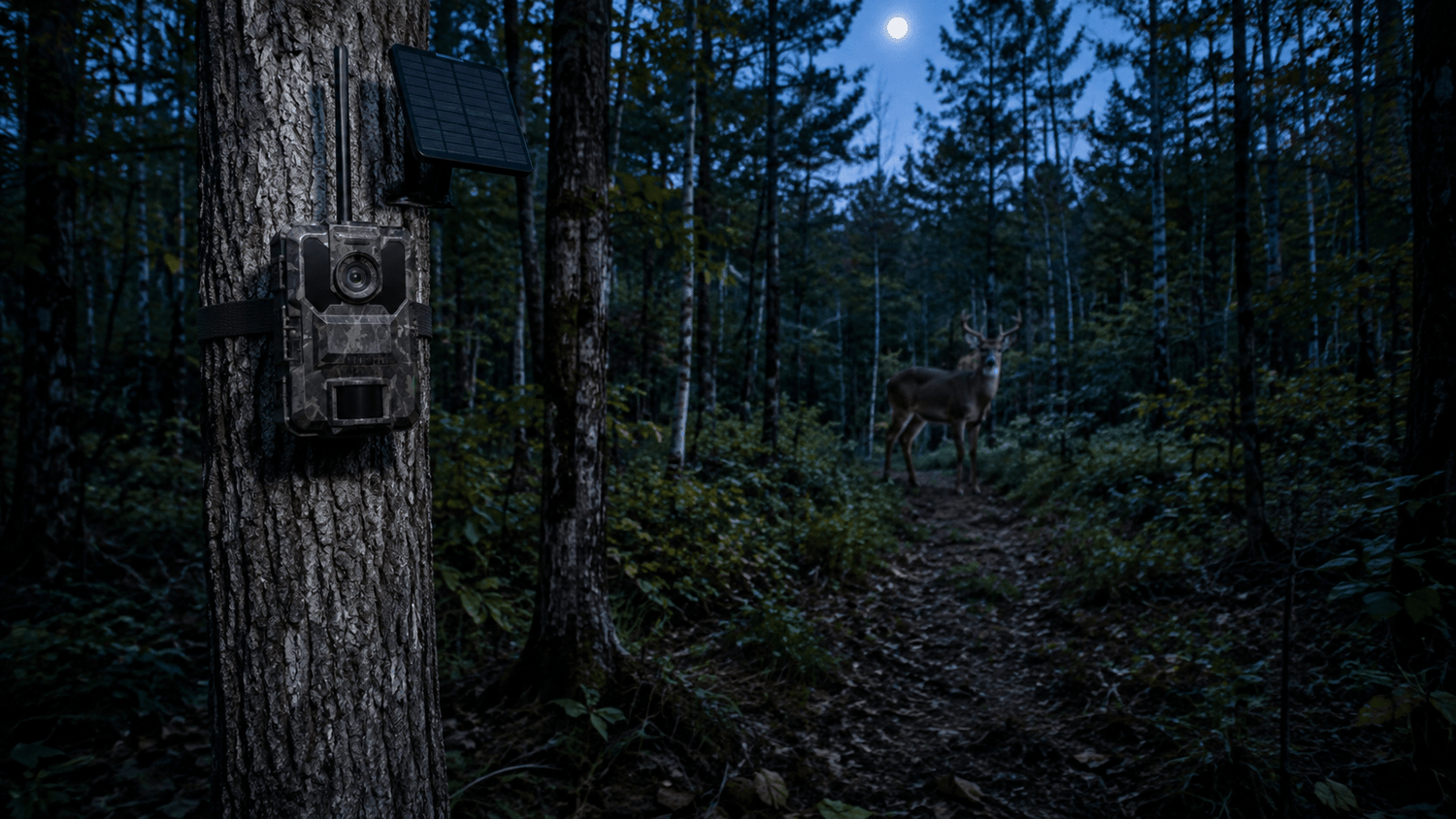
When choosing a trail camera for hunting or wildlife monitoring, one of the most important features to understand is night vision. A camera may look excellent during the day, but nighttime performance determines whether you can actually capture clear images of deer, foxes, bears, raccoons, and other wildlife after dark.
Two terms appear frequently when shopping for a night vision trail camera: low glow infrared and no glow infrared.
So, what is the difference between an infrared trail camera and a no glow trail camera? Is 850nm or 940nm better? And which technology should you choose for deer hunting, wildlife observation, or property monitoring?
The short answer is:
850nm low-glow infrared cameras generally prioritize illumination and night image brightness, while 940nm no-glow cameras prioritize a less visible infrared signature and stealth.
Understanding this difference can help you choose the best trail camera night vision system for your specific environment.
What Is Trail Camera Night Vision?
Trail camera night vision is a camera system designed to capture photos and videos when there is little or no visible light.
Unlike a conventional camera that needs a flash or external lighting source, a trail camera typically uses infrared LEDs to illuminate the scene. The camera's image sensor can detect infrared illumination, allowing it to record wildlife in darkness.
This is especially important because many animals are most active around dusk, dawn, and nighttime.
A good night vision trail camera can help you monitor:
- Deer trails
- Food plots
- Hunting areas
- Wildlife feeding locations
- Forest paths
- Farm properties
- Ranches
- Remote land
- Backyard wildlife
- Property boundaries
For hunters and wildlife enthusiasts, night vision can turn a trail camera from a daytime scouting tool into a 24-hour wildlife monitoring camera.
How Does Infrared Night Vision Work?
Most trail cameras use infrared (IR) LEDs to provide illumination at night.
The important detail is that infrared light has different wavelengths. Two commonly discussed wavelengths in trail cameras are 850nm and 940nm.
The wavelength affects how visible the infrared illumination is and can also influence illumination performance, image brightness, and stealth.
850nm Infrared: Low Glow
An 850nm infrared trail camera is commonly called a low-glow trail camera.
When the infrared LEDs activate, they can produce a faint red glow that may be visible if someone looks directly toward the camera.
The major advantages of 850nm infrared include:
- Strong infrared illumination
- Bright black-and-white night images
- Good nighttime detail
- Often longer practical illumination range
- Generally a cost-effective option
For open fields, backyard wildlife monitoring, and general trail camera use, low-glow infrared can be an excellent choice.
However, the faint red illumination makes the camera less discreet than a no-glow model.

What Is a No Glow Trail Camera?
A no glow trail camera uses infrared illumination designed to produce little or no visible red glow when the camera takes a nighttime image.
These cameras are also commonly described as:
- 940nm trail cameras
- Black flash trail cameras
- Invisible infrared cameras
- No-glow infrared cameras
- Stealth trail cameras
- Invisible flash wildlife cameras
940nm infrared is positioned farther into the infrared spectrum than 850nm. As a result, the visible red signature is greatly reduced compared with conventional low-glow infrared systems.
This makes no-glow technology particularly attractive when stealth is more important than maximum illumination.
For example, a hunter may prefer a no-glow trail camera when monitoring a heavily pressured hunting area or a location where the camera itself should be difficult for people to notice.

850nm vs 940nm: What Is the Difference?
The easiest way to understand the difference is to think about brightness versus stealth.
| Feature | 850nm Low Glow | 940nm No Glow |
|---|---|---|
| Infrared wavelength | 850nm | 940nm |
| Visible red glow | Faint glow may be visible | Little to no visible glow |
| Stealth | Good | Excellent |
| Night illumination | Generally stronger | Generally more discreet |
| Night image brightness | Often brighter | May require more sensitive imaging |
| Best for | General wildlife monitoring | Stealth monitoring |
| Hunting use | Good | Excellent for discreet setups |
| Security monitoring | Good | Excellent |
| Common name | Low Glow | No Glow / Black Flash |
The difference is not simply about which camera is "better."
Instead, it depends on where you place the camera and what you are trying to capture.

Is No Glow Better for Deer Hunting?
For many hunters, no glow trail cameras are an excellent choice for deer hunting, particularly when stealth is important.
A no-glow camera reduces the visible light signature produced when the camera captures nighttime footage.
This can be useful when monitoring:
- Mature deer
- Frequently traveled trails
- Bedding areas
- Food plots
- Water sources
- Scrapes
- Funnels
- Private hunting properties
However, it is important not to assume that infrared flash is the only factor affecting animal behavior.
Camera placement, human scent, movement around the camera, environmental conditions, and how frequently the camera is checked can all influence wildlife activity.
In other words, a no-glow trail camera is a stealth advantage, not a guarantee that an animal will never notice the camera.
No Glow vs Low Glow: Which Has Better Night Image Quality?
This is one of the most common questions about trail camera night vision.
There is no universal winner.
An 850nm low-glow system can provide strong illumination and bright nighttime images. Because 940nm illumination can be less efficiently captured by some camera sensors, comparable no-glow systems may require optimized sensors, exposure settings, and image processing to produce similarly detailed results.
This means you should not judge a trail camera only by its infrared wavelength.
When comparing night vision trail cameras, also look at:
1. Night Vision Range
Check how far the camera can effectively illuminate and record a subject.
2. Image Sensor
A better sensor can make a major difference in low-light performance.
3. Image Processing
Modern image processing can improve contrast, brightness, and detail in nighttime footage.
4. Trigger Speed
A fast trigger helps capture animals before they move out of the camera's field of view.
5. Camera Placement
Even the best night vision trail camera can produce poor footage if it is pointed directly toward a bright background or positioned too far from the animal path.
When Should You Choose an 850nm Low Glow Trail Camera?
An 850nm infrared trail camera can be a great choice if your priority is strong nighttime illumination.
Consider low glow if you:
- Monitor open fields
- Need strong nighttime illumination
- Want brighter black-and-white images
- Are primarily focused on wildlife observation
- Have a lower budget
- Do not need maximum concealment
For general wildlife monitoring, low-glow infrared remains a practical and popular solution.
When Should You Choose a 940nm No Glow Trail Camera?
A 940nm no glow trail camera is worth considering when stealth is your priority.
Choose no glow if you:
- Monitor wary wildlife
- Hunt deer
- Monitor frequently traveled game trails
- Need discreet property monitoring
- Want to reduce the camera's visible nighttime signature
- Install cameras in locations where people may pass by
- Want a black flash trail camera for covert monitoring
For users who want a combination of cellular connectivity, solar power, and stealth night vision, the Voopeak TC36 is one example of this approach.
The current TC36 combines 940nm no-glow infrared night vision, 2.5K video, 4G connectivity, solar charging, and a rechargeable battery.
Voopeak TC36: A No Glow Trail Camera for Remote Monitoring
For hunters who need more than traditional SD-card trail camera monitoring, a cellular trail camera can provide another major advantage: remote access.
The Voopeak TC36 uses 4G connectivity, allowing users to access the camera remotely rather than physically checking the camera every time they want to see what happened.
Its 940nm no-glow infrared system is designed for nighttime monitoring while minimizing visible infrared illumination.
This combination makes the TC36 suitable for:
- Deer hunting
- Wildlife observation
- Remote hunting properties
- Farm monitoring
- Ranch monitoring
- Property security
- Areas without Wi-Fi
The camera also includes solar charging and a 7800mAh battery, making it suitable for longer-term outdoor deployment.
For hunters who want to spend less time walking into the field and more time analyzing what is happening there, a cellular no-glow trail camera can be a practical upgrade from a traditional camera.

How to Improve Trail Camera Night Vision Results
Even the best night vision hunting camera needs to be installed correctly.
Keep the Camera at the Right Height
Position the camera so that the main detection zone is approximately at the height of the animal you are monitoring.
For deer, avoid pointing the camera too high above the expected travel path.
Avoid Directly Facing the Sun
During the day, direct sunlight can cause overexposure and reduce image quality.
Whenever possible, position the camera so the lens is not facing directly into the sunrise or sunset.
Keep the Lens Clean
Dust, water spots, mud, and condensation can significantly reduce nighttime image quality.
A clean lens is particularly important for infrared photography because nighttime scenes already contain less visible information.
Consider the Distance to the Animal
Do not automatically place the camera as far away from the trail as possible.
A subject that is too far away may appear small and poorly illuminated.
A properly positioned camera can often produce much better wildlife footage than simply choosing a camera with a longer advertised detection range.
Minimize Human Disturbance
Avoid checking the camera unnecessarily often.
For hunting applications, repeated visits can introduce human scent and disturb the area.
Remote cellular trail cameras can help reduce the need for physical visits.
Infrared vs No Glow: Which Trail Camera Should You Buy?
The best trail camera night vision technology depends on your priorities.
Choose an 850nm low-glow infrared camera if you want strong illumination, bright nighttime images, and a practical solution for general wildlife monitoring.
Choose a 940nm no-glow trail camera if stealth, discreet monitoring, and minimizing visible infrared illumination are more important.
For hunters monitoring pressured deer, wildlife researchers observing natural behavior, or landowners monitoring remote properties, no-glow technology can be particularly useful.
There is no single best trail camera for everyone.
The right choice depends on your target animal, camera location, expected distance, nighttime conditions, and how important stealth is to your setup.
FAQ About Trail Camera Night Vision
What is the difference between low glow and no glow trail cameras?
Low-glow trail cameras commonly use 850nm infrared LEDs that can produce a faint red glow. No-glow trail cameras commonly use 940nm infrared illumination designed to minimize visible light.
Is 940nm better than 850nm for trail cameras?
Not necessarily. 940nm is generally preferred for stealth, while 850nm can provide stronger illumination and brighter nighttime images. The best option depends on your application.
What does no glow mean on a trail camera?
"No glow" means the camera's infrared illumination produces little to no visible red light when the camera captures nighttime images. It is also commonly called black flash or invisible IR.
Can deer see trail camera infrared?
Animal vision varies by species, so it is better not to assume that all wildlife sees infrared in exactly the same way humans do. The practical advantage of no-glow technology is that it greatly reduces the visible light signature compared with low-glow 850nm systems.
Are no-glow trail cameras worth it?
For hunters, wildlife observers, and property owners who prioritize discreet nighttime monitoring, no-glow trail cameras can be worth the additional cost.
What is the best trail camera for night vision?
The best trail camera depends on your needs. Look beyond the infrared wavelength and compare night vision range, image sensor quality, trigger speed, resolution, battery life, connectivity, weather resistance, and placement options.
Final Thoughts
Understanding trail camera night vision makes it much easier to choose the right hunting camera or wildlife camera.
The main difference between 850nm low glow and 940nm no glow is the balance between illumination and stealth.
Low-glow infrared can deliver strong nighttime illumination and bright images, making it a practical choice for general wildlife monitoring.
No-glow infrared is designed to minimize visible illumination, making it especially attractive for hunters and wildlife enthusiasts who want a more discreet setup.
If your goal is to capture wildlife naturally after dark, the camera's infrared technology is only one part of the equation. Sensor quality, trigger speed, night vision range, camera placement, weather, and minimizing human disturbance all matter.
For hunters looking for a modern no glow cellular trail camera, the Voopeak TC36 combines 940nm infrared night vision with 4G connectivity, solar power, and remote monitoring capabilities.
Scout smarter. Disturb less. See more after dark.

Hinterlasse einen Kommentar
Diese Website ist durch hCaptcha geschützt und es gelten die allgemeinen Geschäftsbedingungen und Datenschutzbestimmungen von hCaptcha.