
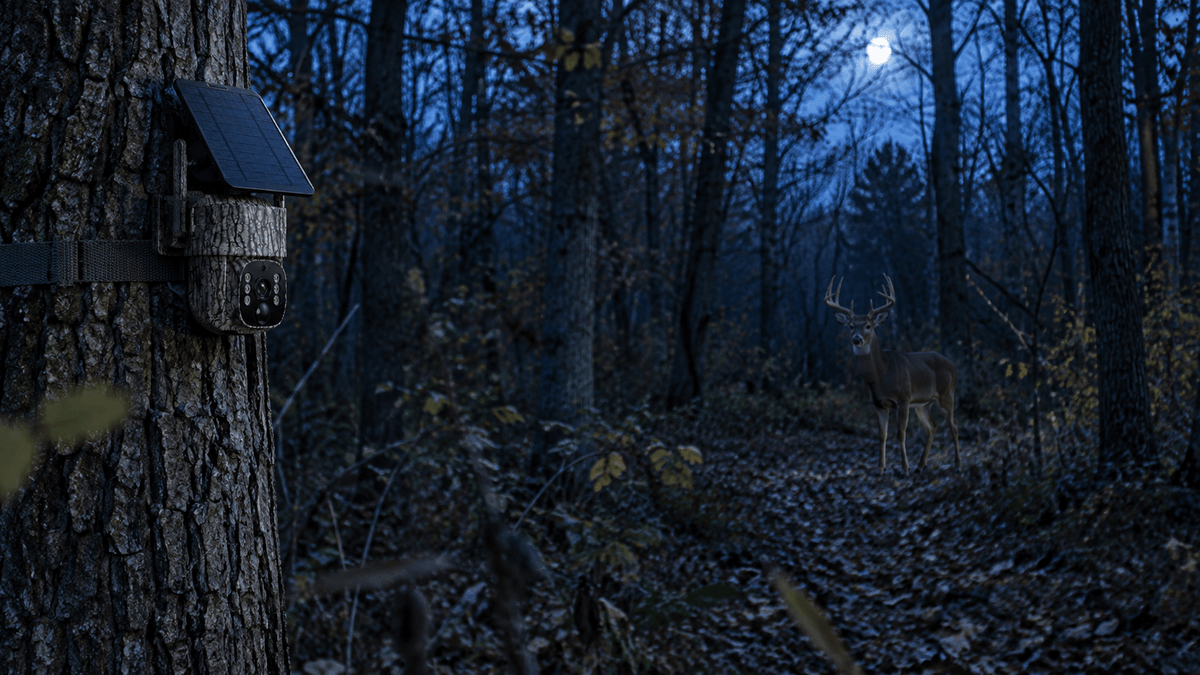
If you are shopping for the best trail camera for night hunting, one of the most important decisions is often overlooked: no-glow vs low-glow infrared night vision.
Both technologies allow a trail camera to capture wildlife after dark without using a traditional white flash. However, they use different infrared technologies, which can affect how visible the camera is, nighttime illumination, image brightness, and the ideal hunting environment.
So, which is better for night hunting: a no-glow trail camera or a low-glow trail camera?
The answer depends on your priorities.
If maximum stealth is your priority, a no-glow trail camera can be an excellent choice. If you want stronger nighttime illumination and broader nighttime coverage, a low-glow trail camera may be more suitable.
In this guide, we'll explain the difference between no-glow and low-glow trail cameras and help you choose the right night vision trail camera for deer hunting, wildlife monitoring, and outdoor scouting.
What Is a No-Glow Trail Camera?
A no-glow trail camera, also known as a black flash trail camera, is designed to minimize visible light when capturing photos or videos at night.
Unlike traditional flash cameras, no-glow trail cameras use infrared illumination that is designed to be difficult for people to see. This makes them particularly attractive for situations where keeping the camera discreet is important.
For example, a no-glow trail camera can be useful for:
- Deer hunting and scouting
- Monitoring mature or cautious wildlife
- Wildlife research
- Remote property monitoring
- Farm and land surveillance
- Areas where people may notice a camera at night
Because the camera does not visibly announce itself when it activates, it can help maintain a more discreet setup.
The Voopeak TC36 No Glow Trail Camera is designed for stealth-focused nighttime wildlife monitoring, making it an option for hunters who want to reduce the visible signature of their trail camera.

What Is a Low-Glow Trail Camera?
A low-glow trail camera uses infrared illumination that may produce a faint visible red glow when the camera captures nighttime images or video.
Unlike a traditional white flash, the glow is relatively subtle. However, someone standing close to the camera may be able to notice it.
One of the main reasons hunters choose low-glow trail cameras is that infrared illumination can provide strong nighttime imaging while maintaining a relatively discreet appearance.
Low-glow cameras can be useful for:
- Open fields
- Food plots
- Deer trails
- General wildlife monitoring
- Backyard wildlife observation
- Outdoor property monitoring
- Situations where nighttime image coverage is important
Whether a low-glow camera is the right choice depends on the environment, camera placement, target wildlife, and how important maximum stealth is for your setup.
The Voopeak TC32 is a cellular trail camera designed for remote wildlife monitoring, making it useful for hunters and landowners who want to stay connected to activity in the field.

No-Glow vs Low-Glow Trail Cameras
The biggest practical difference between no-glow and low-glow trail cameras is the amount of visible infrared light produced during nighttime operation.
A no-glow camera is designed to minimize visible illumination, while a low-glow camera may produce a faint red glow.
Here's a quick comparison:
| Feature | No-Glow Trail Camera | Low-Glow Trail Camera |
|---|---|---|
| Visible red glow | Little to none | Faint glow may be visible |
| Stealth | Excellent | Good |
| Night illumination | Good | Often strong |
| Night image performance | Depends on camera system | Depends on camera system |
| Best use | Stealth-focused monitoring | General wildlife scouting |
| Ideal for | Cautious wildlife & discreet setups | Open areas & general monitoring |
| Voopeak example | TC36 | TC32 |
It's important to remember that infrared technology is only one part of nighttime trail camera performance.
The image sensor, lens, infrared LED design, exposure settings, image processing, trigger speed, detection range, camera placement, and weather conditions can all affect the final image.
This is why you should evaluate the entire night vision system, rather than choosing a trail camera based only on the words "no-glow" or "low-glow."

Does No-Glow Mean Better Night Vision?
Not necessarily.
No-glow does not automatically mean better image quality.
The primary benefit of no-glow technology is stealth, not necessarily maximum illumination.
Because no-glow cameras are designed to minimize visible light, they can be an excellent option when you want the camera to remain discreet.
However, nighttime image quality depends on much more than whether a camera is labeled no-glow or low-glow.
Sensor sensitivity, lens quality, infrared illumination, exposure settings, image processing, detection distance, and environmental conditions can all affect the final photograph or video.
Modern trail cameras can use improved sensors and image processing to produce detailed nighttime footage while maintaining a discreet infrared setup.
This is why the best night vision trail camera should be selected according to your actual hunting environment rather than a single specification.
Is No-Glow Better for Deer Hunting?
For many deer hunters, stealth is one of the biggest reasons to consider a no-glow trail camera.
Deer behavior can vary considerably depending on the environment, hunting pressure, individual animals, and camera placement. A faint red glow may be insignificant in some locations, while hunters may prefer to minimize any visible camera activity in others.
For hunters monitoring a specific mature buck, heavily pressured hunting property, or a location where the camera must remain discreet, no-glow infrared provides an additional level of concealment.
The Voopeak TC36 No Glow Trail Camera is particularly suited to this type of application because it is designed for discreet nighttime wildlife monitoring.
However, that doesn't mean every hunting setup requires no-glow.
If your camera is positioned across an open food plot or large clearing and nighttime coverage is more important than absolute stealth, a low-glow trail camera can still be an effective choice.
When Should You Choose a Low-Glow Trail Camera?
A low-glow trail camera can make sense when you want strong nighttime illumination while maintaining a relatively discreet setup.
For example, imagine a camera watching a large open field.
The animal may be several meters away from the camera, with relatively little vegetation around it. In this situation, nighttime illumination can be important because the camera needs to capture useful detail across a larger area.
Low-glow cameras can also be a practical choice when the camera is installed on private property and there is little concern about people seeing a faint infrared glow.
Choose a low-glow trail camera when your priorities include:
- Strong nighttime illumination
- Detailed nighttime images
- Wildlife monitoring
- Open-field scouting
- Food plot monitoring
- General hunting surveillance
- A balance between nighttime performance and stealth
For hunters who also want to remotely monitor their property, a cellular trail camera such as the Voopeak TC32 can provide another layer of convenience by allowing users to stay connected to activity in the field.
When Should You Choose a No-Glow Trail Camera?
A no-glow trail camera becomes more attractive when camera concealment is your top priority.
Consider a camera mounted along a narrow deer trail.
The camera may be only a few meters from the animal's path, meaning wildlife passes relatively close to the lens. In this type of location, maximum infrared range may be less important than keeping the camera discreet.
No-glow is also useful when cameras are installed in locations where people could potentially discover them.
Consider a no-glow camera if you are monitoring:
- Mature deer
- Heavily pressured hunting areas
- Narrow game trails
- Wildlife bedding areas
- Remote properties
- Farm boundaries
- Sensitive wildlife habitats
- Locations where camera concealment matters
For these applications, the Voopeak TC36 provides a dedicated no-glow option for hunters and wildlife observers who prioritize discreet nighttime monitoring.
No-Glow vs Low-Glow for Night Hunting
So, which one should a hunter choose?
The answer depends on your hunting environment and priorities.
Choose No-Glow If Stealth Is Your Priority
A no-glow trail camera is a practical option when you want to minimize the visible infrared signature of your camera.
For hunters monitoring cautious wildlife, pressured hunting areas, or locations where the camera needs to remain discreet, the Voopeak TC36 No Glow Trail Camera is designed specifically for this type of nighttime wildlife monitoring.
Choose Low-Glow If Nighttime Illumination Is Your Priority
A low-glow trail camera may be preferable when you want strong infrared illumination and useful nighttime coverage.
Low-glow cameras remain popular for deer trails, food plots, open fields, and general wildlife monitoring.
If remote monitoring is also important, a cellular model such as the Voopeak TC32 can be useful for hunters and landowners who want to monitor wildlife activity without repeatedly visiting the camera location.
Other Features Matter More Than You Might Think
When choosing the best trail camera for night hunting, don't look at infrared technology alone.
Consider these additional features:
1. Trigger Speed
Fast trigger speed helps the camera capture animals quickly as they enter the detection zone.
This is particularly important on active deer trails where an animal may only remain in front of the camera for a few seconds.
2. Image Resolution
High-resolution images provide more detail for identifying antler structure, body characteristics, and individual animals.
If you are using a trail camera for deer scouting, image resolution can make it easier to identify individual animals and monitor changes over time.
3. Detection Range
A longer detection range can be useful when monitoring larger areas, while a shorter setup may be perfectly adequate for a narrow trail.
Always consider the actual distance between the camera and the location where animals are expected to pass.
4. Night Image Processing
Good image processing can improve contrast, reduce noise, and preserve detail in low-light conditions.
Nighttime trail camera performance depends on the interaction between the sensor, infrared system, lens, and image processing—not just the advertised megapixel count.
5. Cellular Connectivity
For remote properties, cellular connectivity can be particularly useful.
A cellular trail camera such as the Voopeak TC32 can help users monitor activity remotely instead of relying entirely on physical visits to retrieve images from the camera.
6. Camera Placement
Even the best night vision trail camera can produce poor images if it is installed incorrectly.
Avoid pointing directly toward a rising or setting sun, clear excessive vegetation from the detection zone, and position the camera so animals move across the field of view rather than directly toward the lens.
How to Get Better Nighttime Trail Camera Photos
Regardless of whether you choose no-glow or low-glow, proper placement can significantly improve nighttime results.
Keep the camera at an appropriate height.
For deer, positioning the camera around chest height or slightly lower can provide a useful field of view.
Avoid excessive vegetation.
Leaves and branches close to the lens can reflect infrared light and create bright spots or haze.
Don't place the camera too far away.
Even a powerful infrared system has practical limitations. Keeping the expected animal path within the camera's effective illumination zone generally produces better results.
Test the setup before hunting season.
Check several nighttime images and videos to see whether the animal is centered correctly and whether the infrared illumination covers the intended area.
Consider the direction of movement.
If possible, position the camera so deer move across the field of view instead of directly toward or away from the camera. This can increase the amount of time the animal spends inside the detection zone.

No-Glow vs Low-Glow: Which Is Better?
There isn't one universal choice for every hunting situation.
The better trail camera depends on what you need from your nighttime setup.
No-glow trail cameras are best suited to hunters and wildlife observers who prioritize stealth and discreet monitoring.
Low-glow trail cameras are well suited to users who prioritize nighttime illumination, coverage, and general wildlife scouting.
For a stealth-focused setup, consider a no-glow trail camera such as the Voopeak TC36.
For hunters and landowners who want cellular connectivity and remote wildlife monitoring, the Voopeak TC32 provides another option for staying connected to activity in the field.
Ultimately, choosing between no-glow and low-glow should come down to your hunting environment, target species, camera placement, and whether stealth or nighttime illumination is more important.
The best trail camera is not necessarily the one with the most impressive specification sheet. It is the one that matches the conditions where you actually hunt and scout.
FAQ
Is no-glow or low-glow better for deer hunting?
Both can work well. No-glow is particularly useful when stealth is important, while low-glow can be a practical choice when nighttime illumination and coverage are important.
What is the difference between no-glow and low-glow trail cameras?
A no-glow trail camera is designed to minimize visible infrared illumination, while a low-glow trail camera may produce a faint red glow when recording at night.
Can deer see low-glow infrared?
Animal sensitivity to infrared illumination can vary by species and situation. Low-glow cameras can produce a faint red emission that may be visible to humans at close range, while no-glow systems are designed to minimize visible illumination.
Do no-glow cameras have worse night images?
Not necessarily. Infrared technology is only one factor affecting image quality. Sensor sensitivity, lens quality, infrared illumination, exposure, image processing, distance, and weather can all affect nighttime performance.
What is the best no-glow trail camera for stealth monitoring?
For users looking for a dedicated no-glow option from Voopeak, the TC36 No Glow Trail Camera is designed for discreet nighttime wildlife monitoring.
Is the Voopeak TC32 good for wildlife monitoring?
The Voopeak TC32 is a cellular trail camera designed for remote wildlife monitoring. Its cellular connectivity makes it suitable for hunters and landowners who want to monitor activity without frequently visiting the camera location.
Are low-glow trail cameras still good for hunting?
Yes. Low-glow trail cameras remain a practical choice for many hunting and wildlife scouting situations, especially when nighttime illumination and coverage are important.
Final Thoughts
Choosing between a no-glow vs low-glow trail camera is ultimately about balancing stealth and nighttime illumination.
No-glow technology is designed to minimize visible infrared light, making it particularly attractive for discreet wildlife monitoring. Low-glow technology can provide strong nighttime illumination while producing a faint visible glow in some conditions.
For cautious wildlife, pressured hunting areas, and stealth-focused setups, consider a no-glow trail camera such as the Voopeak TC36.
For hunters and landowners who want cellular connectivity and remote wildlife monitoring, the Voopeak TC32 provides another option for staying connected to activity in the field.
Before buying, look beyond the infrared technology and consider trigger speed, image resolution, detection range, sensor performance, cellular connectivity, weather resistance, and camera placement.
With the right combination of technology and setup, your trail camera can capture more useful nighttime wildlife activity while helping you understand what is happening in the field after dark.

Hinterlasse einen Kommentar
Diese Website ist durch hCaptcha geschützt und es gelten die allgemeinen Geschäftsbedingungen und Datenschutzbestimmungen von hCaptcha.