
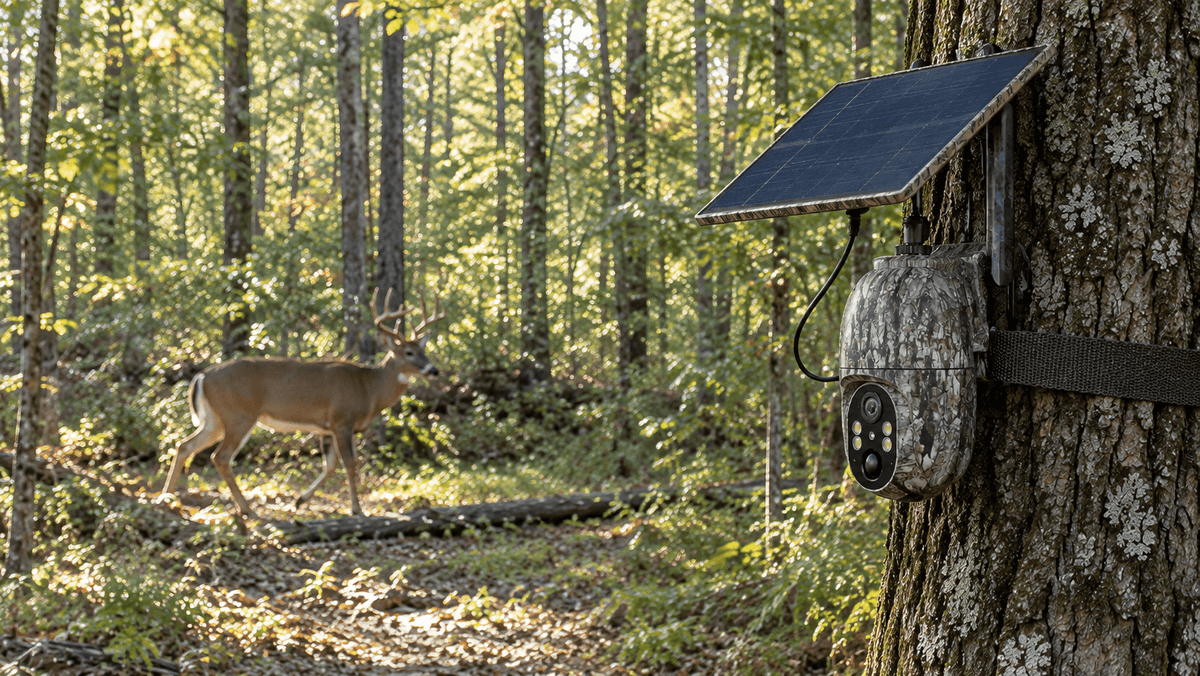
If you use a trail camera for hunting, wildlife monitoring, property surveillance, or outdoor observation, battery life is one of the biggest challenges. A camera may be installed in a remote location for weeks or even months, but eventually, conventional batteries need to be replaced.
That is where solar trail cameras come in.
A solar-powered trail camera combines a rechargeable battery with a solar panel to extend operating time and reduce the need for frequent battery changes. Depending on the camera design, solar power can support features such as motion detection, infrared night vision, photo and video recording, Wi-Fi or cellular connectivity, and remote monitoring.
But how do solar trail cameras actually work? How much sunlight do they need? Can they work at night? And are they really worth the investment?
In this guide, we'll explain how solar trail cameras work, their advantages and limitations, and what to look for when choosing a solar-powered trail camera for hunting or wildlife monitoring.
What Is a Solar Trail Camera?
A solar trail camera is an outdoor camera equipped with a solar panel and rechargeable battery system. The solar panel converts sunlight into electrical energy, which is stored in the camera's rechargeable battery.
Instead of relying entirely on disposable AA batteries, the camera can recharge when sufficient sunlight is available.
A typical solar trail camera system includes a trail camera, solar panel, rechargeable battery, motion detection sensors, infrared LEDs for nighttime recording, storage, and, depending on the model, Wi-Fi or cellular connectivity.
The basic concept is simple:
Sunlight → Solar Panel → Rechargeable Battery → Trail Camera
During the day, the solar panel generates electricity. The camera uses some of that energy while operating and stores energy in the rechargeable battery. At night or during periods of low sunlight, the stored energy can power the camera.
This makes solar technology particularly useful for remote trail cameras that are difficult or inconvenient to access regularly.
How Do Solar Trail Cameras Work?
The operation of a solar trail camera can be broken down into several stages.
1. The Solar Panel Captures Sunlight
The solar panel contains photovoltaic cells that convert sunlight into electrical energy.
The amount of energy generated depends on several factors, including sunlight intensity, panel size, weather conditions, panel orientation, and shade from trees.
For a camera installed under a forest canopy, direct sunlight may be limited. Therefore, the position of the solar panel is important.
Ideally, the panel should be positioned where it can receive as much unobstructed daylight as possible.
2. Energy Is Stored in the Battery
The electricity generated by the solar panel is used to recharge the camera's battery.
The rechargeable battery acts as an energy reserve. This is important because wildlife cameras often operate at night when there is no sunlight.
For example, a deer may walk past the camera at midnight. The solar panel isn't producing power at that moment, but the rechargeable battery can provide the energy needed for motion detection, infrared illumination, image capture, video recording, and wireless transmission.
3. Motion Detection Activates the Camera
Most modern trail cameras are designed to remain in a low-power standby state until movement is detected.
When an animal enters the detection zone, the camera's PIR sensor detects changes in infrared radiation and triggers the camera.
The camera can then capture photos, videos, time-lapse images, or wildlife activity sequences.
This motion-activated design helps reduce energy consumption and makes solar power more practical for long-term outdoor monitoring.
4. Night Vision Uses Stored Energy
Solar trail cameras can continue working after sunset because they rely on stored battery power.
Many models use infrared LEDs for nighttime photography and video. Depending on the design, these may be low-glow or no-glow infrared LEDs.
For wildlife observation and hunting applications, no-glow infrared technology can help minimize visible illumination that could potentially disturb animals.
What Are the Benefits of Solar Trail Cameras?
Solar power can provide several practical advantages for people who use trail cameras frequently.
1. Longer Battery Life
The biggest advantage is reduced dependence on disposable batteries.
A traditional trail camera can consume batteries faster when it records a large number of photos or videos, especially when cellular transmission is enabled.
A solar panel can continually replenish a rechargeable battery when sunlight is available.
This can significantly extend the operating period of a solar wildlife camera.
2. Less Maintenance
Imagine installing a camera deep inside a large hunting property.
With a conventional battery-powered game camera, you may need to visit the location periodically just to replace batteries.
A trail camera with a solar panel can reduce these maintenance visits.
That is particularly useful for large hunting properties, remote forests, wildlife research areas, farms, ranches, and long-term wildlife observation.
3. Better for Remote Locations
Solar power is especially useful when accessing the camera is difficult.
If the camera is several miles from your home or requires hiking through difficult terrain, fewer maintenance trips can save both time and effort.
For remote applications, combining solar power with cellular trail camera technology can create an even more convenient setup.
A solar cellular trail camera can capture wildlife activity and transmit images remotely while using solar energy to help maintain battery power.
4. Reduced Battery Waste
Rechargeable solar-powered systems can also reduce reliance on disposable batteries.
Instead of repeatedly purchasing and replacing batteries throughout the year, users can rely more heavily on solar energy.
For frequent trail camera users, this can be an additional long-term benefit.
Can Solar Trail Cameras Work Without Direct Sunlight?
Yes, but their performance depends on available light and battery capacity.
A common misconception is that a solar trail camera needs bright sunlight all day to operate.
In reality, the camera can continue operating from stored battery power even when the solar panel isn't actively charging.
However, prolonged periods of heavy cloud cover, rain, snow, or dense shade can reduce the amount of energy generated by the solar panel.
This is why solar panel placement matters.
When installing a solar trail camera, choose an area with good exposure to daylight. Avoid placing the panel directly underneath dense branches, keep the panel surface clean, and position it to maximize exposure to available sunlight.
A good installation can make a noticeable difference in how effectively the system maintains its battery.
Do Solar Trail Cameras Work at Night?
Yes.
Solar panels don't need to generate electricity at night because the rechargeable battery stores energy collected during daylight hours.
At night, the trail camera can use the stored energy to activate its motion sensor, infrared LEDs, camera sensor, and other components.
This means a properly configured solar-powered trail camera can monitor wildlife 24 hours a day.
For hunters and wildlife enthusiasts, nighttime performance is particularly important because many animals are most active around dusk, nighttime, and dawn.
Are Solar Trail Cameras Worth It?
For many users, solar trail cameras can be worth it, particularly when long-term deployment and reduced maintenance are priorities.
However, whether one is right for you depends on how and where you use your camera.
Solar trail cameras may be particularly useful if you keep cameras deployed for long periods, monitor remote hunting properties, want to reduce battery replacement, capture large numbers of photos or videos, or need cellular connectivity in a remote location.
A conventional battery-powered trail camera may still make sense for short-term deployments or locations where solar exposure is extremely limited.
The important thing is to match the power system to your environment and usage pattern.
Solar vs. Traditional Battery Trail Cameras
The key difference between solar and traditional battery-powered trail cameras is how they manage energy over time.
A solar trail camera typically combines a solar panel with a rechargeable battery. The solar panel helps replenish the battery during daylight, while the stored energy powers the camera when sunlight isn't available.
A traditional battery trail camera relies primarily on disposable or rechargeable batteries and therefore requires more frequent manual maintenance.
For long-term deployment, a solar-powered system can reduce the need to physically visit the camera. For short-term monitoring, a conventional battery-powered model may provide a simpler setup.
Neither power solution is ideal for every situation. The right choice depends on the camera location, available sunlight, expected trigger frequency, connectivity requirements, and how often you can access the camera.
What Should You Look for in a Solar Trail Camera?
Not all solar trail cameras are designed the same way. Before buying one, consider the following features.
Solar Panel and Battery Capacity
Look at the solar panel's power output and the rechargeable battery capacity.
A suitable solar power system should be able to replenish enough energy for your expected camera usage.
This is particularly important for cameras that capture frequent videos or transmit images through cellular networks.
Image and Video Quality
For wildlife monitoring, image quality matters.
Look for features such as 4K video, high-resolution photos, fast trigger speed, a suitable detection range, clear nighttime images, and reliable infrared night vision.
For example, Voopeak trail cameras offer different combinations of high-resolution imaging, infrared night vision, solar power, and wireless connectivity depending on the model.
Cellular or Wi-Fi Connectivity
Connectivity is another major consideration.
A Wi-Fi trail camera can be useful when you are relatively close to the camera and can connect directly.
For remote hunting properties, however, a cellular trail camera can transmit images through a mobile network without requiring a nearby Wi-Fi router.
This can be especially useful when you want to check wildlife activity without physically visiting the camera.

How to Install a Solar Trail Camera
Correct installation can make your solar trail camera much more effective.
Step 1: Choose the Camera Location
Select an area where animals are likely to pass.
Look for deer trails, game paths, water sources, food plots, bedding areas, property entrances, and natural wildlife corridors.
Step 2: Mount the Camera Securely
Attach the camera to a stable tree or mounting surface.
The camera should have a clear view of the expected detection zone without excessive vegetation blocking the lens or PIR sensor.
Step 3: Position the Solar Panel
Place the solar panel where it can receive as much daylight as possible.
Avoid unnecessary shade from branches, buildings, or nearby structures.
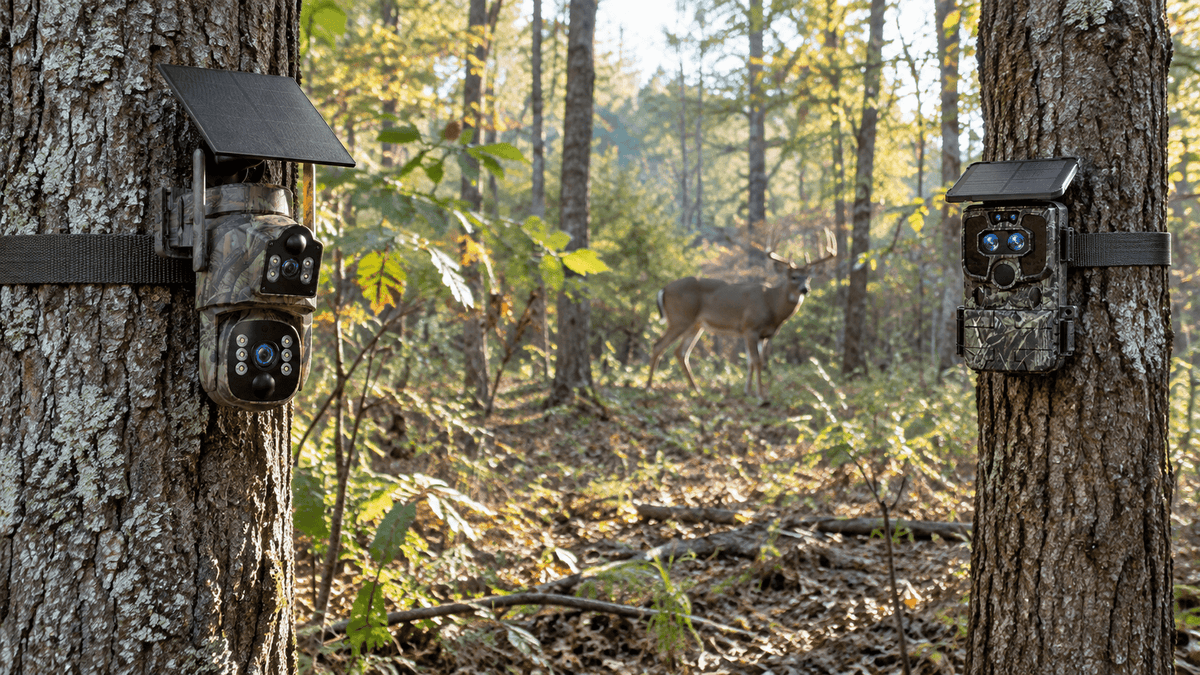
The solar panel and camera do not necessarily have to be installed in exactly the same position. Depending on the camera design, positioning the panel separately can make it easier to find a location with better sunlight exposure.
Step 4: Check the Detection Zone
Before leaving, test the camera's detection range and viewing angle.
The goal is to make sure an animal walking through the target area will trigger the camera.
Proper installation also helps prevent false triggers caused by moving vegetation, direct sunlight, or objects that are too close to the lens.

Common Misconceptions About Solar Trail Cameras
Myth 1: Solar Cameras Only Work in Direct Sunlight
Not exactly.
The camera can operate using stored battery power even when the solar panel isn't actively charging.
Solar charging is designed to replenish energy over time rather than provide all of the camera's power instantly.
Myth 2: Solar Cameras Never Need Batteries
Solar trail cameras normally still use rechargeable batteries or an integrated rechargeable power system.
Solar energy helps replenish that stored energy.
Myth 3: Solar Panels Make Trail Cameras Too Large
Modern solar panels can be relatively compact and can be mounted separately from the camera, depending on the design.
This allows users to position the camera for the best wildlife viewing angle while positioning the solar panel for better sunlight exposure.
Myth 4: Solar Cameras Are Only for Hunting
Solar wildlife cameras have many applications beyond hunting.
They can be used for wildlife observation, nature photography, property monitoring, farm and ranch surveillance, remote outdoor monitoring, and animal behavior studies.
Are Solar Trail Cameras Good for Hunting?
For hunters who maintain cameras throughout an entire season, solar power can be particularly useful.
A solar trail camera for hunting can remain deployed for extended periods while reducing the need for regular battery replacement.
This becomes even more useful when combined with 4K video, high-resolution photos, night vision, motion detection, cellular connectivity, and remote image transmission.
Instead of frequently walking into the area and potentially disturbing wildlife, a remote cellular camera can allow you to monitor activity from a distance.
For hunters monitoring large properties, this combination of solar charging and cellular connectivity can make long-term camera management much more convenient.

How Long Can a Solar Trail Camera Run?
There isn't one universal answer.
Runtime depends on several variables, including battery capacity, solar panel output, amount of sunlight, camera settings, number of triggers, video length, night vision usage, cellular transmission frequency, temperature, and weather conditions.
A camera that captures a few images per day may consume far less energy than one recording dozens of long videos and transmitting them through a cellular network.
Therefore, when evaluating solar trail camera battery life, don't look only at the battery size.
Consider the entire power system and your intended usage.
A well-positioned solar panel can continually replenish the battery, but extended periods of poor weather or heavy shade can still affect charging performance.
Final Thoughts: Should You Buy a Solar Trail Camera?
A solar trail camera is essentially a low-maintenance outdoor monitoring solution that combines solar charging, rechargeable battery power, motion detection, and wildlife imaging.
For long-term wildlife monitoring, hunting properties, remote locations, and users who don't want to frequently replace batteries, solar power can provide a practical advantage.
The most important factors are not simply whether a camera has a solar panel, but whether its solar panel, battery, camera hardware, detection system, connectivity, and installation location work well together.
If you're looking for a modern solar-powered trail camera, consider how much sunlight your installation location receives, how frequently the camera will trigger, whether you need cellular connectivity, and how important nighttime image quality is.
For hunters and wildlife enthusiasts who want to spend less time maintaining cameras and more time monitoring wildlife, a properly installed solar trail camera can be a valuable addition to an outdoor camera setup.


Hinterlasse einen Kommentar
Diese Website ist durch hCaptcha geschützt und es gelten die allgemeinen Geschäftsbedingungen und Datenschutzbestimmungen von hCaptcha.