
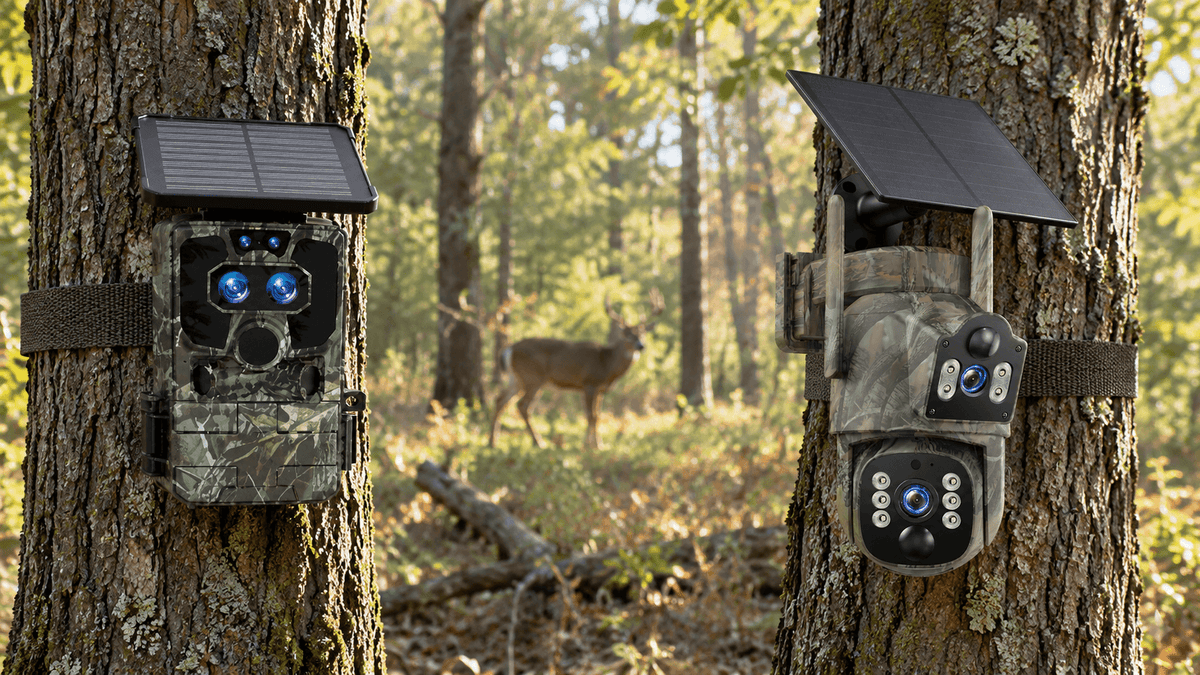
Choosing the right trail camera depends on more than image resolution or night vision. One of the most important decisions is how your trail camera connects to your smartphone.
Today, two popular options are cellular trail cameras and WiFi trail cameras. Both can capture wildlife photos and videos, detect motion, and help you monitor outdoor areas, but they are designed for different types of users and locations.
So, what's the difference between a cellular trail camera and a WiFi trail camera?
The biggest difference is connectivity. A cellular trail camera uses a mobile network such as 4G LTE to transmit images remotely, while a WiFi trail camera generally uses a local wireless connection to communicate with your smartphone when you are near the camera.
For hunters monitoring remote properties, a cellular camera such as the Voopeak TC39 can provide a major advantage. For users who want convenient local smartphone access, a WiFi model such as the Voopeak TC37 can be a practical choice.
Understanding the difference between these two types of trail cameras can help you choose the right camera for hunting, wildlife photography, property monitoring, or backyard observation.
What Is a Cellular Trail Camera?
A cellular trail camera is a wildlife camera that uses a cellular network to communicate with your smartphone or connected service.
Unlike a traditional trail camera that requires you to physically retrieve the SD card, a cellular game camera can transmit captured images remotely when cellular service is available.
This makes a cellular trail camera particularly useful for remote hunting properties, large areas of land, wildlife research, and locations that are difficult to visit frequently.
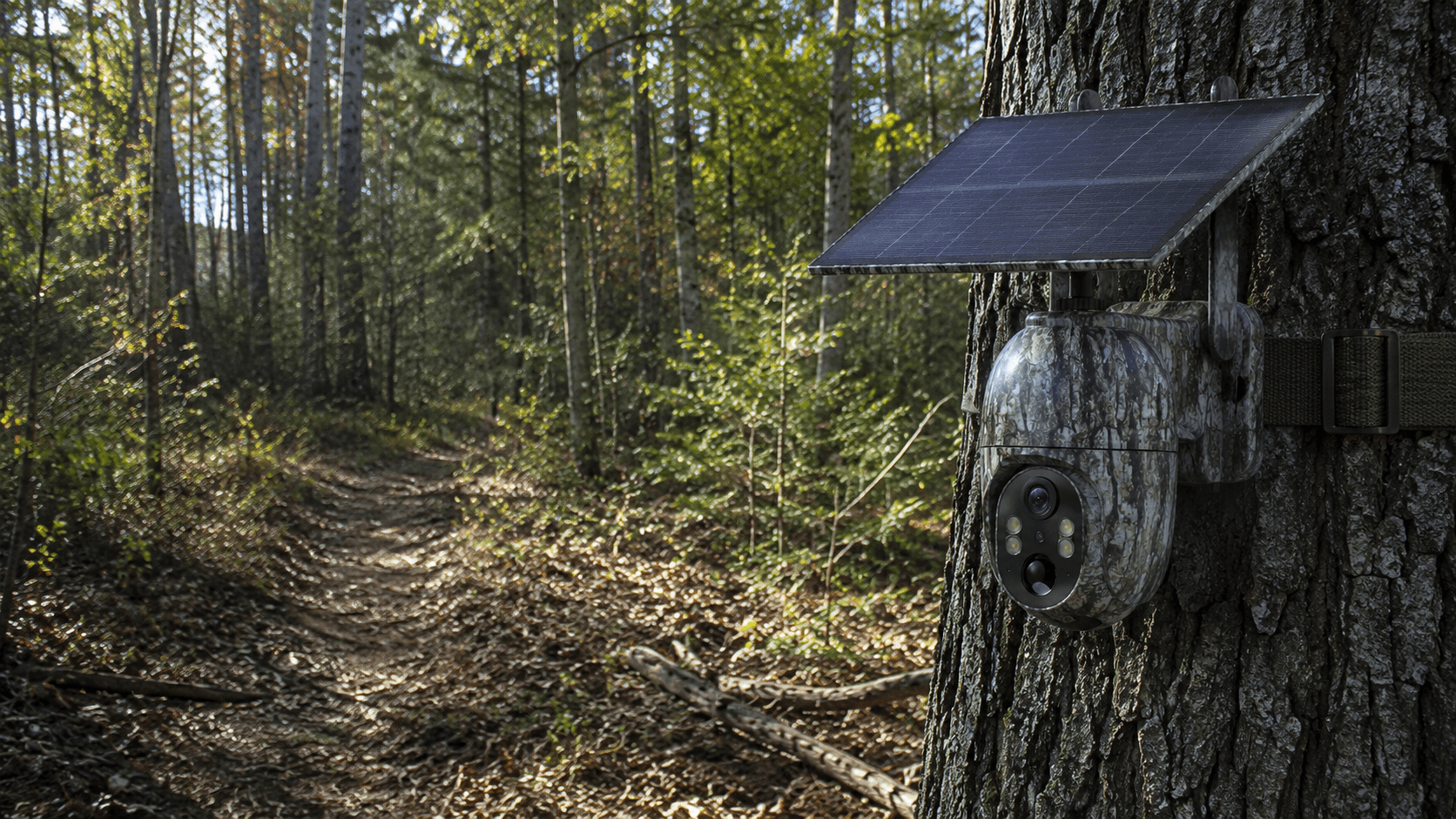
For example, the Voopeak TC39 cellular trail camera is designed for remote outdoor monitoring with cellular connectivity and solar-powered operation.
Once installed in the field, a cellular trail camera can continue monitoring wildlife while you are away from the camera location.
What are the advantages of a cellular trail camera?
A cellular trail camera can offer several important benefits:
- Remote image transmission
- 4G cellular connectivity
- Smartphone access from a distance
- No nearby WiFi router required
- Ideal for remote hunting properties
- Convenient wildlife monitoring
- Solar-powered operation on compatible models
- Reduced need to physically visit the camera
This makes a 4G cellular trail camera especially useful when your camera is located far away from your home.

What Is a WiFi Trail Camera?
A WiFi trail camera uses WiFi technology to establish a wireless connection between the camera and a nearby smartphone or other device.
However, it is important to understand that WiFi does not necessarily mean internet access.
Many WiFi trail cameras are designed for short-range, local connections. Instead of sending images through a cellular network, the camera allows your phone to connect directly to it when you are within the supported range.
The Voopeak TC37 WiFi trail camera is designed for users who want convenient wireless access to their wildlife photos and videos.
This type of trail camera can be particularly useful for:
- Backyard wildlife monitoring
- Bird watching
- Wildlife photography
- Nearby hunting locations
- Checking a camera without removing the SD card
- Users who frequently visit their camera
- Locations where remote cellular access is not necessary
For users who can easily reach their camera, WiFi can provide a simple and convenient way to manage and access captured footage.

Cellular Trail Camera vs WiFi Trail Camera: What's the Difference?
The easiest way to understand the difference is to look at where the camera is installed and how far away you need to be when accessing it.
| Feature | Voopeak TC39 Cellular | Voopeak TC37 WiFi |
|---|---|---|
| Connection | Cellular / 4G | WiFi |
| Remote access | Yes, where supported cellular service is available | Primarily local |
| Nearby WiFi required | No | WiFi connection required for wireless access |
| Cellular data plan | Required for cellular transmission | Generally not required |
| Best use | Remote wildlife monitoring | Nearby wildlife monitoring |
| Hunting | Excellent for remote properties | Good for accessible locations |
| Wildlife monitoring | Excellent for remote sites | Excellent for nearby sites |
| Smartphone access | Remote | Local / short range |
| Installation flexibility | High | Best when the camera is accessible |
| Solar operation | Yes, depending on setup | Battery-powered operation |
| Best for | Hunters and remote landowners | Wildlife observers and nearby users |
The most important difference is therefore remote connectivity.
If you need to receive images while you are miles away from the camera, cellular is generally the better choice.
If you mainly want to connect to your camera when you are nearby, WiFi may be more convenient.

Do Cellular Trail Cameras Need WiFi?
No. A cellular trail camera does not need a nearby WiFi network to transmit images.
A cellular trail camera uses a compatible mobile network instead.
This is one of the biggest advantages of a 4G trail camera. You can install the camera in a remote area without setting up a WiFi router at the location.
For example, if you install a Voopeak TC39 several miles into a hunting property, the camera can use its cellular connection to communicate with the supported service rather than relying on a nearby home WiFi network.
However, cellular trail cameras generally require a SIM card or cellular data service, depending on the specific model and service configuration.
That means you should always check cellular compatibility and coverage before installing a camera in a remote location.
Do WiFi Trail Cameras Need Internet?
Not necessarily.
This is one of the most common questions about WiFi trail cameras.
A WiFi trail camera can use a local wireless connection between the camera and your smartphone. In this situation, your phone does not necessarily need the camera to be connected to your home's internet router.
Instead, you can connect to the camera when you are physically close enough.
This is one reason WiFi trail cameras can be useful for backyard wildlife monitoring or locations that you visit regularly.
However, if you want to check your camera from another city, state, or country, a cellular trail camera is generally a better solution.
Which Is Better for Hunting: Cellular or WiFi?
For remote hunting and deer scouting, a cellular trail camera is often the more practical choice.
Imagine installing a camera deep inside a hunting property. With a conventional WiFi trail camera, you may need to physically travel to the camera whenever you want to check the latest photos.
A cellular trail camera can transmit images remotely, allowing you to monitor wildlife activity without visiting the camera every time.
This can be especially useful for monitoring:
- Deer movement
- Buck activity
- Game trails
- Food plots
- Feeding areas
- Water sources
- Remote hunting locations
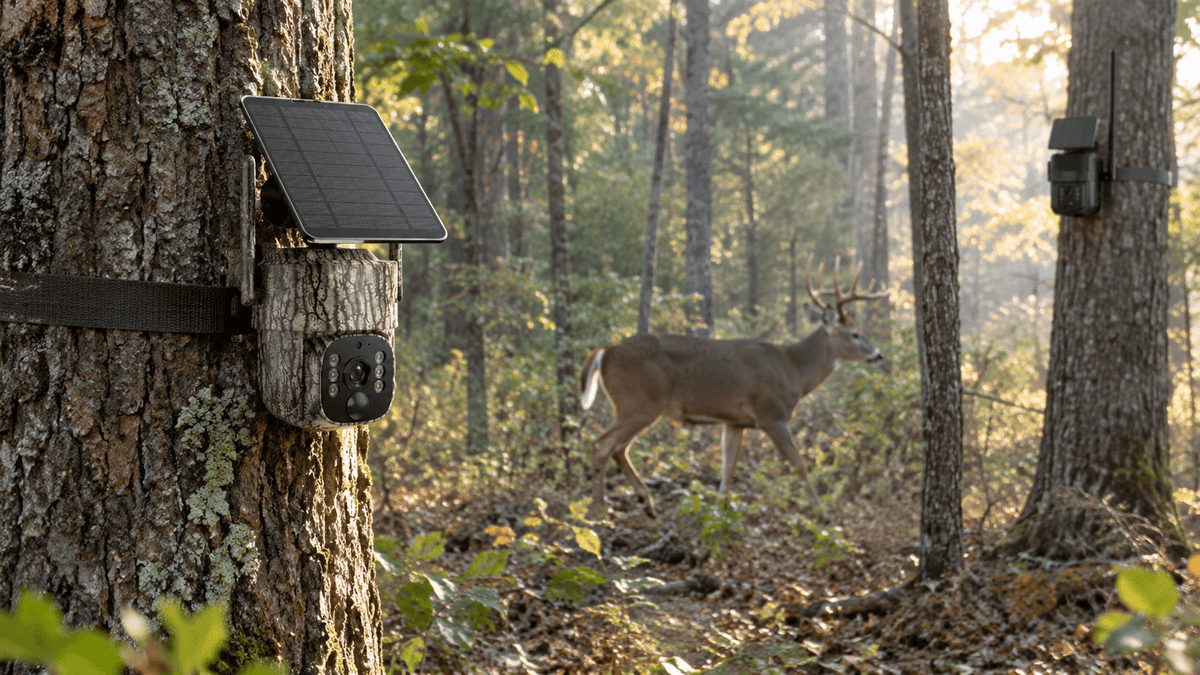
The Voopeak TC39 cellular trail camera is designed for this type of remote outdoor monitoring.
Its cellular connectivity makes it a natural choice for hunters who want to keep track of wildlife activity while staying away from the camera location.
A solar-powered cellular trail camera can also be useful for long-term field installations because solar charging can help extend operating time between maintenance visits.
Which Is Better for Backyard Wildlife?
For backyard wildlife monitoring, a WiFi trail camera may be the simpler choice.
If your camera is installed near your house, garden, bird feeder, or another location you can easily access, you may not need a cellular data plan.
The Voopeak TC37 WiFi trail camera can be a good fit for users who want wireless access to their wildlife footage while remaining relatively close to the camera.
WiFi trail cameras can be useful for observing:
- Birds
- Squirrels
- Raccoons
- Deer
- Small mammals
- Backyard wildlife
- Garden activity
If your primary goal is wildlife photography rather than remote monitoring, a WiFi trail camera can offer a straightforward solution.
Cellular vs WiFi: Which Trail Camera Is Easier to Use?
The answer depends on your situation.
A cellular trail camera may require more initial setup because you need to consider cellular coverage, SIM service, and a data plan.
However, once configured, the ability to monitor a camera remotely can save considerable time.
A WiFi trail camera can be simpler when the camera is installed nearby because there is no need for cellular service.
So the choice is not simply about which technology is newer.
It is about which connection matches your monitoring environment.
When Should You Choose the Voopeak TC39?
The Voopeak TC39 is the better choice when remote connectivity is one of your top priorities.
Consider a cellular trail camera if:
- You monitor a remote hunting property.
- You want to receive wildlife photos remotely.
- Your camera is far away from your home.
- You do not have WiFi available at the camera location.
- You want to reduce unnecessary trips to your trail camera.
- You want cellular connectivity for remote wildlife monitoring.
- You plan to leave the camera in the field for extended periods.
- You want a solar-powered cellular trail camera setup.
For hunters and landowners, the biggest benefit is simple:
You can monitor wildlife without needing to stand next to the camera.

When Should You Choose the Voopeak TC37?
The Voopeak TC37 is a better fit when you primarily need convenient local wireless access.
Consider a WiFi trail camera if:
- Your camera is installed close to your home.
- You regularly visit the camera location.
- You want convenient smartphone access nearby.
- You do not want a cellular data plan.
- You are monitoring backyard wildlife.
- You are interested in wildlife photography.
- Remote access is not essential.
For nearby wildlife monitoring, WiFi can provide a convenient balance between wireless access and operating costs.
Cellular Trail Camera vs WiFi Trail Camera: Which One Should You Buy?
There is no single trail camera that is best for everyone.
Instead, start by asking three simple questions:
1. Where will I install my trail camera?
If the camera will be installed deep in the woods or on a remote hunting property, consider cellular.
If it will be installed near your home, WiFi may be sufficient.
2. Do I need remote access?
If you want to check wildlife activity while you are away from the camera, cellular connectivity is the better option.
If you only need to access the camera when you are nearby, WiFi may be enough.
3. Do I want to pay for cellular data?
Cellular trail cameras generally require cellular service.
If you prefer to avoid an ongoing cellular data plan, a WiFi trail camera can be a more economical option when local access is sufficient.
Cellular Trail Camera vs WiFi Trail Camera: The Bottom Line
The difference between a cellular trail camera and a WiFi trail camera mainly comes down to connectivity and distance.
The Voopeak TC39 is designed for users who need cellular connectivity and remote wildlife monitoring. It is particularly suitable for hunters, landowners, and wildlife enthusiasts who install cameras in remote locations.
The Voopeak TC37 is designed for users who want WiFi connectivity and convenient local access to their camera. It can be a practical choice for backyard wildlife, nearby hunting areas, and wildlife photography.
In simple terms:
Choose the Voopeak TC39 if you need remote cellular monitoring.
Choose the Voopeak TC37 if you mainly need nearby WiFi access.
Neither technology is universally better. The right trail camera is the one that matches your location, monitoring needs, and preferred way of accessing your wildlife photos.
FAQ
Is a cellular trail camera better than a WiFi trail camera?
Not necessarily. A cellular trail camera is generally better for remote monitoring, while a WiFi trail camera can be more convenient for nearby locations. The best choice depends on where you install the camera and whether you need remote access.
What is the difference between a cellular trail camera and a WiFi trail camera?
A cellular trail camera uses a cellular network such as 4G to transmit images remotely. A WiFi trail camera generally uses a local wireless connection to allow a nearby smartphone to access the camera.
Does the Voopeak TC39 need WiFi?
No. The TC39 is a cellular trail camera, so it does not rely on a nearby WiFi router for cellular image transmission. Cellular service and the appropriate data service are required.
Does the Voopeak TC37 need cellular service?
No. The TC37 is a WiFi trail camera designed for wireless local access rather than cellular connectivity.
Can a cellular trail camera send pictures to my phone?
Yes. Cellular trail cameras can transmit captured images through supported cellular services and camera applications, allowing users to monitor wildlife remotely where cellular coverage is available.
Can a WiFi trail camera send pictures to my phone?
Yes. A WiFi trail camera can allow you to access photos and videos from your smartphone when you are within the supported WiFi connection range.
Are cellular trail cameras good for deer hunting?
Yes. Cellular trail cameras are particularly useful for deer hunting because they can allow hunters to monitor deer movement remotely without repeatedly visiting the camera location.
Are WiFi trail cameras good for wildlife photography?
Yes. WiFi trail cameras can be useful for backyard wildlife observation, bird watching, and locations where users can easily access the camera.
Do cellular trail cameras require a monthly fee?
Cellular trail cameras generally require cellular data service. The exact cost depends on the camera, carrier, SIM service, and data plan.
Final Recommendation
If your priority is remote hunting, remote wildlife monitoring, and checking images from far away, the Voopeak TC39 is the better choice.
If your priority is local wireless access, backyard wildlife, and nearby wildlife photography, the Voopeak TC37 may be the better fit.
The most important question is not simply "Cellular or WiFi?"
It is:
"Where will my trail camera be, and where will I be when I want to check it?"

Hinterlasse einen Kommentar
Diese Website ist durch hCaptcha geschützt und es gelten die allgemeinen Geschäftsbedingungen und Datenschutzbestimmungen von hCaptcha.