
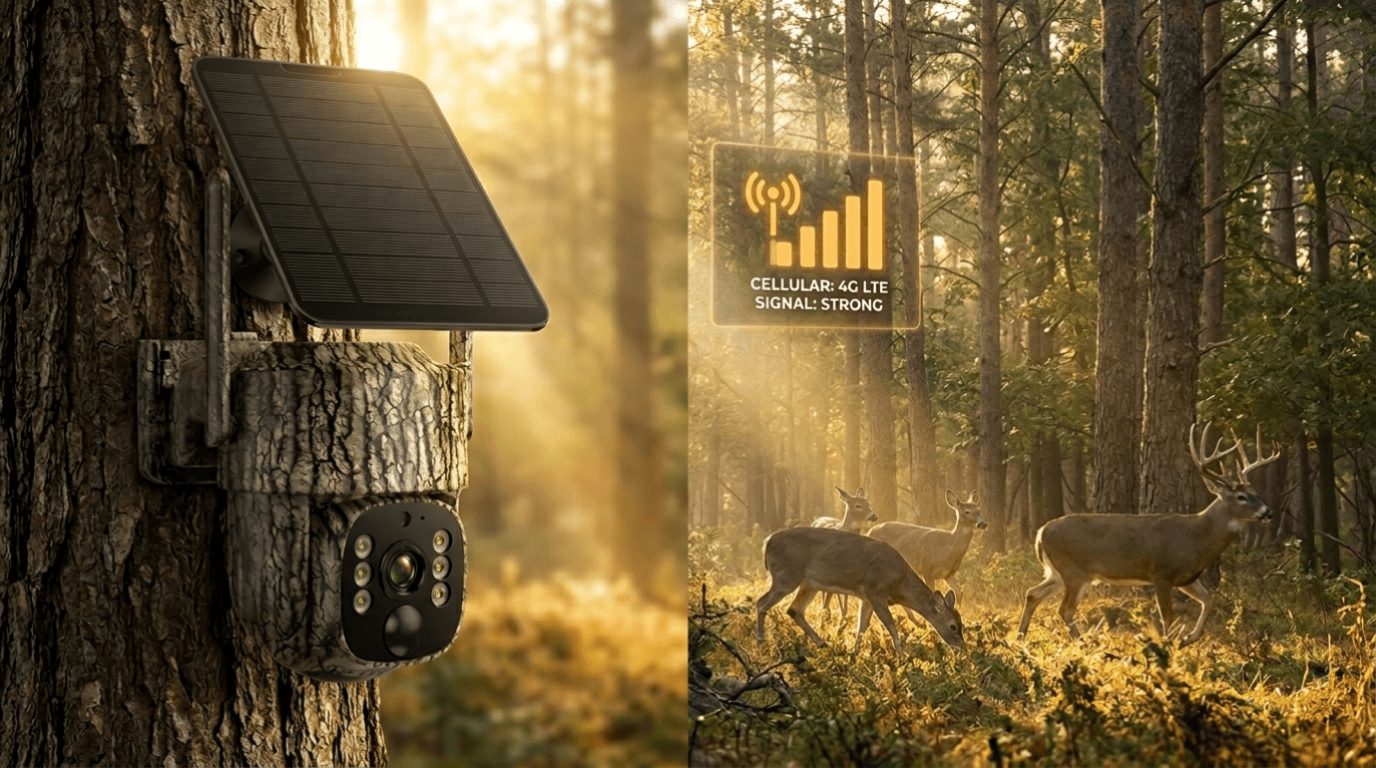
Wildtierkameras sind zu unverzichtbaren Werkzeugen für Jäger, Wildtierliebhaber, Landbesitzer und Outdoor-Nutzer geworden. Egal, ob Sie die Bewegung von Rehen verfolgen, abgelegenes Eigentum überwachen, Wildmuster erkunden oder das Verhalten von Wildtieren beobachten – die Wahl der richtigen Jagdkamera kann Ihr Erlebnis erheblich verbessern.
Eine der häufigsten Fragen, die vor dem Kauf gestellt werden, ist:
Benötigen Wildtierkameras WLAN?
Viele Erstkäufer gehen davon aus, dass jede drahtlose Wildtierkamera wie eine Heimüberwachungskamera funktioniert und Fotos über Internetverbindung automatisch direkt an ein Smartphone sendet. In Wirklichkeit funktioniert die Technologie der Wildtierkameras anders.
Das Verständnis des Unterschieds zwischen WLAN-Wildtierkameras, Mobilfunk-Wildtierkameras und traditionellen Wildkameras kann Ihnen Zeit, Geld und Frustration ersparen.
Wenn Sie planen, die beste Wildtierkamera im Jahr 2026 zu kaufen, erklärt Ihnen dieser Leitfaden alles, was Sie wissen müssen.
Was bedeutet WLAN bei einer Wildtierkamera?
WLAN bei einer Wildtierkamera bedeutet nicht, dass die Kamera kilometerweit mit dem Internetnetzwerk Ihres Zuhauses verbunden ist.
Stattdessen stellen WLAN-Wildtierkameras eine lokale drahtlose Verbindung zwischen der Kamera und Ihrem Smartphone oder Tablet her.
Dies ermöglicht Benutzern:
✓ Fotos und Videos vorab anzusehen
✓ Bilder direkt herunterzuladen
✓ Kameraeinstellungen aus der Ferne anzupassen
✓ Das wiederholte Entfernen von SD-Karten zu vermeiden
Typischerweise arbeiten WLAN-Wildtierkameras in einem Bereich von:
- 3–15 Meter
- Je nach Gelände und Signalstörungen
Dies kann das Überprüfen von Bildern erleichtern, insbesondere wenn Kameras in der Nähe installiert sind.
WLAN allein bietet jedoch keine echte Fernüberwachung über große Entfernungen.

Benötigen Wildtierkameras tatsächlich WLAN?
Die einfache Antwort ist:
Nein.
Wildtierkameras funktionierten lange erfolgreich, bevor die WLAN-Technologie weit verbreitet war.
Traditionelle Wildtierkameras funktionieren nach einem einfachen Prinzip:
- Bewegungssensoren erkennen Aktivität
- Die Kamera nimmt Fotos oder Videos auf
- Dateien werden direkt auf einer SD-Karte gespeichert
Viele Jäger bevorzugen immer noch Standard-Wildtierkameras, da sie Folgendes bieten:
- Geringere Kosten
- Lange Batterielebensdauer
- Zuverlässiger Betrieb
- Einfache Installation
- Geringerer Stromverbrauch
Ob WLAN wichtig ist, hängt davon ab, wie und wo Sie Ihre Kamera einsetzen möchten.
WLAN-Wildtierkameras vs. Mobilfunk-Wildtierkameras
Viele Menschen verwechseln WLAN-Wildtierkameras und Mobilfunk-Wildtierkameras.
Die Unterschiede sind wichtig.
| Funktion | WLAN-Wildtierkamera | Mobilfunk-Wildtierkamera |
|---|---|---|
| Fernüberwachung | Begrenzt | Ja |
| Sendet Bilder sofort an das Telefon | Nein | Ja |
| Benötigt Mobilfunknetz | Nein | Ja |
| Monatlicher Plan | Nein | Normalerweise |
| Batterieverbrauch | Niedriger | Höher |
| Am besten geeignet für | Nahzugriff | Abgelegene Orte |
Wenn Ihre Kamera tief im Jagdgebiet, in Wäldern oder auf abgelegenen Grundstücken steht, wird WLAN viel weniger nützlich.
Mobilfunk-Wildtierkameras nutzen 4G LTE-Netzwerke, um Fotos direkt von fast überall mit Signalabdeckung an Ihr Mobilgerät zu senden.
Warum Mobilfunk-Wildtierkameras im Jahr 2026 immer beliebter werden
Moderne Jäger bevorzugen zunehmend die Fernüberwachung von Wildtierkameras, da dies unnötige Fahrten ins Gelände reduziert.
Vorteile sind:
- Echtzeit-Bewegungswarnungen
- Sofortige Videoübertragung
- Reduzierte Geruchskontamination
- Bessere Planung der Jagdstrategie
- Einfachere Grundstücksüberwachung
Das zu häufige Besuchen von Kamerastandorten kann die Wildtier-Verhaltensmuster stören.
Der Fernzugriff hilft, dieses Problem zu lösen.

Warum viele Jäger Voopeak Wildtierkameras wählen
Bei der Suche nach der besten Jagdkamera konzentrieren sich Käufer oft auf Leistungsmerkmale jenseits von WLAN.
Voopeak Wildtierkameras sind für reale Außenbedingungen und praktische Anwendungsfälle konzipiert.
Merkmale können sein:
✓ Hochauflösende Bildqualität
✓ Schnelle Auslösegeschwindigkeit
✓ Fortschrittliche Infrarot-Nachtsicht
✓ Präzise Bewegungserkennung
✓ Solar Ladeoptionen
✓ Mobilfunk-Fernzugriffsfähigkeit
✓ Einfache mobile Überwachung
Egal, ob Sie die Bewegung von Rehen überwachen oder abgelegenes Eigentum sichern, Voopeak Kameras helfen, den manuellen Aufwand zu reduzieren und gleichzeitig die Effizienz im Gelände zu verbessern.

Häufige Missverständnisse über WLAN bei Wildtierkameras
Mythos 1: WLAN bietet unbegrenzten Fernzugriff
Realität:
Die meisten WLAN-Kameras bieten nur lokale Kurzstreckenverbindungen.
Mythos 2: WLAN-Wildtierkameras verwenden keine SD-Karten
Realität:
Die meisten speichern Fotos immer noch lokal.
Mythos 3: Mobilfunk und WLAN sind identisch
Realität:
Mobilfunkkameras verlassen sich auf Mobilfunknetze, während WLAN-Kameras auf Kurzstreckenkommunikation setzen.
Was ist wichtiger als WLAN beim Kauf einer Wildtierkamera?
Anstatt sich nur auf die Konnektivität zu konzentrieren, sollten Käufer auch Folgendes bewerten:
- Auslösegeschwindigkeit unter 0,5 Sekunden
- Erfassungsbereich
- Nachtsichtleistung
- Akkulaufzeit
- Wasserdichtigkeit
- Videoauflösung
- Kompatibilität mit mobilen Apps
- Speicherkapazität
Diese Faktoren beeinflussen die tatsächliche Leistung oft mehr als WLAN selbst.
Abschließende Gedanken
Benötigen Wildtierkameras also WLAN?
Nicht unbedingt.
WLAN ist nützlich für bequemen Zugriff in der Nähe, aber nicht unerlässlich für eine effektive Wildtierüberwachung.
Für einfache Erkundung und Bildsammlung funktionieren traditionelle Kameras perfekt.
Für Benutzer, die Echtzeit-Warnungen, Fernüberwachung und einfachere Verwaltung wünschen, bieten Mobilfunk-Wildtierkameras mehr Flexibilität.
Letztendlich ist die beste Wildtierkamera nicht die mit den meisten Funktionen, sondern die, die Ihren tatsächlichen Outdoor-Bedürfnissen entspricht.

Hinterlasse einen Kommentar
Diese Website ist durch hCaptcha geschützt und es gelten die allgemeinen Geschäftsbedingungen und Datenschutzbestimmungen von hCaptcha.