
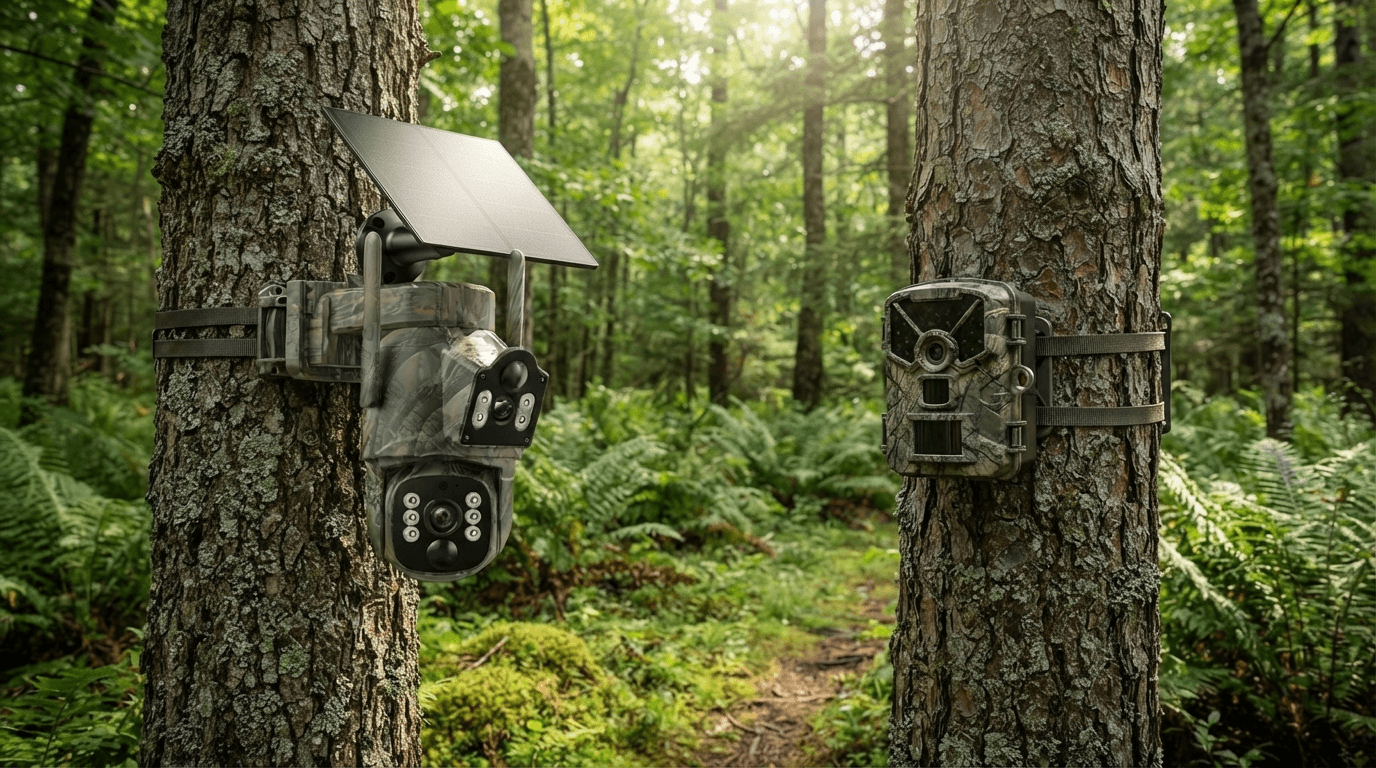
Trail cameras have become essential tools for hunters, wildlife enthusiasts, and property owners. Whether you are tracking deer movement, monitoring wildlife activity, or protecting remote land, choosing the right power source is an important decision.
The biggest difference between modern trail cameras is how they receive power. A solar trail camera uses solar charging technology combined with a rechargeable battery, while a battery trail camera relies on replaceable batteries.
Both options have advantages. Solar-powered trail cameras offer longer operation and less maintenance, while battery-powered trail cameras provide simple installation and flexibility.
In this guide, we compare solar trail cameras vs battery trail cameras to help you choose the best option for your outdoor monitoring needs.
What Is a Solar Trail Camera?
A solar trail camera uses a solar panel to recharge its internal battery during daylight. This allows the camera to operate for extended periods without frequent battery replacement.
Modern solar hunting cameras are especially popular among hunters who need long-term monitoring in remote areas.
Benefits of Solar Trail Cameras:
- Longer battery life
- Less maintenance
- Lower long-term cost
- Environmentally friendly
- Ideal for remote hunting locations
- Perfect for cellular trail cameras
Solar trail cameras work especially well with 4G LTE trail cameras because cellular transmission requires more power than traditional SD card cameras.
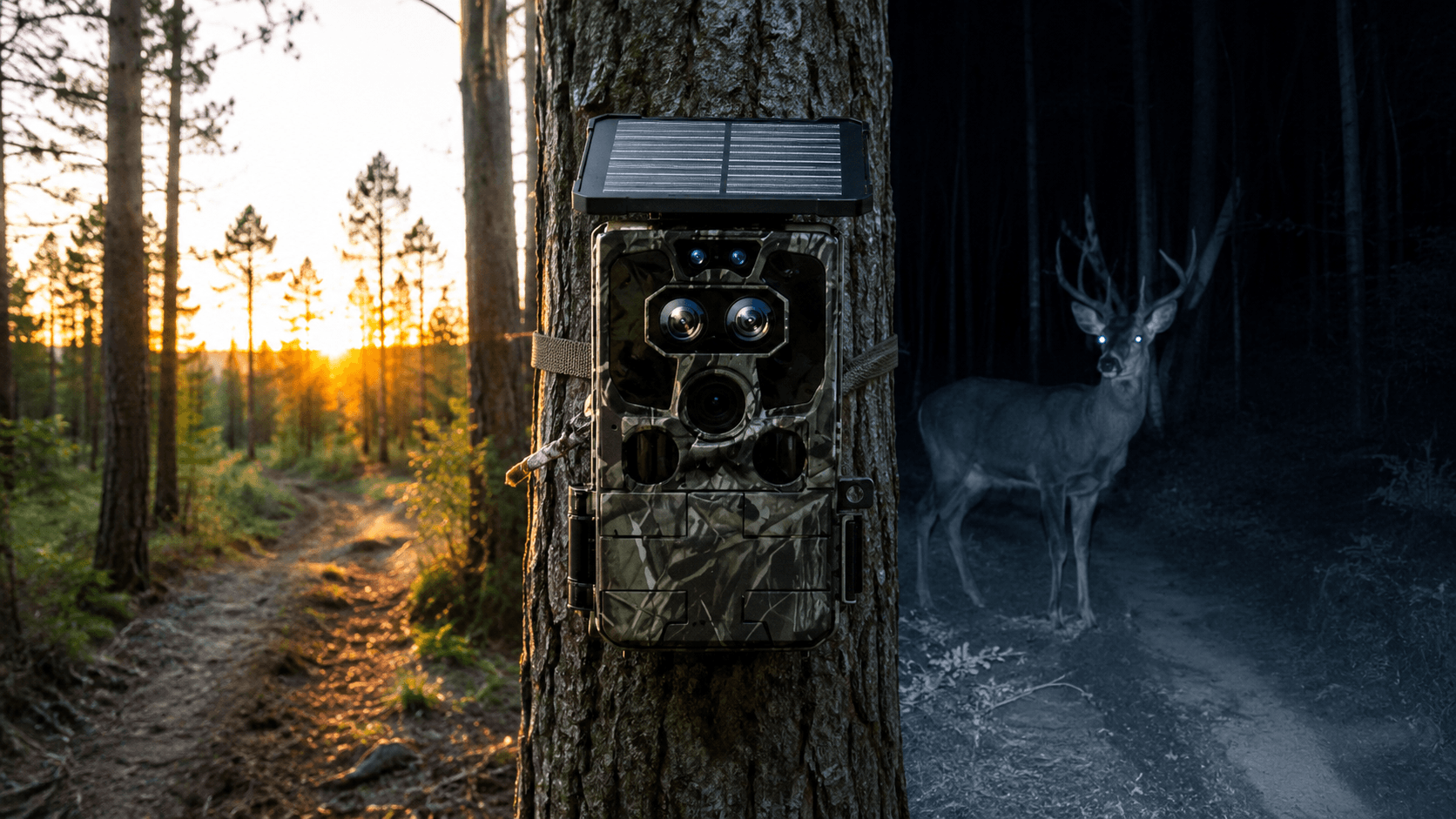
For example, the Voopeak TC39 Solar Cellular Trail Camera combines solar charging, rechargeable battery technology, 4G LTE connection, and remote monitoring features, making it a reliable choice for long-term wildlife observation.

What Is a Battery Trail Camera?
A battery trail camera uses replaceable batteries, usually AA lithium or alkaline batteries, to power the camera.
Battery-powered trail cameras remain popular because they are affordable, easy to install, and can work almost anywhere.
Benefits of Battery Trail Cameras:
- Lower initial cost
- Easy setup
- Works in shaded locations
- No sunlight required
- Great for temporary scouting
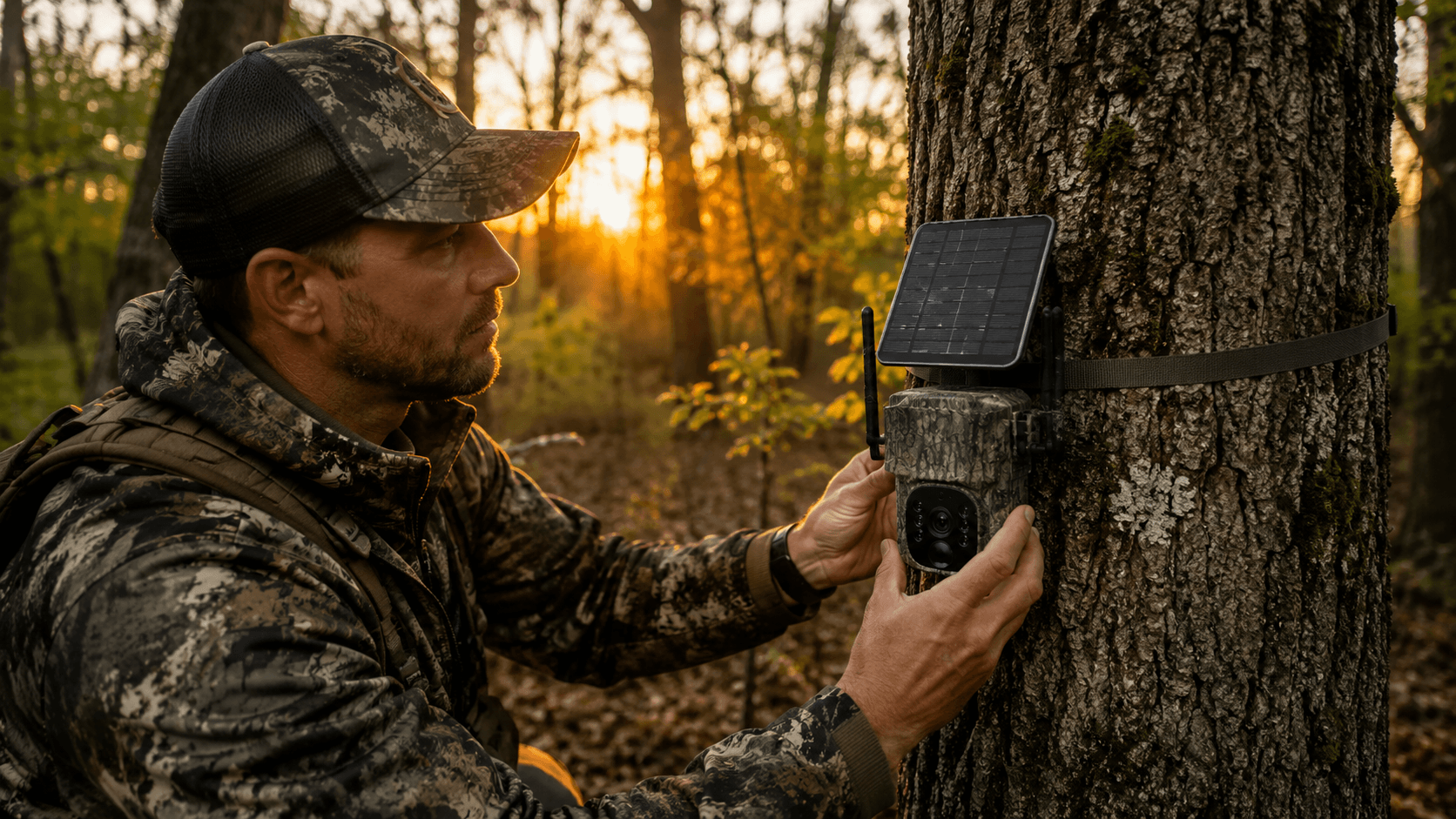
For hunters who frequently move cameras between different locations, a battery trail camera can be a practical solution.

Solar Trail Camera vs Battery Trail Camera: Key Differences
| Feature | Solar Trail Camera | Battery Trail Camera |
|---|---|---|
| Power Source | Solar panel + rechargeable battery | Replaceable batteries |
| Maintenance | Very low | Requires battery changes |
| Long-Term Cost | Lower | Higher |
| Initial Price | Higher | Lower |
| Remote Locations | Excellent | Good |
| Shade Performance | Moderate | Excellent |
| Best Use | Long-term monitoring | Short-term scouting |
Pros and Cons of Solar Trail Cameras
Pros
1. Longer Operation Time
The biggest advantage of a solar-powered trail camera is extended battery performance. With continuous charging from sunlight, the camera can operate for months with minimal maintenance.
This is especially useful for:
- Deer hunting properties
- Wildlife research
- Large outdoor areas
- Remote locations
2. Less Maintenance
Replacing batteries in multiple cameras can be time-consuming. Solar charging reduces the number of trips needed to check and maintain your cameras.
Fewer visits also mean less disturbance to wildlife.
3. Better for Cellular Cameras
A cellular trail camera sends photos and videos directly to your phone. Since cellular features consume more energy, solar charging helps maintain reliable performance.
Cons
- Higher upfront price
- Requires sunlight exposure
- Needs proper solar panel positioning
Pros and Cons of Battery Trail Cameras
Pros
1. Easy Installation
Battery cameras can be placed almost anywhere without considering sunlight direction.
They are ideal for:
- Dense forests
- Temporary hunting locations
- Seasonal scouting
2. Affordable Option
For beginners, a battery trail camera usually costs less and provides an easy way to start wildlife monitoring.
Cons
- Frequent battery replacement
- Higher operating cost over time
- More maintenance visits required
Which Trail Camera Is Better for Deer Hunting?
The best trail camera depends on your hunting style.
For hunters who monitor a property throughout the entire season, a solar cellular trail camera is usually the better choice. It provides longer operation, fewer maintenance trips, and remote access to wildlife activity.
For hunters who only need cameras for short-term scouting or frequently change locations, a battery-powered trail camera may be more convenient.
Why Choose Voopeak Solar Trail Cameras?

Voopeak develops advanced outdoor cameras designed for hunters and wildlife enthusiasts.
The Voopeak solar trail camera lineup offers:
Solar Powered Performance
Rechargeable batteries and solar charging technology help extend outdoor operation.
4G LTE Remote Monitoring
Receive photos, check activity, and monitor wildlife remotely.
High-Quality Wildlife Images
Capture clear photos and videos during both daytime and nighttime.
Durable Outdoor Design
Built for outdoor environments including forests, farms, and hunting properties.
For hunters looking for a reliable solar hunting camera, Voopeak provides a balance of performance, convenience, and long-term value.
FAQ
Are solar trail cameras better than battery trail cameras?
Solar trail cameras are better for long-term monitoring because they require less maintenance. Battery cameras are better for short-term use and locations without enough sunlight.
How long can a solar trail camera last?
A solar trail camera can operate for months depending on sunlight, camera settings, and usage frequency.
Do solar trail cameras work without WiFi?
Yes. Cellular solar trail cameras use mobile networks instead of WiFi, allowing remote monitoring in areas without internet access.
What is the best trail camera for deer hunting?
A solar cellular trail camera like the Voopeak TC39 is a great choice for hunters who want remote access, long battery life, and reliable wildlife monitoring.
Final Thoughts
Both solar trail cameras and battery trail cameras have their advantages.
Battery cameras are affordable and flexible, while solar trail cameras provide longer operation, lower maintenance, and better performance for long-term wildlife monitoring.
For hunters who want a smarter and more convenient way to track wildlife, a solar-powered trail camera is becoming one of the best choices in 2026.
Explore Voopeak solar trail cameras and upgrade your outdoor monitoring experience.


Leave a comment
This site is protected by hCaptcha and the hCaptcha Privacy Policy and Terms of Service apply.