
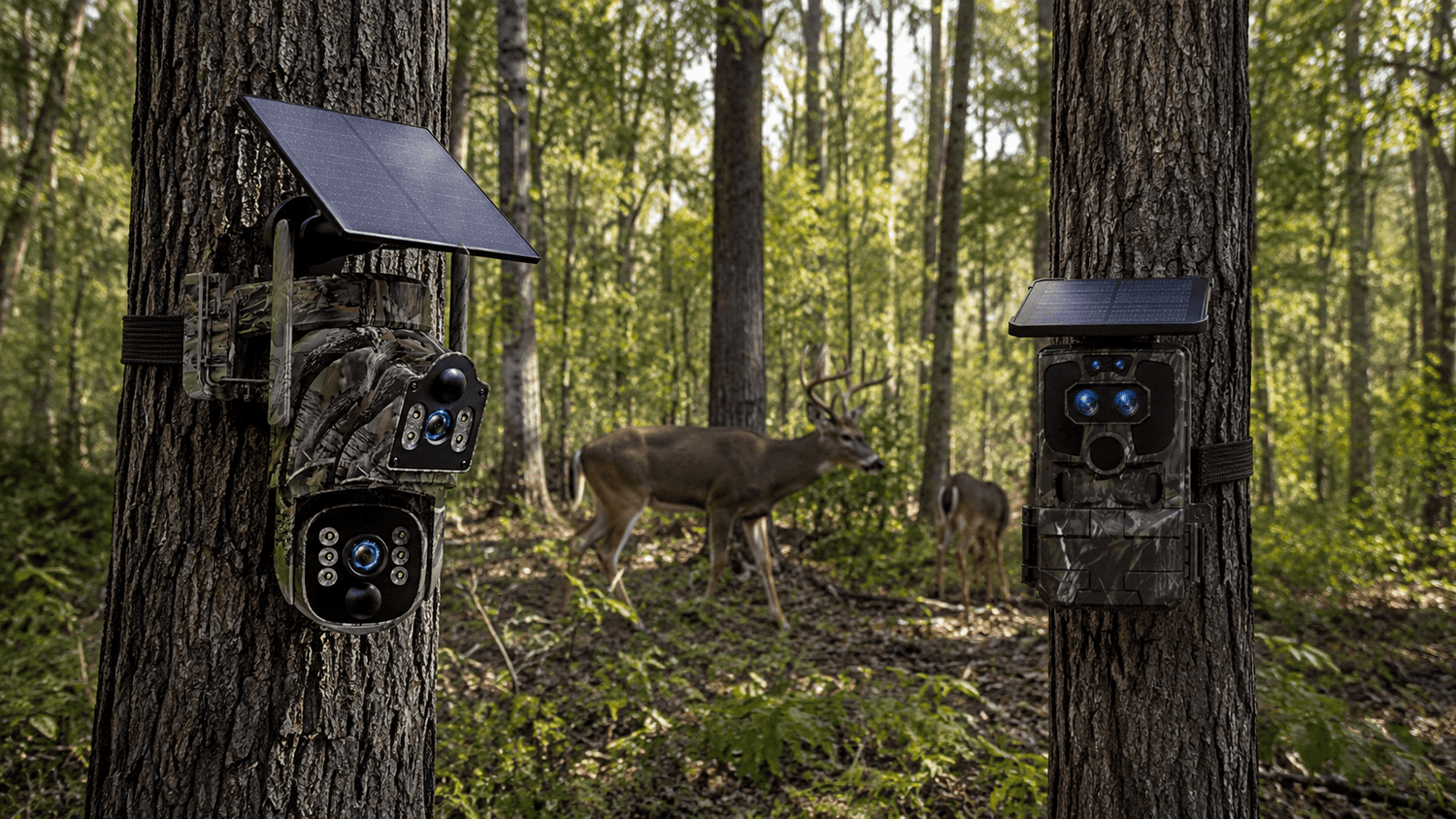
Die Wahl der richtigen Wildkamera kann einen erheblichen Unterschied für Ihren Jagderfolg, die Wildbeobachtung und die Grundstücksüberwachung ausmachen. Zwei der beliebtesten Optionen sind heute Mobilfunk-Wildkameras und WiFi-Wildkameras, aber viele Käufer sind sich unsicher, welche davon am besten zu ihren Bedürfnissen passt.
Während beide qualitativ hochwertige Fotos und Videos aufnehmen, unterscheiden sie sich stark in Konnektivität, Fernzugriff, Stromverbrauch und idealen Anwendungsfällen.
In diesem Leitfaden vergleichen wir Mobilfunk-Wildkamera vs. WiFi-Wildkamera, erläutern ihre Vor- und Nachteile und helfen Ihnen bei der Entscheidung, welche Voopeak-Wildkamera die richtige für Sie ist.
Was ist eine Mobilfunk-Wildkamera?
Eine Mobilfunk-Wildkamera nutzt ein 4G-LTE-Mobilfunknetz, um Fotos und Videos direkt an Ihr Smartphone zu senden, sodass Sie Wildtiere oder Ihr Grundstück aus der Ferne überwachen können, ohne die Kamera aufzusuchen.
Beliebte Anwendungsfälle sind:
- Rehbeobachtung
- Überwachung von Jagdgebieten
- Hofüberwachung
- Abgelegene Hütten
- Ranches
- Wildtierforschung
Da sie über ein Mobilfunknetz verbunden ist, funktioniert sie auch an Orten ohne WLAN.
Was ist eine WiFi-Wildkamera?
Eine WiFi-Wildkamera erstellt eine lokale drahtlose Verbindung, die es Benutzern ermöglicht, sich direkt von einem Smartphone aus zu verbinden, wenn sie sich in der Nähe der Kamera befinden.
Im Gegensatz zu einer Mobilfunkkamera überträgt sie keine Bilder über das Internet. Stattdessen laden Benutzer Fotos und Videos herunter, während sie sich im WLAN-Bereich befinden.
WiFi-Wildkameras sind ideal für:
- Wildbeobachtung im Garten
- Lokale Jagdgebiete
- Kleine Bauernhöfe
- Regelmäßige Kamerakontrollen
Mobilfunk-Wildkamera vs. WiFi-Wildkamera: Hauptunterschiede
| Merkmal | Mobilfunk-Wildkamera | WiFi-Wildkamera |
|---|---|---|
| Fernzugriff | Überall mit Mobilfunkempfang | Nur innerhalb der WiFi-Reichweite |
| Bildübertragung | Sofort aufs Telefon | Manuelles Herunterladen in der Nähe |
| Monatliche Gebühr | SIM-/Datentarif erforderlich | Keine monatliche Gebühr |
| Am besten für | Abgelegene Grundstücke | Lokale Überwachung |
| Batterieverbrauch | Höher | Niedriger |
| Bequemlichkeit | Ausgezeichnet | Gut |
Vorteile von Mobilfunk-Wildkameras
Wenn Sie auf großen Grundstücken jagen oder Land aus der Ferne verwalten, bietet eine Mobilfunk-Wildkamera unübertroffenen Komfort.
Vorteile umfassen:
- Sofortige Bildübertragung
- Echtzeit-Benachrichtigungen
- Fernverwaltung der Kamera
- Weniger Ausflüge in Jagdgebiete
- Weniger Störung durch menschliche Gerüche
- Bessere Analyse des Wildverhaltens
Für Jäger, die reife Böcke suchen, führt die Minimierung der menschlichen Präsenz oft zu einem natürlicheren Tierverhalten.

Vorteile von WiFi-Wildkameras
WiFi-Wildkameras bleiben eine der beliebtesten Optionen, weil sie erschwinglich und einfach zu bedienen sind.
Vorteile umfassen:
- Kein monatliches Abonnement
- Schnellere lokale Downloads
- Einfache Einrichtung
- Geringere Betriebskosten
- Längere Batterielebensdauer
- Hervorragende Bildqualität
Sie sind eine ausgezeichnete Option für Benutzer, die ihre Kameras regelmäßig besuchen.

Welche Wildkamera ist besser für die Rehwildjagd?
Die Antwort hängt davon ab, wo Sie jagen.
Wählen Sie eine Mobilfunk-Wildkamera, wenn Sie:
- Auf großen Grundstücken jagen
- Nicht häufig besuchen können
- Sofortige Benachrichtigungen wünschen
- Fernüberwachung benötigen
Wählen Sie eine WiFi-Wildkamera, wenn Sie:
- Auf lokalem Gelände jagen
- Häufig Kameras überprüfen
- Abonnementgebühren vermeiden möchten
- Schnelle Fotodownloads in der Nähe benötigen
Welche Voopeak Wildkamera sollten Sie wählen?
Wenn Sie eine Fernüberwachung suchen, ist die Voopeak TC39 4G LTE Solar-Wildkamera eine ausgezeichnete Wahl. Ihre Mobilfunkkonnektivität, Solarladung und Dual-Lens-Design ermöglichen es Ihnen, Wildtiere von praktisch überall aus zu überwachen.
Für Jäger, die eine lokale drahtlose Lösung bevorzugen, liefert die Voopeak TC37 WiFi-Wildkamera atemberaubende 60MP-Bilder und 4K-Videos, während schnelle Downloads über die Voopeak Mobile App ohne Entfernen der Speicherkarte möglich sind.
Egal, ob Sie Echtzeit-Updates oder einen erschwinglichen lokalen Zugang bevorzugen, Voopeak bietet eine Wildkamera, die auf Ihren Jagdstil zugeschnitten ist.

Kauftipps vor der Wahl einer Wildkamera
Vor dem Kauf sollten Sie Folgendes beachten:
- Kameraposition
- Verfügbarkeit des Mobilfunksignals
- Jagdhäufigkeit
- Budget
- Batterielebensdauer
- Bildauflösung
- Qualität der Nachtsicht
- Auslösegeschwindigkeit
- Erfassungsbereich
Die Anpassung der Kamera an Ihren Jagdstil bietet den besten langfristigen Wert.
Fazit
Sowohl Mobilfunk-Wildkameras als auch WiFi-Wildkameras haben einzigartige Vorteile. Wenn Fernüberwachung und sofortige Bildübertragung Ihre Prioritäten sind, ist ein Mobilfunkmodell die bessere Investition. Wenn Sie Ihr Jagdgebiet regelmäßig besuchen und geringere Betriebskosten bevorzugen, ist eine WiFi-Wildkamera eine ausgezeichnete Wahl.
Mit innovativen Modellen wie der Voopeak TC39 und der Voopeak TC37 genießen Sie zuverlässige Leistung, außergewöhnliche Bildqualität und eine zuverlässige Wildüberwachung – ob tief im Hinterland oder in der Nähe Ihres Zuhauses.

FAQ
Ist eine Mobilfunk-Wildkamera besser als eine WiFi-Wildkamera?
Eine Mobilfunk-Wildkamera ist besser für die Fernüberwachung geeignet, da sie Fotos direkt über ein 4G-LTE-Netzwerk an Ihr Telefon sendet. Eine WiFi-Wildkamera ist besser für den lokalen Einsatz geeignet, wenn Sie die Kamera persönlich erreichen können.
Benötigen Mobilfunk-Wildkameras ein monatliches Abonnement?
Ja. Die meisten Mobilfunk-Wildkameras benötigen eine SIM-Karte und einen Mobilfunkdatentarif, um Fotos und Videos aus der Ferne zu übertragen.
Braucht eine WiFi-Wildkamera Internet?
Nein. Eine WiFi-Wildkamera erstellt eine lokale drahtlose Verbindung zwischen der Kamera und Ihrem Smartphone. Sie benötigt kein Heim-WLAN oder Internetzugang.
Welche Wildkamera ist die beste für die Rehwildjagd?
Für die Fernbeobachtung von Rehwild ist eine Mobilfunk-Wildkamera ideal, da sie menschliche Störungen minimiert. Für lokale Jagdgebiete bietet eine WiFi-Wildkamera eine hervorragende Leistung ohne laufende Datenkosten.
Was ist der Unterschied zwischen einer drahtlosen Wildkamera und einer Mobilfunk-Wildkamera?
Eine drahtlose Wildkamera bezieht sich oft auf eine WiFi-fähige Kamera, die den Zugriff in der Nähe erfordert, während eine Mobilfunk-Wildkamera Mobilfunknetze verwendet, um Bilder von praktisch überall mit Mobilfunkabdeckung aus der Ferne zu senden.

Hinterlasse einen Kommentar
Diese Website ist durch hCaptcha geschützt und es gelten die allgemeinen Geschäftsbedingungen und Datenschutzbestimmungen von hCaptcha.